
📖 Daily Scripture
Wednesday, November 11, 2026 — Memorial of Saint Martin of Tours, Bishop
Readings: Titus 3:1-7 • Psalm 23:1b-3a, 3bc-4, 5, 6 • Luke 17:11-19
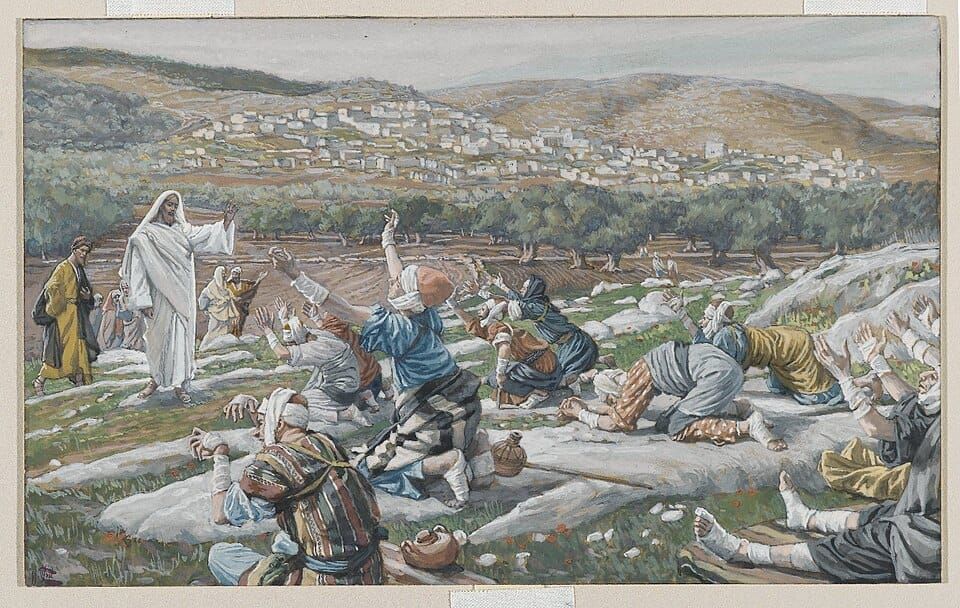
The Gospel sets before the soul a scene at once pitiable and searching. Ten lepers stand at a distance, as the law required of them, and lift their voices across the empty ground: “Jesus, Master! Have pity on us!” He does not touch them, nor even approach; He simply sends them to the priests, and as they go, they are cleansed. Here the miracle seems complete, and yet the true drama has only begun; for nine continue on their way, and only one, a Samaritan and a stranger, realizing that he has been healed, turns back to fall at the feet of Jesus. The question the Lord then asks, “Where are the other nine?”, is spoken not in anger but in a kind of holy sorrow, and it is asked still, quietly and persistently, of every soul that has received His mercy.
It is worth observing that ingratitude seldom wears the face of open rebellion. The nine were not wicked men; they were obedient, they did precisely what they were told, and they went where they were sent. Their fault was subtler and therefore more common: they received the gift and forgot the Giver. Pope Francis, reflecting on this very Gospel, noted that they “forgot the Giver,” and added with gentle candor, “It is easy to approach the Lord to ask for something, but to return and give thanks...” The soul knows this pattern well within itself. In distress it cries out with a fervor it never doubts; in relief it absorbs the blessing into the ordinary course of life, as though health, provision, and pardon had always been owed to it.
Saint Paul, writing to Titus, shows why gratitude is not an ornament of the spiritual life but the plain acknowledgment of truth. “We ourselves were once foolish, disobedient, deluded,” he confesses, and God saved us “not because of any righteous deeds we had done but because of his mercy,” through the bath of rebirth and the renewal of the Holy Spirit. Every baptized soul, then, is a cleansed leper. The Catechism teaches that “grace is favor, the free and undeserved help that God gives us to respond to his call.” What is undeserved cannot be presumed upon; and what cannot be presumed upon must, in simple honesty, be acknowledged. Ingratitude is thus a quiet untruth, a forgetting of whence the soul came and to whom it owes everything it now possesses.
The lesson, then, is concrete: gratitude is a practice of returning. Before hurrying on to the next errand of the day, the soul may pause at evening to retrace its steps, to name the particular mercies it has received, and to turn back toward Christ with each of them, as the Samaritan turned back on the road. Nor need this be confined to bright days, for the Catechism reminds us that “every event and need can become an offering of thanksgiving,” and the psalmist who walks in the dark valley still finds the table spread and the cup overflowing. Saint Augustine, delighting in the simple phrase “Thanks be unto God,” declared that “no other phrase is more easily spoken, and nothing more pleasant in sound, profound in significance, and profitable in practice, than this.”
Yet gratitude that ends in words has not yet finished its journey home. The Church today remembers Saint Martin of Tours, who, while still a catechumen and a soldier, divided his cloak with his sword to clothe a shivering beggar at the gate of Amiens, and that night beheld Christ Himself wearing the half he had given away. Here is gratitude in its mature form: the soul that knows how much it has received cannot keep the overflow of its cup to itself, but becomes, as Paul urges Titus, considerate, peaceable, and gracious toward everyone.
And the end of the Gospel is pure hope. The Samaritan, who came back only to give thanks, received more than he had asked: “Stand up and go; your faith has saved you.” The soul that returns finds not merely the healing of its body but the face of its Healer, and the friendship of the One who cleansed it. It is never too late to turn back on the road; the Shepherd waits, and goodness and kindness follow the soul all the days of its life.
Lord Jesus, who cleansed me in the bath of rebirth not for any merit of mine but by Your mercy alone, teach me to turn back to You before I hurry on my way. Awaken within me a heart that remembers the Giver in every gift, and let my thanks overflow, as Your servant Martin’s did, into mercy toward the poor. Through Christ our Lord. Amen.
Sources & References
- “Jesus, Master! Have pity on us!”; “Where are the other nine?”; “Stand up and go; your faith has saved you.” — Luke 17:13, 17, 19
- “We ourselves were once foolish, disobedient, deluded”; “not because of any righteous deeds we had done but because of his mercy”; the bath of rebirth and renewal by the Holy Spirit; considerate, peaceable, gracious toward everyone — Titus 3:2-5
- The dark valley, the table spread, the cup overflowing; goodness and kindness all the days of life — Psalm 23:4-6
- “Grace is favor, the free and undeserved help that God gives us to respond to his call” — Catechism of the Catholic Church, 1996
- “Every event and need can become an offering of thanksgiving” — Catechism of the Catholic Church, 2638
- “Thanks be unto God! … No other phrase is more easily spoken, and nothing more pleasant in sound, profound in significance, and profitable in practice, than this.” — St. Augustine, Letter 41 (to Aurelius), 1
- St. Martin dividing his cloak at Amiens and his vision of Christ wearing it — Sulpicius Severus, Life of St. Martin, ch. 3
- “They forgot the Giver”; “It is easy to approach the Lord to ask for something, but to return and give thanks...” — Pope Francis, Homily, 9 October 2016, as presented in Vatican News “Word of the Day,” 11 November 2026
El camino de regreso hacia el Dador
📖 Sagrada Escritura Diaria
Miércoles, 11 de noviembre de 2026 — Memoria de San Martín de Tours, obispo
Lecturas: Tito 3, 1-7 • Salmo 22, 1-3a. 3b-4. 5. 6 • Lucas 17, 11-19
El Evangelio pone ante el alma una escena a la vez lastimosa y penetrante. Diez leprosos se detienen a lo lejos, como la ley les exigía, y alzan la voz a través del terreno vacío: “¡Jesús, maestro, ten compasión de nosotros!” Él no los toca, ni siquiera se acerca; sencillamente los envía a los sacerdotes, y mientras van de camino quedan limpios. Aquí el milagro parece completo, y sin embargo el verdadero drama apenas comienza; porque nueve siguen su camino, y sólo uno, un samaritano y extranjero, al ver que estaba curado, regresa para postrarse a los pies de Jesús. La pregunta que entonces hace el Señor, “¿Dónde están los otros nueve?”, no brota de la ira sino de una especie de santa tristeza, y se dirige todavía, silenciosa y perseverante, a toda alma que ha recibido su misericordia.
Conviene advertir que la ingratitud rara vez se presenta con el rostro de la rebelión abierta. Los nueve no eran hombres malvados; eran obedientes, hicieron exactamente lo que se les mandó y fueron adonde se les envió. Su falta era más sutil y, por eso mismo, más común: recibieron el don y olvidaron al Dador. El Papa Francisco, meditando este mismo Evangelio, observó que siguieron su camino “olvidándose del Donador”, y añadió con suave franqueza: “Es fácil ir al Señor para pedirle algo, pero regresar a darle las gracias…” El alma conoce bien este movimiento dentro de sí. En la angustia clama con un fervor del que nunca duda; en el alivio absorbe la bendición en el curso ordinario de la vida, como si la salud, el sustento y el perdón se le hubieran debido siempre.
San Pablo, escribiendo a Tito, muestra por qué la gratitud no es un adorno de la vida espiritual, sino el sencillo reconocimiento de la verdad. “Hubo un tiempo en que también nosotros fuimos insensatos y rebeldes con Dios”, confiesa, y Dios nos salvó “no porque nosotros hubiéramos hecho algo digno de merecerlo, sino por su misericordia”, mediante el bautismo que nos regenera y nos renueva por la acción del Espíritu Santo. Toda alma bautizada es, pues, un leproso purificado. El Catecismo enseña que “la gracia es el favor, el auxilio gratuito que Dios nos da para responder a su llamada”. Lo que es inmerecido no puede darse por supuesto; y lo que no puede darse por supuesto debe, con simple honradez, ser reconocido. La ingratitud es así una callada falsedad, un olvido de dónde viene el alma y de a quién debe todo cuanto ahora posee.
La lección, entonces, es concreta: la gratitud es una práctica del regreso. Antes de apresurarse hacia el siguiente quehacer del día, el alma puede detenerse al anochecer para desandar sus pasos, nombrar las misericordias particulares que ha recibido y volverse hacia Cristo con cada una de ellas, como el samaritano se volvió en el camino. Y esto no ha de reservarse para los días luminosos, pues el Catecismo recuerda que “todo acontecimiento y toda necesidad pueden convertirse en ofrenda de acción de gracias”, y el salmista que camina por cañadas oscuras encuentra aún la mesa preparada y la copa llena hasta los bordes. San Agustín, deleitándose en la sencilla expresión “¡Gracias a Dios!”, afirmaba: “Nada puede decirse con mayor brevedad, ni oírse con mayor complacencia, ni entenderse con mayor sublimidad, ni realizarse con mayor provecho.”
Pero la gratitud que termina en palabras aún no ha concluido su viaje de regreso. La Iglesia recuerda hoy a San Martín de Tours, quien, siendo todavía catecúmeno y soldado, partió su capa con la espada para cubrir a un mendigo aterido a las puertas de Amiens, y aquella noche contempló a Cristo mismo vestido con la mitad que había regalado. He aquí la gratitud en su forma madura: el alma que sabe cuánto ha recibido no puede guardar para sí lo que rebosa de su copa, sino que llega a ser, como Pablo exhorta a Tito, sencilla, pacífica y amable con todos.
Y el final del Evangelio es pura esperanza. El samaritano, que volvió sólo para dar gracias, recibió más de lo que había pedido: “Levántate y vete. Tu fe te ha salvado.” El alma que regresa no encuentra únicamente la curación de su cuerpo, sino el rostro de quien la sana y la amistad de Aquel que la purificó. Nunca es demasiado tarde para volver sobre el camino; el Pastor espera, y su bondad y su misericordia acompañan al alma todos los días de su vida.
Señor Jesús, que me purificaste en el baño del nuevo nacimiento no por mérito alguno mío, sino sólo por tu misericordia, enséñame a volver a ti antes de apresurarme por mi camino. Despierta dentro de mí un corazón que recuerde al Dador en cada don, y haz que mi gratitud rebose, como la de tu siervo Martín, en misericordia hacia los pobres. Por Jesucristo nuestro Señor. Amén.
Fuentes y referencias
- “¡Jesús, maestro, ten compasión de nosotros!”; “¿Dónde están los otros nueve?”; “Levántate y vete. Tu fe te ha salvado.” — Lucas 17, 13. 17. 19
- “Hubo un tiempo en que también nosotros fuimos insensatos y rebeldes con Dios”; “no porque nosotros hubiéramos hecho algo digno de merecerlo, sino por su misericordia”; el bautismo que nos regenera y nos renueva por la acción del Espíritu Santo; sencillos y amables con todos — Tito 3, 2-5
- Las cañadas oscuras, la mesa preparada, la copa llena hasta los bordes; la bondad y la misericordia todos los días de la vida — Salmo 22, 4-6
- “La gracia es el favor, el auxilio gratuito que Dios nos da para responder a su llamada” — Catecismo de la Iglesia Católica, 1996
- “Todo acontecimiento y toda necesidad pueden convertirse en ofrenda de acción de gracias” — Catecismo de la Iglesia Católica, 2638
- “¡Gracias a Dios! … Nada puede decirse con mayor brevedad, ni oírse con mayor complacencia, ni entenderse con mayor sublimidad, ni realizarse con mayor provecho.” — San Agustín, Carta 41 (a Aurelio), 1
- San Martín parte su capa en Amiens y contempla a Cristo vestido con ella — Sulpicio Severo, Vida de San Martín, cap. 3
- “Olvidándose del Donador”; “Es fácil ir al Señor para pedirle algo, pero regresar a darle las gracias…” — Papa Francisco, Homilía, 9 de octubre de 2016, según Vatican News, “Evangelio y palabra del día”, 11 de noviembre de 2026