
📖 Daily Scripture
Sunday, July 12, 2026 — Fifteenth Sunday in Ordinary Time
Readings: Isaiah 55:10-11 • Psalm 65:10, 11, 12-13, 14 • Romans 8:18-23 • Matthew 13:1-23
The prophet Isaiah sets before the soul an image of great gentleness and of greater certainty: the rain and the snow come down from the heavens and do not return there until they have watered the earth, making it fertile and fruitful; and so, says the Lord, "my word shall not return to me void, but shall do my will, achieving the end for which I sent it." The rain does not bargain with the field. It does not first inquire whether the ground has merited its coming. It falls, and falls freely; and whatever fruitfulness follows is the quiet work of a gift that asked nothing before it was given.
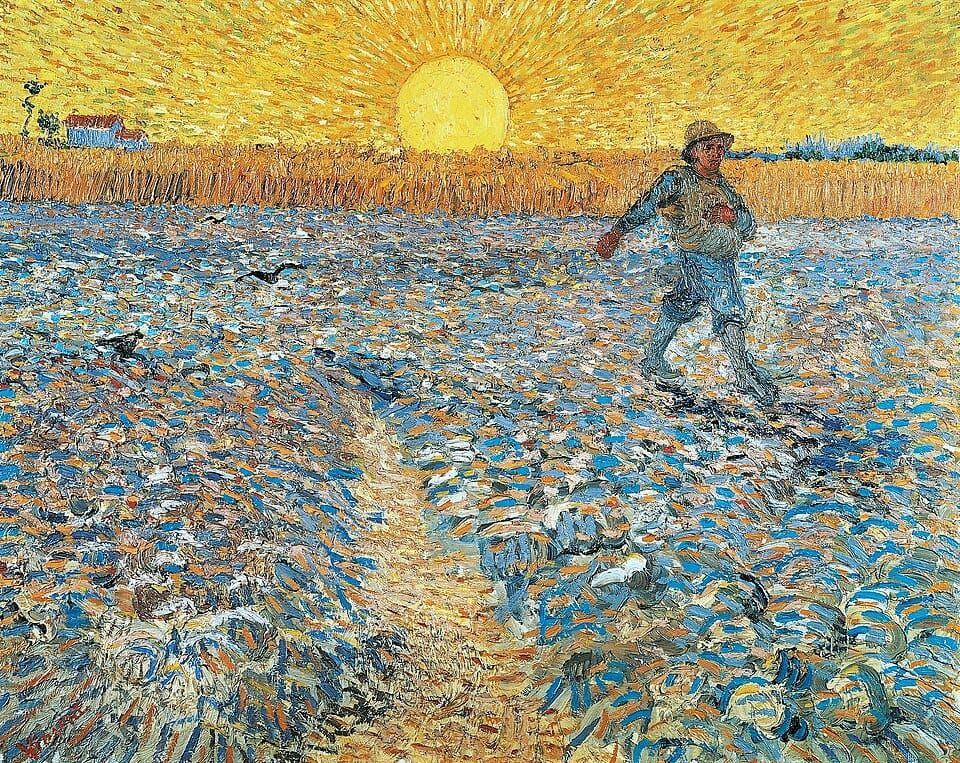
It is this same free bestowal that our Lord unfolds in the parable of the sower. A sower goes out and scatters seed with a liberality that any careful farmer would call waste — on the path, on the rocky ground, among the thorns, no less than on the rich soil. St. John Chrysostom, pondering the scene, observed that "as the sower makes no distinction in the land submitted to him, but simply and indifferently casts his seed; so He Himself too makes no distinction of rich and poor, of wise and unwise, of slothful or diligent." And Pope Leo XIV, taking up this very Gospel in the first catechesis of his pontificate, drew out the same consoling truth: "We are used to calculating things — and at times it is necessary — but this does not apply in love!" The prodigality of the sower is an image of the way God loves us; "he does not wait for us to become the best soil, but he always generously gives us his word."
Yet the parable, having consoled, begins quietly to question. The Catechism teaches that "the parables are like mirrors for man: will he be hard soil or good earth for the word?" The seed never fails; the ground often does. And the three failures our Lord describes are not portraits of other people, but of the one heart that reads them. There is in every soul a trodden path, worn hard by the constant traffic of the world, where holy things are heard so often and so carelessly that they no longer sink in at all. There is a shelf of rock beneath a thin covering of feeling, where the word springs up in a moment of fervour and withers in the first heat of trial, having no root. And there are the thorns, which our Lord names with unsettling precision: "worldly anxiety and the lure of riches choke the word and it bears no fruit."
Here, then, is the labour the parable asks of the soul: not to sow — that work is God's, and He is never idle — but to tend the ground. Against the hardened path, attention: a fixed hour kept for the word of God, guarded as one guards any appointment with a person one loves. Against the shallow rock, perseverance: fidelity in small hidden duties precisely when consolation has gone, so that conviction may send down roots deeper than feeling. Against the thorns, a deliberate pruning of the anxieties and acquisitions that crowd the heart's narrow field; for the soil of the soul, like any soil, can nourish only so much at once. And in all of this, prayer must accompany reading, "so that a dialogue takes place between God and man" — for as St. Ambrose says, "we speak to him when we pray; we listen to him when we read the divine oracles."
Nor should the slowness of the growth discourage. St. Paul writes that the sufferings of this present time are as nothing compared with the glory to be revealed, and that all creation is groaning even now — not with the groans of death, but "in labor pains," the pains that precede a birth. The word of the Lord "is compared to a seed which is sown in a field," says the Catechism; "then, by its own power, the seed sprouts and grows until the harvest." The soul that keeps even a little ground clear for God will find, in a time it did not choose and by a power not its own, that the year has been crowned with bounty and rejoicing clothes the hills. The harvest is certain, because the Sower is faithful; and He has loved us too extravagantly to let His word return void.
Lord, you have sown your word in me more often than I have known. Teach me to keep still beneath its falling; break up within me what is hardened, deepen what is shallow, and uproot the anxieties that choke your grace. Make my heart good ground, patient in every season, until your word achieves in me the end for which you sent it. Through Christ our Lord. Amen.
Sources & References
- "Just as from the heavens the rain and snow come down… my word shall not return to me void" — Isaiah 55:10-11 (First Reading, USCCB Lectionary 103)
- "The seed that falls on good ground will yield a fruitful harvest" — Responsorial Psalm refrain (cf. Luke 8:8), Psalm 65:10, 11, 12-13, 14
- "The sufferings of this present time are as nothing… all creation is groaning in labor pains" — Romans 8:18-23 (Second Reading)
- "A sower went out to sow… worldly anxiety and the lure of riches choke the word" — Matthew 13:1-23 (Gospel)
- "The parables are like mirrors for man: will he be hard soil or good earth for the word?" — Catechism of the Catholic Church, 546
- "The word of the Lord is compared to a seed which is sown in a field… by its own power, the seed sprouts and grows until the harvest" — Catechism of the Catholic Church, 543 (quoting Lumen Gentium 5)
- "We speak to him when we pray; we listen to him when we read the divine oracles" — St. Ambrose, De officiis ministrorum I, 88, cited in Catechism of the Catholic Church, 2653 (Dei Verbum 25)
- "As the sower makes no distinction in the land submitted to him…" — St. John Chrysostom, Homily 44 on Matthew
- "We are used to calculating things… but this does not apply in love!" — Pope Leo XIV, General Audience on the Parable of the Sower, May 21, 2025 (vatican.va)
La semilla que no vuelve vacía
📖 Sagrada Escritura Diaria
Domingo 12 de julio de 2026 — XV Domingo Ordinario
Lecturas: Isaías 55, 10-11 • Salmo 64, 10abcd. 10e-11. 12-13. 14 • Romanos 8, 18-23 • Mateo 13, 1-23
El profeta Isaías pone ante el alma una imagen de gran ternura y de mayor certeza: la lluvia y la nieve bajan del cielo y no vuelven allá sino después de empapar la tierra, de fecundarla y hacerla germinar; y así, dice el Señor, será la palabra que sale de su boca: "no volverá a mí sin resultado, sino que hará mi voluntad y cumplirá su misión". La lluvia no negocia con el campo. No pregunta primero si la tierra ha merecido su venida. Cae, y cae libremente; y toda la fecundidad que sigue es la obra callada de un don que nada exigió antes de entregarse.
Es esta misma entrega gratuita la que nuestro Señor despliega en la parábola del sembrador. Un sembrador sale y arroja la semilla con una liberalidad que cualquier agricultor prudente llamaría derroche: a lo largo del camino, en terreno pedregoso, entre espinos, no menos que en la tierra buena. San Juan Crisóstomo, contemplando la escena, observó que así como el sembrador no hace distinción entre los terrenos que se le presentan, sino que arroja la semilla sencillamente y sin distinción, así tampoco Él distingue entre rico y pobre, sabio e ignorante, negligente y diligente, sino que habla a todos, cumpliendo su parte. Y el Papa León XIV, tomando este mismo Evangelio en la primera catequesis de su pontificado, extrajo de él la misma verdad consoladora: "Estamos acostumbrados a calcular las cosas —y a veces es necesario—, ¡pero esto no vale en el amor!". La prodigalidad del sembrador es una imagen de la forma en que Dios nos ama; "no espera a que seamos el mejor terreno, siempre nos da generosamente su palabra".
Pero la parábola, después de consolar, comienza calladamente a interrogar. El Catecismo enseña que "las parábolas son como un espejo para el hombre: ¿acoge la palabra como un suelo duro o como una buena tierra?". La semilla nunca falla; el terreno, muchas veces sí. Y los tres fracasos que describe nuestro Señor no son retratos de otras personas, sino del único corazón que los lee. Hay en toda alma un camino endurecido, apisonado por el tránsito incesante del mundo, donde las cosas santas se oyen tan a menudo y con tanto descuido que ya no penetran. Hay una losa de piedra bajo una delgada capa de sentimiento, donde la palabra brota en un momento de fervor y se marchita al primer calor de la prueba, por no tener raíces. Y están los espinos, que nuestro Señor nombra con inquietante precisión: "las preocupaciones de la vida y la seducción de las riquezas la sofocan y queda sin fruto".
He aquí, pues, la labor que la parábola pide al alma: no sembrar —esa obra es de Dios, y Él nunca descansa—, sino cuidar el terreno. Contra el camino endurecido, la atención: una hora fija reservada a la palabra de Dios, custodiada como se custodia una cita con la persona amada. Contra la piedra superficial, la perseverancia: la fidelidad en los pequeños deberes ocultos precisamente cuando el consuelo se ha retirado, para que la convicción eche raíces más hondas que el sentimiento. Contra los espinos, una poda deliberada de las inquietudes y posesiones que invaden el campo estrecho del corazón; porque el suelo del alma, como todo suelo, sólo puede alimentar una cosecha a la vez. Y en todo esto, la oración debe acompañar la lectura, para que se realice el diálogo de Dios con el hombre; pues como dice san Ambrosio, "a Dios hablamos cuando oramos, a Dios escuchamos cuando leemos sus palabras".
Y que la lentitud del crecimiento no desanime. San Pablo escribe que los sufrimientos de esta vida no se pueden comparar con la gloria que un día se manifestará en nosotros, y que la creación entera gime hasta el presente — no con gemidos de muerte, sino con "dolores de parto", los dolores que preceden a un nacimiento. "La palabra de Dios se compara a una semilla sembrada en el campo", dice el Catecismo; "después la semilla, por sí misma, germina y crece hasta el tiempo de la siega". El alma que conserve despejado aun un pequeño terreno para Dios descubrirá, en un tiempo que no eligió y por un poder que no es suyo, que el año ha sido coronado de bienes y que las colinas se han vestido de flores. La cosecha es segura, porque el Sembrador es fiel; y nos ha amado con demasiada largueza para dejar que su palabra vuelva vacía.
Señor, has sembrado tu palabra en mí más veces de las que he sabido reconocer. Enséñame a permanecer quieto bajo su caída; rompe en mí lo que está endurecido, ahonda lo que es superficial y arranca las inquietudes que ahogan tu gracia. Haz de mi corazón tierra buena, paciente en toda estación, hasta que tu palabra cumpla en mí la misión para la que la enviaste. Por Jesucristo nuestro Señor. Amén.
Fuentes y referencias
- "Como bajan del cielo la lluvia y la nieve… no volverá a mí sin resultado" — Isaías 55, 10-11 (Primera lectura, Leccionario USCCB en español)
- "Señor, danos siempre de tu agua" — Estribillo del Salmo Responsorial (cf. Lc 8, 8), Salmo 64, 10abcd. 10e-11. 12-13. 14 (numeración del Leccionario mexicano)
- "Los sufrimientos de esta vida no se pueden comparar con la gloria… la creación entera gime… y sufre dolores de parto" — Romanos 8, 18-23 (Segunda lectura)
- "Una vez salió un sembrador a sembrar… las preocupaciones de la vida y la seducción de las riquezas la sofocan" — Mateo 13, 1-23 (Evangelio)
- "Las parábolas son como un espejo para el hombre: ¿acoge la palabra como un suelo duro o como una buena tierra?" — Catecismo de la Iglesia Católica, 546
- "La palabra de Dios se compara a una semilla sembrada en el campo… después la semilla, por sí misma, germina y crece hasta el tiempo de la siega" — Catecismo de la Iglesia Católica, 543 (citando Lumen gentium 5)
- "A Dios hablamos cuando oramos, a Dios escuchamos cuando leemos sus palabras" — San Ambrosio, De officiis ministrorum I, 88, citado en el Catecismo de la Iglesia Católica, 2653 (Dei Verbum 25)
- San Juan Crisóstomo, Homilía 44 sobre San Mateo (traducción fiel del texto de la edición NPNF)
- "Estamos acostumbrados a calcular las cosas… ¡pero esto no vale en el amor!" — Papa León XIV, Audiencia general sobre la parábola del sembrador, 21 de mayo de 2025 (vatican.va, texto oficial en español)