
📖 Daily Scripture
Tuesday, November 10, 2026 — Memorial of Saint Leo the Great, Pope and Doctor of the Church
Readings: Titus 2:1-8, 11-14 • Psalm 37:3-4, 18 and 23, 27 and 29 • Luke 17:7-10
There is a figure in today's Gospel in whom the soul is slow to recognize itself: the servant who comes in at evening from the plowing or the flock, the dust of the field still upon him, and who is told not to sit but to serve — "Put on your apron and wait on me while I eat and drink." The scene is homely, almost severe, and our Lord draws from it a conclusion that seems at first to wound rather than to console: "We are unprofitable servants; we have done what we were obliged to do." Yet the severity lies only on the surface. Beneath it is a deliverance, for the word frees the soul from a burden it has carried so long that it has forgotten it is a burden at all.
That burden is the habit of keeping accounts with God. It enters quietly, and most often into those who labor much: the soul that has prayed faithfully, given generously, and borne its duties without complaint begins, almost imperceptibly, to reckon what it is owed. It expects consolation as wages and peace as payment, and when these are delayed it grows resentful, as though Heaven had defaulted upon a debt. The Church answers this temper with a sober clarity: "With regard to God, there is no strict right to any merit on the part of man." Pope Benedict XVI, meditating on this very passage, put the matter plainly: "we are not his creditors but are always indebted to him, because we owe him everything since everything is a gift from him."
This is not a doctrine of discouragement. St. Paul, writing to Titus, does not merely list the sober duties of a Christian household — temperance in the old, reverence in the aged, self-mastery in the young, integrity in the one who teaches — as though they were tasks performed in exchange for a reward. He roots them all in something prior: "the grace of God has appeared, saving all and training us to reject godless ways and worldly desires and to live temperately, justly, and devoutly in this age." The order is everything. Grace comes first; the faithful life follows as its fruit. The servant does not earn the house by his labor; he labors because he already belongs to it.
Here St. Augustine, who knew well the subtle pride of the earnest, offers the decisive word: "If, then, your good merits are God's gifts, God does not crown your merits as your merits, but as His own gifts." The Catechism gathers the same truth into a single line: "The charity of Christ is the source in us of all our merits before God." Whatever good the soul has done was first given to it; even its willingness to serve was a grace before it was a deed. To claim it as wages would be as if a mirror were to demand thanks for the light it reflects.
The concrete lesson, then, is this: to do the duty of the day — the unseen faithfulness, the patient word at home, the ordinary task finished well — and to do it without the ledger. Let the soul refuse to tally its sacrifices, to measure its worth against the worth of others, or to sulk when its service goes unthanked. "Trust in the LORD and do good," says the Psalmist; the trusting and the doing belong together, and neither keeps accounts.
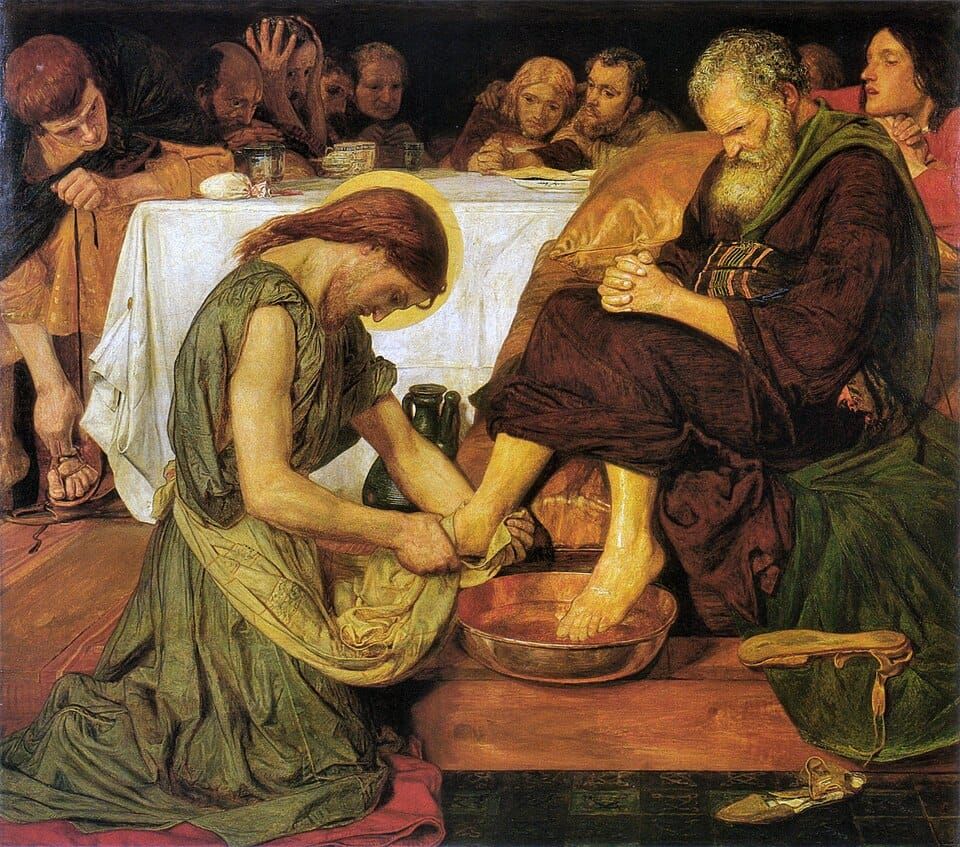
Nor does such humility diminish the soul; it restores the soul to its true dignity. St. Leo the Great, whose memory the Church keeps today, bade every believer, in words the Catechism has made its own, "Christian, recognize your dignity" — and the dignity of which he speaks is that of a child in the Father's house, not of a hireling bargaining at the gate. The servant who asks nothing finds that he is given everything. For the same Lord who bids him put on the apron has promised elsewhere to gird Himself and to serve His faithful ones at table. The servant emptied of every claim is the very one whom Love delights to fill.
Lord Jesus, who girded Yourself to serve, teach me to labor without reckoning and to serve without seeking wages. Uproot within me every secret claim upon Your gifts, and let me find my joy in having done what love required. Crown in me, at the last, only what You Yourself have given. Through Christ our Lord. Amen.
Sources & References
- "Put on your apron and wait on me while I eat and drink." — Luke 17:8 (Lectionary for Mass, USCCB, Lect. 492)
- "We are unprofitable servants; we have done what we were obliged to do." — Luke 17:10
- "the grace of God has appeared, saving all and training us to reject godless ways and worldly desires and to live temperately, justly, and devoutly in this age." — Titus 2:11-12
- "Trust in the LORD and do good." — Psalm 37:3
- The Lord who girds Himself and serves His faithful at table — allusion to Luke 12:37
- "With regard to God, there is no strict right to any merit on the part of man." — Catechism of the Catholic Church, 2007
- "The charity of Christ is the source in us of all our merits before God." — Catechism of the Catholic Church, 2011
- "Christian, recognize your dignity" — St. Leo the Great, Sermon 21 on the Nativity of the Lord, 3; quoted in Catechism of the Catholic Church, 1691
- "If, then, your good merits are God's gifts, God does not crown your merits as your merits, but as His own gifts." — St. Augustine, On Grace and Free Will, ch. 15 (6, 15)
- "we are not his creditors but are always indebted to him, because we owe him everything since everything is a gift from him." — Pope Benedict XVI, Homily, Pastoral Visit to Palermo, 3 October 2010 (as presented in Vatican News "Word of the Day" for Luke 17:7-10)
El delantal del siervo y la mesa del Señor
📖 Sagrada Escritura Diaria
Martes, 10 de noviembre de 2026 — Memoria de San León Magno, Papa y doctor de la Iglesia
Lecturas: Tito 2, 1-8. 11-14 • Salmo 36, 3-4. 18 y 23. 27 y 29 • Lucas 17, 7-10
Hay en el Evangelio de hoy una figura en la que el alma tarda en reconocerse: el siervo que vuelve al atardecer de labrar la tierra o de pastorear el rebaño, cubierto aún del polvo del campo, y a quien no se le dice que se siente, sino que sirva: «Prepárame de comer y disponte a servirme». La escena es sencilla, casi severa, y nuestro Señor extrae de ella una conclusión que al principio parece herir más que consolar: «No somos más que siervos; sólo hemos hecho lo que teníamos que hacer». Pero la severidad está sólo en la superficie. Debajo de ella hay una liberación, porque esta palabra libra al alma de una carga que ha llevado durante tanto tiempo que ya ha olvidado que es una carga.
Esa carga es la costumbre de llevar cuentas con Dios. Entra en silencio, y sobre todo en quienes trabajan mucho: el alma que ha orado con fidelidad, que ha dado con generosidad y que ha cumplido sus deberes sin queja comienza, casi sin advertirlo, a calcular lo que se le debe. Espera el consuelo como un salario y la paz como un pago, y cuando éstos se demoran se vuelve resentida, como si el Cielo hubiera faltado a una deuda. La Iglesia responde a esta disposición con sobria claridad: «Frente a Dios no hay, en el sentido de un derecho estricto, mérito por parte del hombre». El Papa Benedicto XVI, meditando este mismo pasaje, lo expresó con sencillez: «no somos acreedores frente a él, sino que somos siempre deudores, porque a él le debemos todo, porque todo es un don suyo».
No se trata de una doctrina de desaliento. San Pablo, al escribir a Tito, no se limita a enumerar los sobrios deberes de un hogar cristiano —la sobriedad de los ancianos, la dignidad de las ancianas, el dominio de sí en los jóvenes, la autenticidad de quien enseña— como si fueran tareas que se cumplen a cambio de una recompensa. Los arraiga todos en algo anterior: «la gracia de Dios se ha manifestado para salvar a todos los hombres y nos ha enseñado a renunciar a la vida sin religión y a los deseos mundanos, para que vivamos, ya desde ahora, de una manera sobria, justa y fiel a Dios». El orden lo es todo. Primero viene la gracia; la vida fiel le sigue como su fruto. El siervo no gana la casa con su trabajo; trabaja porque ya pertenece a ella.
Aquí san Agustín, que conocía bien el sutil orgullo de los fervorosos, ofrece la palabra decisiva: «Si, pues, tus buenos méritos son dones de Dios, no corona Dios tus méritos como méritos tuyos, sino como dones suyos». El Catecismo recoge la misma verdad en una sola línea: «La caridad de Cristo es en nosotros la fuente de todos nuestros méritos». Todo el bien que el alma ha hecho le fue dado primero; aun su disposición a servir fue gracia antes de ser obra. Reclamarlo como salario sería como si un espejo exigiera gratitud por la luz que refleja.
La lección concreta, entonces, es ésta: cumplir el deber de cada día —la fidelidad que nadie ve, la palabra paciente en el hogar, la tarea ordinaria bien acabada— y cumplirlo sin libro de cuentas. Que el alma se niegue a sumar sus sacrificios, a medir su valor frente al de los demás o a entristecerse cuando su servicio no recibe agradecimiento. «Pon tu esperanza en Dios, practica el bien», dice el salmista; la esperanza y la obra van juntas, y ninguna de las dos lleva cuentas.
Tampoco esta humildad empequeñece al alma; la devuelve a su verdadera dignidad. San León Magno, cuya memoria celebra hoy la Iglesia, exhortaba a todo creyente, con palabras que el Catecismo ha hecho suyas: «Cristiano, reconoce tu dignidad». Y la dignidad de la que habla es la de un hijo en la casa del Padre, no la de un jornalero que regatea a la puerta. El siervo que nada pide descubre que todo le es dado. Porque el mismo Señor que le manda ceñirse para servir ha prometido en otro lugar ceñirse Él mismo y servir a sus fieles a la mesa. El siervo vaciado de todo reclamo es precisamente aquel a quien el Amor se complace en colmar.
Señor Jesús, que te ceñiste para servir, enséñame a trabajar sin hacer cuentas y a servir sin buscar salario. Arranca dentro de mí todo secreto reclamo sobre tus dones, y haz que encuentre mi alegría en haber hecho lo que el amor pedía. Corona en mí, al final, sólo lo que Tú mismo me has dado. Por Jesucristo nuestro Señor. Amén.
Fuentes y referencias
- «Prepárame de comer y disponte a servirme» — Lucas 17, 8 (Leccionario, USCCB en español)
- «No somos más que siervos; sólo hemos hecho lo que teníamos que hacer» — Lucas 17, 10
- «la gracia de Dios se ha manifestado para salvar a todos los hombres y nos ha enseñado a renunciar a la vida sin religión y a los deseos mundanos, para que vivamos, ya desde ahora, de una manera sobria, justa y fiel a Dios» — Tito 2, 11-12
- «Pon tu esperanza en Dios, practica el bien» — Salmo 36 (37), 3
- El Señor que se ciñe y sirve a sus fieles a la mesa — alusión a Lucas 12, 37
- «Frente a Dios no hay, en el sentido de un derecho estricto, mérito por parte del hombre» — Catecismo de la Iglesia Católica, 2007
- «La caridad de Cristo es en nosotros la fuente de todos nuestros méritos» — Catecismo de la Iglesia Católica, 2011
- «Cristiano, reconoce tu dignidad» — San León Magno, Sermón 21 en la Natividad del Señor, 3; citado en el Catecismo de la Iglesia Católica, 1691
- «Si, pues, tus buenos méritos son dones de Dios, no corona Dios tus méritos como méritos tuyos, sino como dones suyos» — San Agustín, De la gracia y del libre albedrío, cap. 15 (6, 15)
- «no somos acreedores frente a él, sino que somos siempre deudores, porque a él le debemos todo, porque todo es un don suyo» — Papa Benedicto XVI, Homilía, Visita pastoral a Palermo, 3 de octubre de 2010 (según Vatican News, «Evangelio y palabra del día», Lucas 17, 7-10)