
📖 Daily Scripture
Tuesday, July 21, 2026 — Tuesday of the Sixteenth Week in Ordinary Time
Readings: Micah 7:14-15, 18-20 • Psalm 85:2-4, 5-6, 7-8 • Matthew 12:46-50
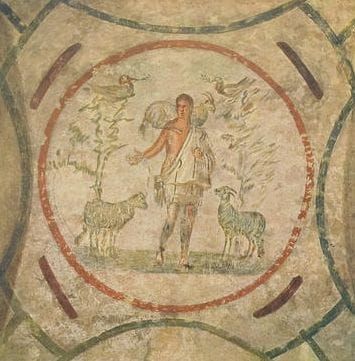
The prophet Micah closes his book not with an argument but with a prayer: "Shepherd your people with your staff, the flock of your inheritance." The soul that has strayed far into the woodland does not, in the end, reason its way home; it asks to be led. And no sooner has the prophet made his petition than he is overtaken by astonishment at the One to whom he prays: "Who is there like you, the God who removes guilt and pardons sin?" — a God who "does not persist in anger forever, but delights rather in clemency," who "will cast into the depths of the sea all our sins."
Let the soul dwell a while upon that image. Not the shallows, where a thing thrown in may wash back with the next tide, but the depths, where what is sunk is sunk forever. When God forgives, He does not merely set our offenses aside in some ledger, to be consulted again in a colder hour; He drowns them. It is we, and not He, who row back out over that dark water, peering down after what He has buried. The Psalmist teaches the soul a better occupation: "Lord, show us your mercy and love." The remembrance of sin has one lawful use only, and that is to enlarge our wonder at the mercy which took it away.
Here is the very heart of revelation, as the Church teaches: "The Gospel is the revelation in Jesus Christ of God's mercy to sinners." Mercy is not one attribute among many, which God exercises on occasion as a king signs pardons; it is the innermost disposition of His heart toward the guilty, and He delights in it.
But mercy is not given merely that the soul should be relieved; it is given that the soul should be made kin. In the Gospel, while His mother and His brothers stand outside, our Lord stretches His hand toward His disciples and asks, "Who is my mother? Who are my brothers?" He does not slight her who bore Him — far from it; Augustine says that Mary was more blessed in receiving the faith of Christ than in conceiving the flesh of Christ, and in that first blessedness she is first of all. Rather He throws open the household: "Whoever does the will of my heavenly Father is my brother, and sister, and mother." Pope Francis, meditating on this word, observed that the strongest bond for the Christian is no longer that of blood, but of the love of Christ.
Here, then, is the concrete lesson the soul must carry from this day. Pardon is the door, but the house is obedience. "Becoming a disciple of Jesus means accepting the invitation to belong to God's family, to live in conformity with His way of life." The forgiven soul that goes on living as before has stopped upon the threshold; kinship with Christ is measured not by feeling, nor even by hearing, but by doing the will of the Father — today, in the small matter one has been avoiding: the pardon withheld from another, the duty deferred, the truth left unspoken. For as Augustine also says, God who created us without us did not will to save us without us; the mercy that asks nothing beforehand asks everything after.
Nor does the soul enter this family alone. Cyprian wrote that one cannot have God for his Father who has not the Church for his mother; the household of God has a table, and it is the altar. There the Shepherd still gathers His flock, and there the soul may believe, against every whisper of the past, that its sins lie already in the depths of the sea. What remains is not fear but gratitude, and the quiet resolve of a child at home: to do the will of the Father, and so to be found among the brothers, the sisters, the mother of the Lord — held fast forever in the love of God.
Lord Jesus, good Shepherd of my soul, teach me to leave in the depths what Your mercy has buried there, and to seek Your face and not my guilt. Work within me a heart that does the will of the Father, promptly and with love, that I may live not at the threshold of Your house but at its table. Through Christ our Lord. Amen.
Sources & References
- "Shepherd your people with your staff…", "Who is there like you, the God who removes guilt and pardons sin?", "delights rather in clemency", "will cast into the depths of the sea all our sins" — Micah 7:14, 18-19 (First Reading)
- "Lord, show us your mercy and love." — Psalm 85:8 (Responsorial Psalm refrain)
- "Who is my mother? Who are my brothers?", "Whoever does the will of my heavenly Father is my brother, and sister, and mother." — Matthew 12:48, 50 (Gospel)
- "The Gospel is the revelation in Jesus Christ of God's mercy to sinners." — Catechism of the Catholic Church, no. 1846
- "Becoming a disciple of Jesus means accepting the invitation to belong to God's family, to live in conformity with His way of life." — Catechism of the Catholic Church, no. 2233
- "God created us without us: but he did not will to save us without us." — St. Augustine, Sermo 169, as quoted in Catechism of the Catholic Church, no. 1847
- Mary "more blessed in receiving the faith of Christ than in conceiving the flesh of Christ" — St. Augustine, De sancta virginitate, 3
- One cannot have God for Father without the Church for mother — St. Cyprian of Carthage, On the Unity of the Catholic Church (De unitate Ecclesiae), 6
- "The strongest, most important bond for us Christians is no longer that of blood, but of the love of Christ." — Pope Francis, Address to the pilgrimage of the Diocese of Asti, 5 May 2023, presented in Vatican News "Word of the Day," 21 July 2026
- Daily readings: USCCB, bible.usccb.org, July 21, 2026
El Pastor que arroja nuestros pecados al mar
📖 Sagrada Escritura Diaria
Martes 21 de julio de 2026 — Martes de la XVI semana del Tiempo ordinario
Lecturas: Miqueas 7, 14-15. 18-20 • Salmo 84, 2-4. 5-6. 7-8 • Mateo 12, 46-50
El profeta Miqueas no cierra su libro con un argumento, sino con una oración: "Pastorea a tu pueblo con tu cayado, a las ovejas de tu heredad". El alma que se ha extraviado en la maleza no vuelve a casa, al fin, a fuerza de razones; pide ser conducida. Y apenas ha pronunciado su súplica, el profeta queda sobrecogido de asombro ante Aquel a quien reza: "¿Qué Dios hay como tú, que quitas la iniquidad y pasas por alto la rebeldía?" — un Dios que "no mantendrá por siempre su cólera, pues se complace en ser misericordioso", que "arrojará a lo hondo del mar nuestros delitos".
Deténgase el alma un momento en esa imagen. No la orilla, donde lo arrojado puede volver con la próxima marea, sino lo hondo, donde lo que se hunde queda hundido para siempre. Cuando Dios perdona, no se limita a apartar nuestras ofensas en algún registro, para consultarlas de nuevo en una hora más fría: las ahoga. Somos nosotros, y no Él, quienes volvemos a remar sobre esa agua oscura, escrutando lo que Él ha sepultado. El salmista enseña al alma una ocupación mejor: "Muéstranos, Señor, tu misericordia". El recuerdo del pecado tiene un solo uso legítimo: agrandar nuestro asombro ante la misericordia que lo borró.
Aquí está el corazón mismo de la revelación, como enseña la Iglesia: "El Evangelio es la revelación, en Jesucristo, de la misericordia de Dios con los pecadores". La misericordia no es un atributo entre muchos, que Dios ejerza de cuando en cuando como un rey firma indultos; es la disposición más íntima de su corazón hacia el culpable, y en ella se complace.
Pero la misericordia no se concede solo para que el alma quede aliviada; se concede para hacerla de la familia. En el Evangelio, mientras su madre y sus parientes esperan fuera, el Señor extiende la mano hacia sus discípulos y pregunta: "¿Quién es mi madre y quiénes son mis hermanos?". No desdeña a la que lo llevó en su seno — lejos de ello; dice San Agustín que María fue más bienaventurada al recibir la fe de Cristo que al concebir la carne de Cristo, y en esa primera bienaventuranza ella es la primera de todos. Lo que hace el Señor es abrir de par en par la casa: "Todo el que cumple la voluntad de mi Padre, que está en los cielos, ése es mi hermano, mi hermana y mi madre". El Papa Francisco, meditando esta palabra, observó que el vínculo más fuerte para el cristiano ya no es el de la sangre, sino el del amor de Cristo.
He aquí, pues, la lección concreta que el alma debe llevarse de este día. El perdón es la puerta, pero la casa es la obediencia. "Hacerse discípulo de Jesús es aceptar la invitación a pertenecer a la familia de Dios, a vivir en conformidad con su manera de vivir". El alma perdonada que sigue viviendo como antes se ha quedado en el umbral; el parentesco con Cristo no se mide por el sentimiento, ni siquiera por el oír, sino por el cumplir la voluntad del Padre — hoy, en aquello pequeño que venimos evitando: el perdón negado a otro, el deber aplazado, la verdad callada. Porque, como dice también San Agustín, Dios, que te ha creado sin ti, no te salvará sin ti; la misericordia que nada exige de antemano lo pide todo después.
Y el alma no entra sola en esta familia. Escribió San Cipriano que no puede tener a Dios por Padre quien no tiene a la Iglesia por Madre; la casa de Dios tiene una mesa, y esa mesa es el altar. Allí el Pastor sigue reuniendo a su rebaño, y allí el alma puede creer, contra todo susurro del pasado, que sus pecados yacen ya en lo hondo del mar. Lo que queda no es temor sino gratitud, y la serena resolución de un hijo en su casa: cumplir la voluntad del Padre, y ser hallado así entre los hermanos, las hermanas, la madre del Señor — sostenido para siempre en el amor de Dios.
Señor Jesús, buen Pastor de mi alma, enséñame a dejar en lo hondo lo que tu misericordia ha sepultado allí, y a buscar tu rostro y no mi culpa. Obra en mí un corazón que cumpla la voluntad del Padre, con prontitud y con amor, para que no viva en el umbral de tu casa sino en su mesa. Por Jesucristo nuestro Señor. Amén.
Fuentes y referencias
- "Pastorea a tu pueblo con tu cayado…", "¿Qué Dios hay como tú, que quitas la iniquidad…?", "te complaces en ser misericordioso", "arrojarás a lo hondo del mar nuestros delitos" — Miqueas 7, 14. 18-19 (Primera lectura)
- "Muéstranos, Señor, tu misericordia." — Salmo 84, 8 (estribillo del Salmo responsorial; numeración del Leccionario mexicano)
- "¿Quién es mi madre y quiénes son mis hermanos?", "Todo el que cumple la voluntad de mi Padre… ése es mi hermano, mi hermana y mi madre." — Mateo 12, 48. 50 (Evangelio)
- "El Evangelio es la revelación, en Jesucristo, de la misericordia de Dios con los pecadores." — Catecismo de la Iglesia Católica, n. 1846
- "Hacerse discípulo de Jesús es aceptar la invitación a pertenecer a la familia de Dios, a vivir en conformidad con su manera de vivir." — Catecismo de la Iglesia Católica, n. 2233
- "Dios, que te ha creado sin ti, no te salvará sin ti." — San Agustín, Sermo 169, citado en el Catecismo de la Iglesia Católica, n. 1847
- María "más bienaventurada al recibir la fe de Cristo que al concebir la carne de Cristo" — San Agustín, De sancta virginitate, 3
- No puede tener a Dios por Padre quien no tiene a la Iglesia por Madre — San Cipriano de Cartago, Sobre la unidad de la Iglesia (De unitate Ecclesiae), 6
- "El vínculo más fuerte e importante para nosotros los cristianos ya no es el de la sangre, sino el del amor de Cristo." — Papa Francisco, Discurso a la peregrinación de la diócesis de Asti, 5 de mayo de 2023, presentado en Vatican News, "La Palabra del día", 21 de julio de 2026
- Lecturas diarias: USCCB, bible.usccb.org/es, 21 de julio de 2026