
📖 Daily Scripture
Thursday, November 5, 2026 — Thursday of the Thirty-first Week in Ordinary Time
Readings: Philippians 3:3-8a • Psalm 105:2-3, 4-5, 6-7 • Luke 15:1-10
There is a kind of poverty which the world does not recognize, because it wears the garments of success. Saint Paul knew it well. He could set out his credentials with the exactness of a man reading from a ledger — circumcised on the eighth day, of the tribe of Benjamin, a Pharisee in observance of the law, in righteousness blameless — and yet, having once beheld the face of Christ, he could write without regret that “whatever gains I had, these I have come to consider a loss because of Christ.” It is no small thing for a soul to close its own book of accounts. Most souls keep such a book quietly, even devoutly; they enter their prayers, their fidelities and their sacrifices on the side of credit, and find a secret consolation in the balance. The Apostle does not despise the law he kept, but he has discovered a good so far above it that every other possession, weighed against “the supreme good of knowing Christ Jesus my Lord,” falls to nothing.
The Gospel shows what becomes of the soul that will not close its ledger. The Pharisees and scribes stand at the edge of the crowd, and their complaint is, in its way, an exact description of the Gospel itself: “This man welcomes sinners and eats with them.” They saw the truth and were offended by it. The Church has never ceased to marvel at that table; as the Catechism observes, “Jesus receives sinners at his table, a gesture that expresses in an astonishing way both God's forgiveness and the return to the bosom of the People of God.” What scandalized the righteous was not that the sinner was lost, but that he was sought — and that the seeking was so costly, so eager, and so unashamed of its joy.
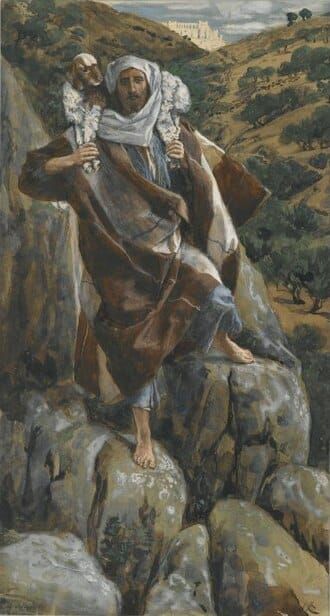
Consider the shepherd. He leaves the ninety-nine in the desert and goes after the one until he finds it, and then he “sets it on his shoulders with great joy.” Consider the woman who will “light a lamp and sweep the house, searching carefully” for a single coin. Neither waits for the lost to return of its own power; the sheep does not find the shepherd, nor the coin the lamp. So it is with the soul. “Conversion is first of all a work of the grace of God who makes our hearts return to him,” the Church teaches, and “it is in discovering the greatness of God's love that our heart is shaken by the horror and weight of sin.” Repentance, then, is not first a labor of self-improvement but a consent to being found. Saint Clement of Rome, writing while the memory of the Apostles was still fresh, turns the soul's gaze in the right direction: “Let us fix our eyes on Christ's blood and understand how precious it is to his Father, for, poured out for our salvation it has brought to the whole world the grace of repentance.”
Here lies the lesson, and it is a searching one. The soul must ask itself, with candor, whether it stands among the ninety-nine who imagine they have “no need of repentance,” and whether it murmurs, however softly, when mercy is shown to another. Resentment at grace given elsewhere is the surest sign that one has begun to put confidence in the flesh. The remedy is twofold: to count one's own merits as loss, bringing them together with one's sins to the shepherd's shoulders in the sacrament of Penance; and to rejoice without reserve whenever another is carried home. Pope Francis once observed that “conversion, changing the heart, is a process, a process that purifies us from moral encrustations.” Those encrustations are most often the small pieties that the soul has quietly turned into wages.
And yet the end of all this is not severity but gladness. The Psalmist sings, “rejoice, O hearts that seek the LORD!” and the Catechism, taking up that very verse, adds that God “never ceases to call every man to seek him, so as to find life and happiness.” Saint Augustine confessed the same truth from within his own long wandering: “you have made us for yourself, and our heart is restless until it rests in you.” The restless heart is not a curse but a summons. It is the shepherd's voice carried across the desert, and the soul that answers it — emptied of its boasting, content to be carried — will find that heaven itself has been waiting all along to rejoice.
Lord Jesus, Good Shepherd, teach me to count as loss whatever I have trusted in apart from you, and never let me murmur at the mercy you show to another. When I wander, seek me; when I am found, carry me home; and kindle within me a share of heaven's joy over every soul that returns. Through Christ our Lord. Amen.
Sources & References
- “whatever gains I had, these I have come to consider a loss because of Christ”; “the supreme good of knowing Christ Jesus my Lord” — Philippians 3:7-8 (First Reading, Philippians 3:3-8a; credentials paraphrased from 3:5-6)
- “This man welcomes sinners and eats with them”; “sets it on his shoulders with great joy”; “light a lamp and sweep the house, searching carefully”; “no need of repentance” — Luke 15:2, 5, 8, 7 (Gospel, Luke 15:1-10)
- “rejoice, O hearts that seek the LORD!” — Psalm 105:3 (Responsorial Psalm, Psalm 105:2-3, 4-5, 6-7)
- “Jesus receives sinners at his table, a gesture that expresses in an astonishing way both God's forgiveness and the return to the bosom of the People of God” — Catechism of the Catholic Church, 1443
- “Conversion is first of all a work of the grace of God who makes our hearts return to him”; “it is in discovering the greatness of God's love that our heart is shaken by the horror and weight of sin” — Catechism of the Catholic Church, 1432
- “Let us fix our eyes on Christ's blood…the grace of repentance” — St. Clement of Rome, Letter to the Corinthians 7, 4 (as quoted in CCC 1432)
- “never ceases to call every man to seek him, so as to find life and happiness” — Catechism of the Catholic Church, 30 (citing Psalm 105:3)
- “you have made us for yourself, and our heart is restless until it rests in you” — St. Augustine, Confessions I, 1, 1 (as quoted in CCC 30)
- “conversion, changing the heart, is a process, a process that purifies us from moral encrustations” — Pope Francis, Angelus, 27 September 2020 (featured by Vatican News “Word of the Day” for this Gospel; today's 5 November 2026 entry was not yet published)
- Readings: USCCB Daily Readings, November 5, 2026 (Lectionary 488)
El Pastor que busca: sobre tenerlo todo por pérdida
📖 Sagrada Escritura Diaria
Jueves, 5 de noviembre de 2026 — Jueves de la XXXI semana del Tiempo ordinario
Lecturas: Filipenses 3, 3-8 • Salmo 104, 2-3. 4-5. 6-7 • Lucas 15, 1-10
Hay una clase de pobreza que el mundo no reconoce, porque se viste con las galas del éxito. San Pablo la conocía bien. Podía enumerar sus títulos con la exactitud de quien lee un libro de cuentas — circuncidado al octavo día, de la tribu de Benjamín, fariseo en la interpretación de la ley, intachable en cuanto a la rectitud que da su cumplimiento — y sin embargo, después de haber contemplado una vez el rostro de Cristo, pudo escribir sin pesar: “todo lo que era valioso para mí, lo consideré sin valor a causa de Cristo”. No es cosa pequeña que un alma cierre su propio libro de cuentas. Muchas almas llevan ese libro en silencio, incluso con devoción; anotan sus oraciones, sus fidelidades y sus sacrificios en la columna del haber, y hallan en el saldo un consuelo secreto. El Apóstol no desprecia la ley que guardó, pero ha descubierto un bien tan por encima de ella que toda otra posesión, puesta en la balanza frente a “el bien supremo, que consiste en conocer a Cristo Jesús, mi Señor”, queda reducida a nada.
El Evangelio muestra lo que sucede al alma que no quiere cerrar su libro de cuentas. Los fariseos y los escribas permanecen al margen de la multitud, y su murmuración es, a su manera, una descripción exacta del Evangelio mismo: “Este recibe a los pecadores y come con ellos”. Vieron la verdad y se escandalizaron de ella. La Iglesia nunca ha dejado de asombrarse ante esa mesa; como observa el Catecismo, “Jesús admite a los pecadores a su mesa, más aún, Él mismo se sienta a su mesa, gesto que expresa de manera conmovedora, a la vez, el perdón de Dios y el retorno al seno del pueblo de Dios”. Lo que escandalizaba a los justos no era que el pecador estuviera perdido, sino que fuera buscado — y que esa búsqueda fuera tan costosa, tan ansiosa y tan libre de vergüenza en su alegría.
Considérese al pastor. Deja las noventa y nueve en el campo y va en busca de la que se le perdió hasta encontrarla, y entonces “la carga sobre sus hombros, lleno de alegría”. Considérese a la mujer que “enciende luego una lámpara y barre la casa y la busca con cuidado” por una sola moneda. Ninguno de los dos espera que lo perdido regrese por su propio poder; la oveja no encuentra al pastor, ni la moneda a la lámpara. Así sucede con el alma. “La conversión es primeramente una obra de la gracia de Dios que hace volver a Él nuestros corazones”, enseña la Iglesia, y “al descubrir la grandeza del amor de Dios, nuestro corazón se estremece ante el horror y el peso del pecado”. El arrepentimiento, pues, no es ante todo una tarea de perfeccionamiento propio, sino un consentir en ser encontrado. San Clemente Romano, escribiendo cuando la memoria de los Apóstoles estaba aún fresca, orienta la mirada del alma en la dirección debida: “Tengamos los ojos fijos en la sangre de Cristo y comprendamos cuán preciosa es a su Padre, porque, habiendo sido derramada para nuestra salvación, ha conseguido para el mundo entero la gracia del arrepentimiento”.
Aquí está la lección, y es una lección que escudriña. El alma debe preguntarse, con sinceridad, si se cuenta entre los noventa y nueve que imaginan “que no necesitan arrepentirse”, y si murmura, aunque sea en voz baja, cuando la misericordia se muestra a otro. El resentimiento ante la gracia concedida a otros es la señal más segura de que se ha comenzado a confiar en motivos humanos. El remedio es doble: tener por pérdida los propios méritos, llevándolos junto con los propios pecados a los hombros del pastor en el sacramento de la Penitencia; y alegrarse sin reserva cada vez que otro es llevado a casa. El Papa Francisco observó en una ocasión que “la conversión, cambiar el corazón, es un proceso, un proceso que nos purifica de las incrustaciones morales”. Esas incrustaciones son, con frecuencia, las pequeñas piedades que el alma ha convertido en silencio en un salario.
Y, sin embargo, el término de todo esto no es la severidad, sino el gozo. El salmista canta: “siéntase feliz el que lo busca”, y el Catecismo, recogiendo ese mismo verso — “Alégrese el corazón de los que buscan a Dios” —, añade que Dios “no cesa de llamar a todo hombre a buscarle para que viva y encuentre la dicha”. San Agustín confesó esa misma verdad desde dentro de su largo extravío: “nos has hecho para ti y nuestro corazón está inquieto mientras no descansa en ti”. El corazón inquieto no es una maldición, sino una llamada. Es la voz del pastor que atraviesa el desierto, y el alma que le responde — vaciada de su jactancia, contenta de ser llevada — descubrirá que el cielo mismo la esperaba desde siempre para alegrarse.
Señor Jesús, Buen Pastor, enséñame a tener por pérdida todo aquello en que he confiado fuera de ti, y no permitas que murmure nunca de la misericordia que muestras a otro. Cuando me extravíe, búscame; cuando me encuentres, llévame a casa; y enciende dentro de mí una parte de la alegría del cielo por cada alma que vuelve. Por Jesucristo nuestro Señor. Amén.
Fuentes y referencias
- “todo lo que era valioso para mí, lo consideré sin valor a causa de Cristo”; “el bien supremo, que consiste en conocer a Cristo Jesús, mi Señor” — Filipenses 3, 7-8 (Primera lectura, Filipenses 3, 3-8; los títulos de Pablo se parafrasean de 3, 5-6)
- “Este recibe a los pecadores y come con ellos”; “la carga sobre sus hombros, lleno de alegría”; “enciende luego una lámpara y barre la casa y la busca con cuidado”; “que no necesitan arrepentirse” — Lucas 15, 2. 5. 8. 7 (Evangelio, Lucas 15, 1-10)
- “siéntase feliz el que lo busca” — Salmo 104, 3 (Salmo responsorial, Salmo 104, 2-3. 4-5. 6-7, numeración del Leccionario)
- “Jesús admite a los pecadores a su mesa, más aún, Él mismo se sienta a su mesa, gesto que expresa de manera conmovedora, a la vez, el perdón de Dios y el retorno al seno del pueblo de Dios” — Catecismo de la Iglesia Católica, 1443
- “La conversión es primeramente una obra de la gracia de Dios que hace volver a Él nuestros corazones”; “al descubrir la grandeza del amor de Dios, nuestro corazón se estremece ante el horror y el peso del pecado” — Catecismo de la Iglesia Católica, 1432
- “Tengamos los ojos fijos en la sangre de Cristo…la gracia del arrepentimiento” — San Clemente Romano, Carta a los Corintios 7, 4 (citado en el Catecismo, 1432)
- “Alégrese el corazón de los que buscan a Dios”; “no cesa de llamar a todo hombre a buscarle para que viva y encuentre la dicha” — Catecismo de la Iglesia Católica, 30 (citando Sal 105, 3)
- “nos has hecho para ti y nuestro corazón está inquieto mientras no descansa en ti” — San Agustín, Confesiones 1, 1, 1 (citado en el Catecismo, 30)
- “la conversión, cambiar el corazón, es un proceso, un proceso que nos purifica de las incrustaciones morales” — Papa Francisco, Ángelus, 27 de septiembre de 2020 (presentado por Vatican News, “Evangelio de hoy”, para este Evangelio; la entrada del 5 de noviembre de 2026 aún no estaba publicada)
- Lecturas: USCCB, Lecturas de hoy, 5 de noviembre de 2026 (Leccionario 488)