
📖 Daily Scripture
Monday, October 12, 2026 — Monday of the Twenty-eighth Week in Ordinary Time
Readings: Galatians 4:22-24, 26-27, 31–5:1 • Psalm 113:1b-2, 3-4, 5a and 6-7 • Luke 11:29-32
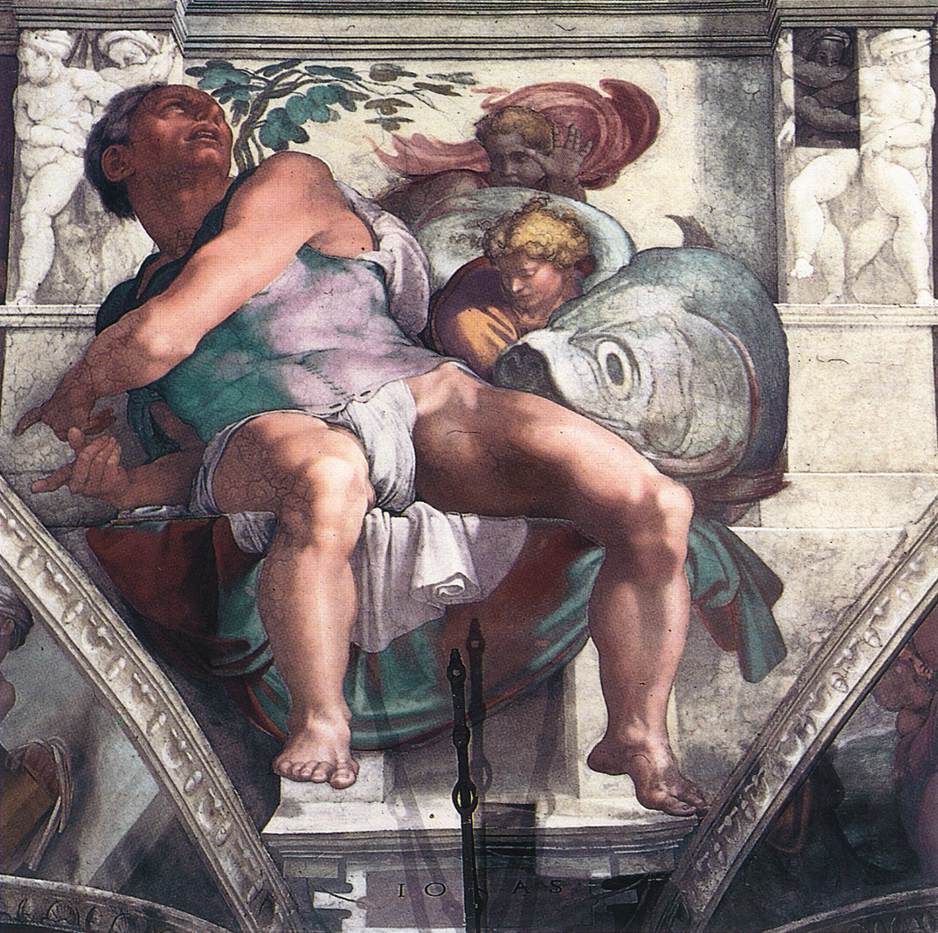
There is a restlessness in the soul which mistakes itself for seriousness. It will not yield until it has been given one more assurance, one more proof, one further light upon a road already sufficiently lit; and it calls this caution, when very often it is only delay dressed in the garments of prudence. Such was the temper of the crowd that pressed about our Lord, eager and curious and unmoved, and to them He spoke with a severity that is itself a kind of mercy: "This generation is an evil generation; it seeks a sign, but no sign will be given it, except the sign of Jonah."
It is worth dwelling upon those whom He sets against that generation. The men of Nineveh were strangers to the covenant; they had a reluctant prophet and a handful of words, and yet they turned. The queen of the south came from the ends of the earth to hear the wisdom of a mortal king. They had little, and they answered; the soul that hears the Gospel has been given "something greater than Jonah," and too often answers nothing. Here lies the hidden lesson of the passage: the demand for signs is seldom a want of evidence. It is more commonly a want of willingness, a reluctance to act upon the light already received, because to act upon it would cost the soul some cherished attachment, some comfortable postponement, some image of itself it would rather keep.
St. Paul, writing to the Galatians, sets before the soul two sons and two mothers, the child of the slave and the child of the free woman, and he says plainly to which the Christian belongs: "the Jerusalem above is freeborn, and she is our mother." Then comes the charge: "For freedom Christ set us free; so stand firm and do not submit again to the yoke of slavery." The perpetual seeker after signs is, without knowing it, a kind of slave, bound not by chains but by his own hesitation, by a self that will not surrender. Yet the sign he asks for has already been given. Jonah lay three days in the depths and was restored to the light; so the Son of Man lay in the tomb and rose. "By his glorious Cross," the Church teaches, "Christ has won salvation for all men. He redeemed them from the sin that held them in bondage." Pope Francis gathered the whole matter into a single line: "The sign of Jonah is God's mercy in Jesus Christ, who died and rose again for us, for our salvation."
Freedom, then, is not the indefinite suspension of choice, the power to stand forever at the crossroads weighing paths one never takes. The Catechism speaks with a quiet clarity: "The more one does what is good, the freer one becomes. There is no true freedom except in the service of what is good and just." The soul that waits for more light grows no freer by waiting; the soul that walks by the light it has finds the road opening beneath its feet. St. Augustine said it more boldly still: "Love, and do what you will." He did not mean license, but a heart so ordered by charity that what it wills and what God wills have become one.
The lesson for this day is therefore concrete. Let the soul name, in the quiet of its own conscience, one thing it has long known it ought to do or to relinquish — a reconciliation deferred, a prayer neglected, a habit indulged, a duty quietly evaded — and let it cease to ask for further signs concerning it. This is what the Church means by repentance: "a radical reorientation of our whole life, a return, a conversion to God with all our heart." Nineveh did not wait for a second prophet. The verse sung before today's Gospel gathers it all into a single word of time: "If today you hear his voice, harden not your hearts." Not tomorrow, when the soul imagines it will be readier, but today.
Nor is there any cause for fear in this. The God who calls is the God of the psalmist, who looks down from above the heavens and raises the lowly from the dust. The sign has not been withheld; it has been given in the fullest measure, in wounds and in an empty tomb. The Jerusalem above is free, and she is the soul's mother, and her gates stand open. Whoever turns toward her, however late and however burdened, will find at the threshold not a stern accuser but a love that has been watching the road all along.
Father of mercies, You have given me the sign of Jonah in the death and rising of Your Son, and still I have asked for more. Break within me the bondage of my hesitation, and teach me to act today upon the light You have already given. Make me free with the freedom of Your children, that I may love You and do Your will. Through Christ our Lord. Amen.
Sources & References
- "This generation is an evil generation; it seeks a sign, but no sign will be given it, except the sign of Jonah." — Luke 11:29
- The men of Nineveh, the queen of the south; "something greater than Jonah" — Luke 11:31-32
- Two sons, of the slave woman and of the free woman — Galatians 4:22-24
- "the Jerusalem above is freeborn, and she is our mother" — Galatians 4:26
- "For freedom Christ set us free; so stand firm and do not submit again to the yoke of slavery." — Galatians 5:1
- "By his glorious Cross Christ has won salvation for all men. He redeemed them from the sin that held them in bondage." — Catechism of the Catholic Church, 1741
- "The sign of Jonah is God's mercy in Jesus Christ, who died and rose again for us, for our salvation." — Pope Francis, Morning Meditation at Casa Santa Marta, "The Jonah syndrome," 14 October 2013; presented in Vatican News, Word of the Day, 12 October 2026
- "The more one does what is good, the freer one becomes. There is no true freedom except in the service of what is good and just." — Catechism of the Catholic Church, 1733
- "Love, and do what you will." — St. Augustine, Homilies on the First Epistle of John (Tractatus in Epistolam Ioannis ad Parthos), 7.8
- "a radical reorientation of our whole life, a return, a conversion to God with all our heart" — Catechism of the Catholic Church, 1431
- "If today you hear his voice, harden not your hearts." — Psalm 95:8 (Alleluia verse)
- The Lord who looks down from on high and raises the lowly from the dust — Psalm 113:6-7 (Responsorial Psalm)
La señal ya concedida
📖 Sagrada Escritura Diaria
Lunes, 12 de octubre de 2026 — Lunes de la XXVIII semana del Tiempo ordinario
Lecturas: Gálatas 4, 22-24. 26-27. 31–5, 1 • Salmo 112, 1-2. 3-4. 5a y 6-7 • Lucas 11, 29-32
Hay en el alma una inquietud que se confunde a sí misma con la seriedad. No cede mientras no se le conceda una seguridad más, una prueba más, una luz más sobre un camino ya suficientemente iluminado; y a esto lo llama cautela, cuando con frecuencia no es sino demora vestida con los ropajes de la prudencia. Tal era el ánimo de la multitud que se apiñaba en torno a nuestro Señor, ávida y curiosa e inconmovible, y a ella le habló con una severidad que es en sí misma una forma de misericordia: "La gente de este tiempo es una gente perversa. Pide una señal, pero no se le dará más señal que la de Jonás".
Conviene detenerse en aquellos a quienes Él contrapone a esa generación. Los hombres de Nínive eran ajenos a la alianza; tuvieron un profeta renuente y un puñado de palabras, y sin embargo se convirtieron. La reina del sur vino desde los últimos rincones de la tierra para escuchar la sabiduría de un rey mortal. Ellos tuvieron poco, y respondieron; al alma que escucha el Evangelio se le ha dado "uno que es más que Jonás", y con demasiada frecuencia no responde nada. Aquí yace la enseñanza escondida del pasaje: la exigencia de señales rara vez es falta de evidencia. Es más bien falta de voluntad, una resistencia a obrar según la luz ya recibida, porque obrar según ella le costaría al alma algún apego querido, alguna cómoda postergación, alguna imagen de sí misma que preferiría conservar.
San Pablo, escribiendo a los gálatas, pone ante el alma dos hijos y dos madres, el hijo de la esclava y el hijo de la libre, y dice claramente a cuál pertenece el cristiano: "la Jerusalén de arriba es libre y ésa es nuestra madre". Luego viene la exhortación: "Cristo nos ha liberado para que seamos libres. Conserven, pues, la libertad y no se sometan de nuevo al yugo de la esclavitud". El que busca señales sin cesar es, sin saberlo, una especie de esclavo, atado no por cadenas sino por su propia vacilación, por un yo que no quiere rendirse. Y, sin embargo, la señal que pide ya ha sido dada. Jonás yació tres días en lo profundo y fue devuelto a la luz; así el Hijo del hombre yació en el sepulcro y resucitó. "Por su Cruz gloriosa", enseña la Iglesia, "Cristo obtuvo la salvación para todos los hombres. Los rescató del pecado que los tenía sometidos a esclavitud". El Papa Francisco recogió todo el misterio al enseñar que el signo de Jonás es "la misericordia de Dios en Jesucristo muerto y resucitado por nosotros, por nuestra salvación".
La libertad, pues, no es la suspensión indefinida de la elección, el poder de permanecer para siempre en la encrucijada sopesando caminos que nunca se emprenden. El Catecismo habla con serena claridad: "En la medida en que el hombre hace más el bien, se va haciendo también más libre. No hay verdadera libertad sino en el servicio del bien y de la justicia". El alma que espera más luz no se hace más libre por esperar; el alma que camina según la luz que tiene descubre que el camino se abre bajo sus pies. San Agustín lo dijo con mayor audacia todavía: "Ama y haz lo que quieras". No quiso decir licencia, sino un corazón tan ordenado por la caridad que lo que él quiere y lo que Dios quiere han llegado a ser una sola cosa.
La enseñanza de este día es, por tanto, concreta. Que el alma nombre, en el silencio de su propia conciencia, una cosa que desde hace mucho sabe que debe hacer o abandonar —una reconciliación aplazada, una oración descuidada, un hábito consentido, un deber discretamente eludido— y que deje de pedir nuevas señales acerca de ella. Esto es lo que la Iglesia entiende por penitencia: "una reorientación radical de toda la vida, un retorno, una conversión a Dios con todo nuestro corazón". Nínive no esperó a un segundo profeta. El versículo que se canta antes del Evangelio de hoy lo resume todo en una sola palabra: "No endurezcan su corazón". No mañana, cuando el alma imagina que estará mejor dispuesta, sino hoy.
Y no hay en esto motivo alguno de temor. El Dios que llama es el Dios del salmista, que se inclina desde lo alto de los cielos y levanta del polvo al desvalido. La señal no ha sido negada; ha sido dada en la medida más plena, en llagas y en un sepulcro vacío. La Jerusalén de arriba es libre, y es la madre del alma, y sus puertas están abiertas. Quien se vuelva hacia ella, por tarde que sea y por cargado que esté, hallará en el umbral no a un acusador severo, sino un amor que ha estado mirando el camino desde siempre.
Padre de misericordia, me has dado la señal de Jonás en la muerte y resurrección de tu Hijo, y aún te he pedido más. Rompe dentro de mí la esclavitud de mi vacilación, y enséñame a obrar hoy según la luz que ya me has dado. Hazme libre con la libertad de tus hijos, para que te ame y cumpla tu voluntad. Por Jesucristo nuestro Señor. Amén.
Fuentes y referencias
- "La gente de este tiempo es una gente perversa. Pide una señal, pero no se le dará más señal que la de Jonás". — Lucas 11, 29
- Los hombres de Nínive, la reina del sur; "uno que es más que Jonás" — Lucas 11, 31-32
- Los dos hijos, de la esclava y de la libre — Gálatas 4, 22-24
- "la Jerusalén de arriba es libre y ésa es nuestra madre" — Gálatas 4, 26
- "Cristo nos ha liberado para que seamos libres. Conserven, pues, la libertad y no se sometan de nuevo al yugo de la esclavitud". — Gálatas 5, 1
- "Por su Cruz gloriosa, Cristo obtuvo la salvación para todos los hombres. Los rescató del pecado que los tenía sometidos a esclavitud". — Catecismo de la Iglesia Católica, 1741
- "la misericordia de Dios en Jesucristo muerto y resucitado por nosotros, por nuestra salvación" — Papa Francisco, Meditación matutina en la Casa Santa Marta, "El síndrome de Jonás", 14 de octubre de 2013 (vatican.va)
- "En la medida en que el hombre hace más el bien, se va haciendo también más libre. No hay verdadera libertad sino en el servicio del bien y de la justicia". — Catecismo de la Iglesia Católica, 1733
- "Ama y haz lo que quieras". — San Agustín, Comentario a la Primera Carta de San Juan (Tractatus in Epistolam Ioannis ad Parthos), 7, 8
- "una reorientación radical de toda la vida, un retorno, una conversión a Dios con todo nuestro corazón" — Catecismo de la Iglesia Católica, 1431
- "No endurezcan su corazón". — cf. Salmo 94, 8 (Aclamación antes del Evangelio)
- El Señor que se inclina desde lo alto y levanta del polvo al desvalido — Salmo 112, 6-7 (Salmo responsorial)