
📖 Daily Scripture
Tuesday, July 7, 2026 — Tuesday of the Fourteenth Week in Ordinary Time
Readings: Hosea 8:4-7, 11-13 • Psalm 115:3-4, 5-6, 7ab-8, 9-10 • Matthew 9:32-38
There is a quiet industry of the soul which the prophet Hosea watched at work in Samaria: the manufacture of gods. “With their silver and gold they made idols for themselves, to their own destruction.” He does not describe men who denied heaven; he describes men who preferred a heaven of their own making — kings raised up “but not by my authority,” princes established without God’s approval, altars multiplied until the very places built to expiate sin became occasions of sin. And over the whole busy enterprise he pronounces the terrible law of the interior life: “When they sow the wind, they shall reap the whirlwind.” What the soul plants in vanity it gathers in ruin, and the harvest is always larger than the seed.
The Psalmist carries the lesson inward. The idols of the nations “have mouths but speak not; they have eyes but see not”; and then follows the sentence before which the soul should stand very still: “Their makers shall be like them, everyone that trusts in them.” Here is the secret penalty of every false worship — not only that God is offended, but that the worshipper is emptied. The soul becomes what it adores. Give the heart to what is deaf, and it slowly loses its hearing; give it to what is dumb, and the tongue forgets the language of praise. Tertullian, in the earliest age of the Church, named this disorder without softening: “The principal crime of the human race, the highest guilt charged upon the world, the whole procuring cause of judgment, is idolatry.”
Nor should the soul imagine that this concerns only calves of gold in Samaria. The Catechism warns that idolatry “remains a constant temptation to faith,” and that it “consists in divinizing what is not God” — power, pleasure, wealth, reputation, the good opinion of others, the self and its plans. Each of these, honored in the place of God, divides the heart into as many pieces as it has masters. And the same Catechism states the remedy with great beauty: “Human life finds its unity in the adoration of the one God. The commandment to worship the Lord alone integrates man and saves him from an endless disintegration.” The first commandment is not a jealousy that diminishes; it is a mercy that gathers the scattered soul into one.
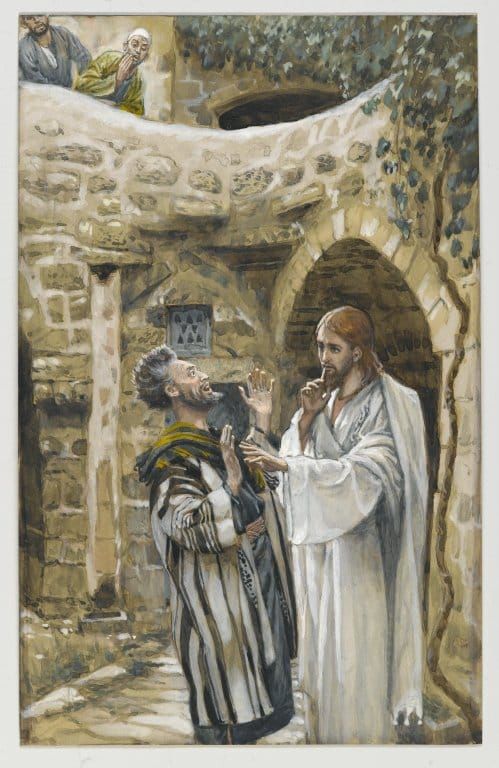
It is no accident, then, that the Gospel set beside these readings shows a man who cannot speak. A demoniac, mute, is brought to Jesus, and “when the demon was driven out the mute man spoke.” What idolatry works in figure, the evil one had wrought in this man literally: the sealing of a mouth that was made for praise. Christ has only to command, and speech returns to its true office. The crowds marvel; the Pharisees, who can speak, use their tongues to call the finger of God the work of demons — proof that there is a muteness of the heart more grievous than any muteness of the lips.
And what is the disposition of Christ before all this ruin? Not contempt, but compassion. “At the sight of the crowds, his heart was moved with pity for them because they were troubled and abandoned, like sheep without a shepherd.” The Catechism sees in this the very signature of God among us: “Christ’s compassion toward the sick and his many healings of every kind of infirmity are a resplendent sign that ‘God has visited his people.’” Augustine confessed the same truth from within: “You have made us for yourself, O Lord, and our heart is restless until it rests in you.” Every idol is a resting place that cannot give rest; Christ looks upon the weariness such resting places produce, and He is moved with pity.
But the healed tongue is given work to do. “The harvest is abundant but the laborers are few.” Pope Leo XIV, meditating on these very words, observed that the Church and the world do not need people who fulfill their religious duties as if the faith were merely an external label, but “loving disciples who bear witness to the Kingdom of God in all places” — and that before all pastoral planning comes prayer to the Lord of the harvest. Here, then, is the day’s lesson for the soul: examine what your own silver and gold have quietly been shaped into; cast down the mute god, whatever its name; let Christ loose the tongue He made; and then ask the Master of the harvest to send you — for the first labor of the harvest is prayer, and the love of God, who gathers what was scattered, will not leave the willing laborer unemployed.
Lord God, search my heart and show me the idols my own hands have fashioned — the small silent gods of comfort, of opinion, of self — and cast them down within me. Loose my tongue as Your Son loosed the tongue of the mute, that I may praise You without fear and speak of You without shame. Gather my scattered heart into the single worship of Your name, and make me a laborer in Your harvest. Through Christ our Lord. Amen.
Sources & References
- “With their silver and gold they made idols for themselves…”, “but not by my authority”, “When they sow the wind, they shall reap the whirlwind” — Hosea 8:4-7, 11-13 (First Reading, USCCB Daily Readings, July 7, 2026)
- “They have mouths but speak not…”, “Their makers shall be like them, everyone that trusts in them” — Psalm 115:3-4, 5-6, 7ab-8, 9-10 (Responsorial Psalm)
- “when the demon was driven out the mute man spoke”, “troubled and abandoned, like sheep without a shepherd”, “The harvest is abundant but the laborers are few” — Matthew 9:32-38 (Gospel)
- “remains a constant temptation to faith… consists in divinizing what is not God” — Catechism of the Catholic Church, 2113
- “Human life finds its unity in the adoration of the one God…” — Catechism of the Catholic Church, 2114
- “Christ’s compassion toward the sick… ‘God has visited his people’” — Catechism of the Catholic Church, 1503
- “The principal crime of the human race… is idolatry” — Tertullian, On Idolatry (De idololatria), ch. 1
- “You have made us for yourself, O Lord…” — St. Augustine, Confessions, I, 1, 1
- “loving disciples who bear witness to the Kingdom of God in all places” — Pope Leo XIV, Angelus, July 6, 2025 (quoted in Vatican News “Word of the Day,” July 7, 2026)
El ídolo mudo y la lengua desatada
📖 Sagrada Escritura Diaria
Martes 7 de julio de 2026 — Martes de la XIV semana del Tiempo ordinario
Lecturas: Oseas 8, 4-7. 11-13 • Salmo 113b, 3-4. 5-6. 7ab-8. 9-10 • Mateo 9, 32-38
Hay una silenciosa industria del alma que el profeta Oseas contempló en plena obra en Samaria: la fabricación de dioses. “Con su oro y su plata se han hecho ídolos, para su perdición”. No describe a hombres que negaran el cielo; describe a hombres que prefirieron un cielo de propia manufactura — reyes nombrados “sin contar conmigo”, príncipes escogidos sin la aprobación de Dios, altares multiplicados hasta que los lugares mismos levantados para expiar el pecado sólo sirvieron para pecar. Y sobre toda esa afanosa empresa pronuncia la terrible ley de la vida interior: “Siembran vientos y cosecharán tempestades”. Lo que el alma planta en la vanidad lo recoge en la ruina, y la cosecha es siempre mayor que la semilla.
El salmista lleva la lección hacia dentro. Los ídolos de los paganos “tienen boca, pero no hablan; tienen ojos, pero no ven”; y sigue luego la sentencia ante la cual el alma debería quedarse muy quieta: “Que sean como ellos quienes los hacen y cuantos confían en ellos”. He aquí el castigo secreto de todo culto falso — no sólo que Dios sea ofendido, sino que el adorador queda vacío. El alma se convierte en aquello que adora. Entregue el corazón a lo que es sordo, y poco a poco perderá el oído; entréguelo a lo que es mudo, y la lengua olvidará el idioma de la alabanza. Tertuliano, en la edad más temprana de la Iglesia, nombró este desorden sin suavizarlo: “El principal crimen del género humano, la mayor culpa del mundo, la causa entera del juicio, es la idolatría”.
Y no imagine el alma que esto concierne únicamente a becerros de oro en Samaria. El Catecismo advierte que la idolatría “es una tentación constante de la fe”, y que “consiste en divinizar lo que no es Dios” — el poder, el placer, la riqueza, la reputación, la buena opinión de los demás, el yo y sus planes. Cada una de estas cosas, honrada en el lugar de Dios, divide el corazón en tantos pedazos como amos tiene. Y el mismo Catecismo enuncia el remedio con gran belleza: “La vida humana se unifica en la adoración del Dios Único. El mandamiento de adorar al único Señor da unidad al hombre y lo salva de una dispersión infinita”. El primer mandamiento no es un celo que empequeñece; es una misericordia que recoge en unidad al alma dispersa.
No es casualidad, entonces, que el Evangelio puesto junto a estas lecturas muestre a un hombre que no puede hablar. Llevan ante Jesús a un endemoniado mudo, y “Jesús expulsó al demonio y el mudo habló”. Lo que la idolatría obra en figura, el maligno lo había obrado en este hombre literalmente: el sellamiento de una boca hecha para la alabanza. A Cristo le basta mandar, y la palabra vuelve a su verdadero oficio. La multitud se maravilla; los fariseos, que sí pueden hablar, usan su lengua para llamar obra de los demonios al dedo de Dios — prueba de que existe una mudez del corazón más grave que cualquier mudez de los labios.
¿Y cuál es la disposición de Cristo ante toda esta ruina? No el desprecio, sino la compasión. Al ver a las multitudes, “se compadecía de ellas, porque estaban extenuadas y desamparadas, como ovejas sin pastor”. El Catecismo ve en esto la firma misma de Dios entre nosotros: “La compasión de Cristo hacia los enfermos y sus numerosas curaciones de dolientes de toda clase son un signo maravilloso de que ‘Dios ha visitado a su pueblo’”. Agustín confesó la misma verdad desde dentro: “Nos hiciste, Señor, para ti, y nuestro corazón está inquieto hasta que descanse en ti”. Todo ídolo es un lugar de descanso que no puede dar descanso; Cristo mira el cansancio que tales descansos producen, y se compadece.
Pero a la lengua sanada se le encomienda un trabajo. “La cosecha es mucha y los trabajadores, pocos”. El papa León XIV, meditando estas mismas palabras, observó que la Iglesia y el mundo no necesitan personas que cumplen con sus deberes religiosos mostrando su fe como una etiqueta exterior, sino “discípulos enamorados que den testimonio del Reino de Dios dondequiera que se encuentren” — y que antes de todo plan pastoral está la oración al dueño de la mies. He aquí, pues, la lección del día para el alma: examine en qué se han convertido calladamente su propio oro y su plata; derribe al dios mudo, cualquiera que sea su nombre; deje que Cristo desate la lengua que Él mismo hizo; y pida luego al dueño de la mies que lo envíe — porque el primer trabajo de la cosecha es la oración, y el amor de Dios, que recoge lo que estaba disperso, no dejará sin empleo al obrero bien dispuesto.
Señor Dios, escudriña mi corazón y muéstrame los ídolos que mis propias manos han fabricado — los pequeños dioses silenciosos de la comodidad, de la opinión, del yo — y derríbalos dentro de mí. Desata mi lengua como tu Hijo desató la lengua del mudo, para que te alabe sin miedo y hable de ti sin vergüenza. Recoge mi corazón disperso en la única adoración de tu nombre, y hazme trabajador en tu mies. Por Jesucristo nuestro Señor. Amén.
Fuentes y referencias
- “Con su oro y su plata se han hecho ídolos…”, “sin contar conmigo”, “Siembran vientos y cosecharán tempestades” — Oseas 8, 4-7. 11-13 (Primera lectura, USCCB Lecturas diarias en español, 7 de julio de 2026)
- “Tienen boca, pero no hablan…”, “Que sean como ellos quienes los hacen y cuantos confían en ellos” — Salmo 113b, 3-4. 5-6. 7ab-8. 9-10 (Salmo responsorial; numeración del Leccionario mexicano usado por USCCB-es)
- “Jesús expulsó al demonio y el mudo habló”, “extenuadas y desamparadas, como ovejas sin pastor”, “La cosecha es mucha y los trabajadores, pocos” — Mateo 9, 32-38 (Evangelio)
- “Es una tentación constante de la fe… Consiste en divinizar lo que no es Dios” — Catecismo de la Iglesia Católica, 2113
- “La vida humana se unifica en la adoración del Dios Único…” — Catecismo de la Iglesia Católica, 2114
- “La compasión de Cristo hacia los enfermos… ‘Dios ha visitado a su pueblo’” — Catecismo de la Iglesia Católica, 1503
- “El principal crimen del género humano… es la idolatría” — Tertuliano, Sobre la idolatría (De idololatria), cap. 1
- “Nos hiciste, Señor, para ti…” — San Agustín, Confesiones, I, 1, 1
- “discípulos enamorados que den testimonio del Reino de Dios dondequiera que se encuentren” — Papa León XIV, Ángelus, 6 de julio de 2025 (texto oficial en español, vatican.va)