
📖 Daily Scripture
September 19, 2026 — Saturday of the Twenty-fourth Week in Ordinary Time
Readings: 1 Corinthians 15:35-37, 42-49 • Psalm 56:10c-12, 13-14 • Luke 8:4-15
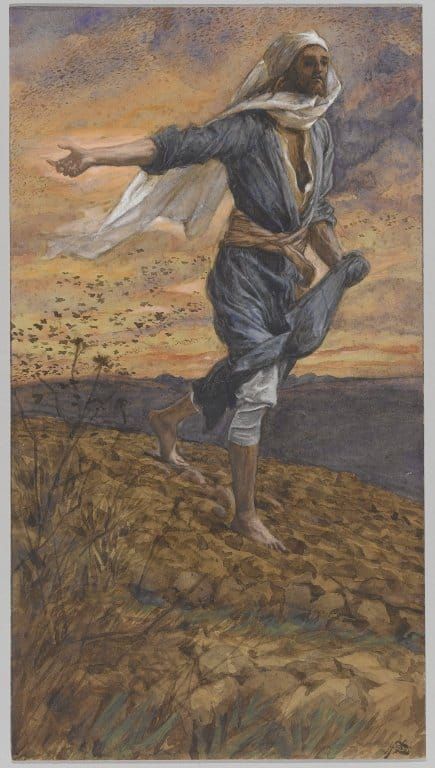
Two fields are opened before the soul today, and they are in truth one field. The Apostle, pressed by the question of how the dead are raised and with what sort of body they shall return, answers not with argument but with agriculture: what you sow is not brought to life unless it dies, and what you sow is not the body that is to be but a bare kernel of wheat. And the Lord, standing before a crowd gathered out of one town after another, turns likewise to the furrow and the seed, and speaks of a sower who scattered without measuring the ground. That the same image should serve both for the end of all things and for the beginning of faith is not an accident of imagery; for the soul that learns today to receive the word is the very soul that shall one day be raised incorruptible.
Consider what the parable does not say. It does not say that the sower was careless, nor that the seed was poor, nor that some seed was better than the rest. One hand, one grain, one sowing; the whole difference lay in what received it. Chrysostom saw this with his accustomed clarity when he asked whether it is not plain that “not the husbandman is to be blamed, nor the seed, but the land that receives it.” This is at once a severe word and a consoling one. Severe, because it withdraws from the soul every excuse it had prepared — that the truth was never offered, that the age was too noisy, that grace passed elsewhere. Consoling, because a field, unlike the weather, is a thing a man may actually work upon. He cannot command the rain; he can break up his own ground.
Look then at the three failures, for they are not exotic and they are not other people’s. The trampled path is the soul so thoroughly walked over by everything and everyone that nothing can sink in; the word is heard, and is gone before the hour is out, because there was no furrow anywhere to hold it. The rocky place is more painful, because it begins so well: the word is received with joy, and the joy is real, and yet when the season of testing comes there is nothing underneath. The Church speaks of this dryness with great tenderness, calling it the state in which the heart is without taste “for thoughts, memories, and feelings, even spiritual ones,” and naming it “the moment of sheer faith clinging faithfully to Jesus in his agony and in his tomb.” But she adds a warning that must not be softened: if the dryness is due to the lack of roots, because the word has fallen on rocky soil, the battle requires conversion. Not more feeling. Conversion.
The thorns are subtler still, and more dangerous for being respectable. The Lord names them as the anxieties and riches and pleasures of life, and it should be noticed that He does not call them sins. They choke not by attacking but by crowding; they are given the hours, and the word is given whatever is left, which is nothing. A soul is rarely lost by a single decision against God. It is far more often lost by a thousand small decisions in favour of something else.
Here, then, is the labour that today asks: the deliberate clearing of ground. It is unspectacular work, and it is meant to be. It is the small silence defended against the day’s noise; the short passage of the Gospel read before the world has begun to speak; the one anxiety surrendered rather than rehearsed. The seed is already in the heart — this is the whole consolation of the parable — and, as the Holy Father has taught, making it fruitful depends on us, on the welcome we reserve for this seed. Such is the force of the word of God that it becomes strength for faith, food for the soul, and a pure and lasting fount of spiritual life; but a fountain left unvisited quenches no thirst.
And the harvest is not swift. The good soil is described not by its enthusiasm but by its endurance: it bears fruit through perseverance. This is precisely why the Apostle’s field is set beside the Lord’s. The grain that is buried and seems lost is the grain that rises; the body sown corruptible is raised incorruptible; all shall rise with their own bodies which they now bear, transformed into a spiritual body. Tertullian said the whole matter in six words: the flesh is the hinge of salvation. Nothing patiently given to God in this ground is ever mislaid.
Let no soul, then, measure itself by the poverty of its own soil and despair. The sower in the parable is extravagant to the point of apparent waste, and He scatters still, upon the path and the rock and the thorns, upon the ground that failed Him last year and the ground that failed Him this morning. He does not sow because the field deserves it. He sows because He is the sower, and because He intends a harvest, and because He is patient with the slow work of the earth.
Lord, break up the hard ground in me, and let Your word go deeper than my feelings. Teach me to guard the little silence where You speak, and to give You the hours I now give to my anxieties. Grant me perseverance where I have only enthusiasm, and root within me what I cannot root myself. Through Christ our Lord. Amen.
Sources & References
- “What you sow is not brought to life unless it dies.” — 1 Corinthians 15:36
- “It is sown corruptible; it is raised incorruptible.” — 1 Corinthians 15:42
- “I will walk in the presence of God, in the light of the living.” — Psalm 56:14 (responsorial refrain)
- “The seed is the word of God.” / “bear fruit through perseverance” — Luke 8:11; 8:15
- “Do you see, that not the husbandman is to be blamed, nor the seed, but the land that receives it?” — St. John Chrysostom, Homily 44 on the Gospel of Matthew
- “for thoughts, memories, and feelings, even spiritual ones” / “the moment of sheer faith clinging faithfully to Jesus in his agony and in his tomb” / “If dryness is due to the lack of roots, because the word has fallen on rocky soil, the battle requires conversion.” — Catechism of the Catholic Church, 2731
- “strength for their faith, food for the soul, and a pure and lasting fount of spiritual life” — Catechism of the Catholic Church, 131, citing Dei Verbum 21
- “all of them will rise again with their own bodies which they now bear” / “spiritual body” — Catechism of the Catholic Church, 999
- “The flesh is the hinge of salvation.” — Tertullian, De resurrectione carnis 8, 2, cited in Catechism of the Catholic Church, 1015
- “making it fruitful depends on us; it depends on the embrace that we reserve for this seed” — Pope Francis, Angelus, 12 July 2020; carried as the papal commentary for this day in Vatican News, Word of the Day, 19 September 2026
- Readings: USCCB, Daily Readings, 19 September 2026, Lectionary 448
La tierra de un corazón paciente
📖 Sagrada Escritura Diaria
19 de septiembre de 2026 — Sábado de la XXIV semana del Tiempo ordinario
Lecturas: 1 Corintios 15, 35-37. 42-49 • Salmo 55, 10. 11-12. 13-14 • Lucas 8, 4-15
Dos campos se abren hoy ante el alma, y en verdad son un solo campo. El Apóstol, apremiado por la pregunta de cómo resucitan los muertos y con qué clase de cuerpo han de volver, no responde con argumentos sino con agricultura: el grano que se siembra tiene que morir para que nazca la planta, y lo que se siembra no es la planta que va a brotar, sino solamente la semilla. Y el Señor, ante una multitud que se le iba uniendo de pueblo en pueblo, se vuelve igualmente al surco y a la semilla, y habla de un sembrador que sembró sin medir el terreno. Que la misma imagen sirva para el fin de todas las cosas y para el comienzo de la fe no es un accidente del lenguaje; porque el alma que hoy aprende a recibir la palabra es la misma alma que un día resucitará incorruptible.
Considérese lo que la parábola no dice. No dice que el sembrador fuera descuidado, ni que la semilla fuera mala, ni que unos granos fueran mejores que otros. Una sola mano, un solo grano, una sola siembra; toda la diferencia estuvo en lo que la recibió. Con su acostumbrada claridad lo vio el Crisóstomo al preguntar si no resulta evidente que no hay que culpar al sembrador ni a la semilla, sino a la tierra que la recibe. Ésta es a la vez una palabra severa y una palabra consoladora. Severa, porque le quita al alma toda excusa que tenía preparada: que la verdad nunca le fue ofrecida, que el tiempo era demasiado ruidoso, que la gracia pasó por otra parte. Consoladora, porque un terreno, a diferencia del clima, es algo sobre lo cual el hombre sí puede trabajar. No puede mandar sobre la lluvia; sí puede romper la dureza de su propia tierra.
Mírense entonces los tres fracasos, pues no son exóticos ni son de los demás. El camino pisoteado es el alma tan transitada por todo y por todos que ya nada logra penetrar en ella; la palabra se escucha y se pierde antes de que acabe la hora, porque no había surco alguno que la sostuviera. El terreno pedregoso duele más, porque empieza tan bien: la palabra se recibe con alegría, y la alegría es verdadera, y sin embargo, cuando llega el momento de la prueba, debajo no hay nada. La Iglesia habla de esta sequedad con gran ternura, llamándola aquel estado en que el corazón está seco, «sin gusto por los pensamientos, recuerdos y sentimientos, incluso espirituales», y nombrándola «el momento en que la fe es más pura, la fe que se mantiene firme junto a Jesús en su agonía y en su sepulcro». Pero añade una advertencia que no debe suavizarse: si la sequedad se debe a falta de raíz, porque la Palabra ha caído sobre roca, no hay éxito en el combate sin una mayor conversión. No más sentimiento. Conversión.
Los espinos son todavía más sutiles, y más peligrosos por ser respetables. El Señor los nombra como los afanes, las riquezas y los placeres de la vida, y conviene notar que no los llama pecados. Ahogan no atacando, sino apretujando; a ellos se les dan las horas, y a la palabra se le da lo que sobra, que es nada. Rara vez se pierde un alma por una sola decisión contra Dios. Mucho más a menudo se pierde por mil pequeñas decisiones a favor de otra cosa.
He aquí, pues, la labor que hoy se pide: despejar el terreno deliberadamente. Es un trabajo sin brillo, y está hecho para serlo. Es el pequeño silencio defendido contra el ruido del día; el breve pasaje del Evangelio leído antes de que el mundo empiece a hablar; la única inquietud entregada en vez de rumiada. La semilla ya está en el corazón —ésta es toda la consolación de la parábola— y, como ha enseñado el Santo Padre, hacerla fructificar depende de nosotros, depende de la acogida que reservamos a esta semilla. Tan grande es la fuerza de la Palabra de Dios que llega a ser firmeza de fe, alimento del alma, fuente límpida y perenne de vida espiritual; pero una fuente que nunca se visita no apaga sed alguna.
Y la cosecha no es rápida. La tierra buena no se describe por su entusiasmo, sino por su constancia: da fruto por su perseverancia. Precisamente por eso el campo del Apóstol se coloca junto al del Señor. El grano que queda enterrado y parece perdido es el grano que se levanta; el cuerpo que se siembra corruptible resucita incorruptible; todos resucitarán con su propio cuerpo, que tienen ahora, transformado en cuerpo espiritual. Tertuliano lo dijo entero en seis palabras: la carne es el soporte de la salvación. Nada de lo que en esta tierra se entrega pacientemente a Dios se extravía jamás.
Que ningún alma, entonces, se mida por la pobreza de su propio terreno y desespere. El sembrador de la parábola es generoso hasta el aparente desperdicio, y sigue sembrando todavía: sobre el camino, sobre la roca y sobre los espinos, sobre la tierra que le falló el año pasado y sobre la que le falló esta misma mañana. No siembra porque el campo lo merezca. Siembra porque Él es el sembrador, porque quiere una cosecha, y porque es paciente con la obra lenta de la tierra.
Señor, rompe en mí la tierra dura y haz que tu palabra baje más hondo que mis sentimientos. Enséñame a guardar el pequeño silencio donde tú hablas, y a darte las horas que ahora doy a mis inquietudes. Concédeme perseverancia donde sólo tengo entusiasmo, y arraiga dentro de mí lo que yo no puedo arraigar. Por Jesucristo nuestro Señor. Amén.
Fuentes y referencias
- «El grano que se siembra tiene que morir, para que nazca la planta.» — 1 Corintios 15, 36
- «Se siembra un cuerpo corruptible y resucita incorruptible.» — 1 Corintios 15, 42
- «Caminaré en presencia del Señor.» — Salmo 55, 14 (respuesta del salmo responsorial; el Leccionario en español sigue la numeración de la Vulgata)
- «La semilla es la palabra de Dios.» / «dan fruto por su constancia» — Lucas 8, 11; 8, 15
- «¿No es evidente que no hay que culpar al sembrador ni a la semilla, sino a la tierra que la recibe?» — San Juan Crisóstomo, Homilía 44 sobre el Evangelio de san Mateo
- «sin gusto por los pensamientos, recuerdos y sentimientos, incluso espirituales» / «el momento en que la fe es más pura, la fe que se mantiene firme junto a Jesús en su agonía y en su sepulcro» / «Si la sequedad se debe a falta de raíz, porque la Palabra ha caído sobre roca, no hay éxito en el combate sin una mayor conversión.» — Catecismo de la Iglesia Católica, 2731
- «firmeza de fe para sus hijos, alimento del alma, fuente límpida y perenne de vida espiritual» — Catecismo de la Iglesia Católica, 131, citando Dei Verbum 21
- «todos resucitarán con su propio cuerpo, que tienen ahora» / «cuerpo espiritual» — Catecismo de la Iglesia Católica, 999
- «La carne es el soporte de la salvación.» — Tertuliano, De resurrectione carnis 8, 2, citado en el Catecismo de la Iglesia Católica, 1015
- «hacerla fructificar depende de nosotros, depende de la acogida que reservamos a esta semilla» — Papa Francisco, Ángelus, 12 de julio de 2020; recogido como comentario papal del día en Vatican News, Palabra del día, 19 de septiembre de 2026
- Lecturas: USCCB, Lecturas de Hoy, 19 de septiembre de 2026, Leccionario 448