
📖 Daily Scripture
Monday, October 26, 2026 — Monday of the Thirtieth Week in Ordinary Time
Readings: Ephesians 4:32–5:8 • Psalm 1:1-2, 3, 4 and 6 • Luke 13:10-17
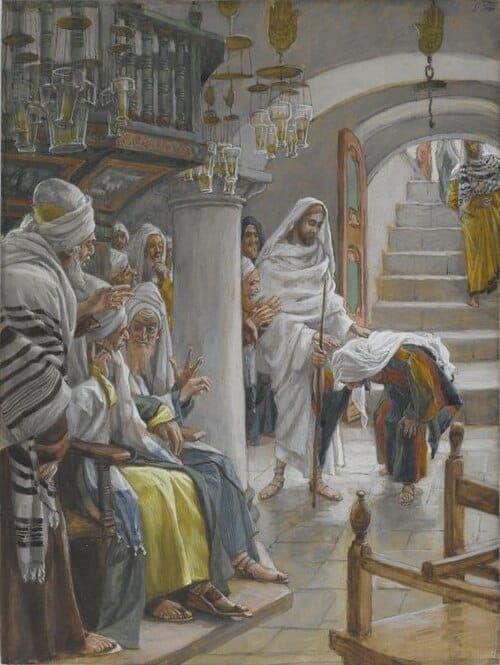
There are some figures in the Gospel whose whole history is told in a single posture, and the woman of today’s reading is among them. For eighteen years, the Evangelist tells us, “she was bent over, completely incapable of standing erect.” She came, nevertheless, to the synagogue on the sabbath, carrying a burden she could not lay down, and seeing of the world little more than the dust beneath her feet. It is not difficult for the soul to recognize itself in her. There is a bending which is not of the spine but of the heart, by which a man, little by little, turns in upon himself, until his own grievances, his own fears, and his own small reckonings fill the whole horizon of his sight.
The Holy Father has named this condition with great clarity: like the bent-over woman of the Gospel, he observes, “the risk is always that of remaining prisoners of our self-centered perspective.” And among the cords that bind the soul in this posture, none is more common, nor more quietly tenacious, than the refusal to forgive. An injury nursed in the memory draws the eyes ever downward; and so the soul that will not pardon grows bent around its wound, unable to lift its gaze either to its neighbor or to God.
It is precisely against this bending that the Apostle sets his counsel: “Be kind to one another, compassionate, forgiving one another as God has forgiven you in Christ.” And again: “Be imitators of God, as beloved children, and live in love.” These words would be a crushing burden if they were only a command laid upon the soul from without. “It is impossible to keep the Lord’s commandment by imitating the divine model from outside,” the Catechism teaches; “there has to be a vital participation, coming from the depths of the heart, in the holiness and the mercy and the love of our God.” The soul is not asked to manufacture a mercy it does not possess, but to receive the mercy by which it has itself been forgiven, and to let that mercy pass through it to others. Nor is it asked to feel nothing; for “it is not in our power not to feel or to forget an offense; but the heart that offers itself to the Holy Spirit turns injury into compassion and purifies the memory in transforming the hurt into intercession.”
Here, then, is the lesson the readings press upon the conscience. The leader of the synagogue was not a man without religion; he was a man whose religion had become a reason to withhold compassion, who could speak of six days for work while a daughter of Abraham stood bound before him. The soul may do the same with far subtler instruments: it may keep every observance, and yet keep beside them a ledger of debts it will not cancel. But Christ, as the Catechism reminds us, “declares the sabbath for doing good rather than harm.” The truest worship is that which sends the worshipper out more merciful than he came. To forgive, then, is not a sentiment to be awaited but a deed to be chosen, by placing the offense in the hands of God and praying for the one who caused it.
And when the soul consents, the Gospel shows what follows. Christ lays His hands upon her, and “she at once stood up straight and glorified God.” St. Irenaeus wrote that “the glory of God is man fully alive; moreover man’s life is the vision of God.” The woman made upright is that glory made visible: she can at last lift her eyes, and the first use she makes of her freedom is praise. So it is with the soul released from resentment. It becomes, in the Psalmist’s image, “like a tree planted near running water,” yielding its fruit in due season. It hears the Apostle’s word as spoken to itself: “you were once darkness, but now you are light in the Lord.” And it learns what St. Augustine confessed, that “you have made us for yourself, and our heart is restless until it rests in you.” No soul is so long bent that the hand of Christ cannot raise it, and no wound so old that His love cannot turn it into a prayer.
Father of mercies, You see the burdens beneath which my soul is bent, and the old injuries I have carried far too long. Let Your Son lay His hands upon me; teach me to forgive as I have been forgiven, and raise me up to seek Your face and glorify Your name. Through Christ our Lord. Amen.
Sources & References
- “she was bent over, completely incapable of standing erect”; “she at once stood up straight and glorified God”; a daughter of Abraham bound for eighteen years — Luke 13:11, 13, 16 (USCCB, NABRE Lectionary)
- “Be kind to one another, compassionate, forgiving one another as God has forgiven you in Christ” — Ephesians 4:32
- “Be imitators of God, as beloved children, and live in love” — Ephesians 5:1-2
- “you were once darkness, but now you are light in the Lord” — Ephesians 5:8
- “like a tree planted near running water” — Psalm 1:3
- “the risk is always that of remaining prisoners of our self-centered perspective” — Pope Leo XIV, Homily at the Mass with the Pontifical Universities, October 27, 2025, as presented in Vatican News “Word of the Day,” October 26, 2026
- “It is impossible to keep the Lord’s commandment by imitating the divine model from outside…” — Catechism of the Catholic Church, 2842
- “It is not in our power not to feel or to forget an offense; but the heart that offers itself to the Holy Spirit…” — Catechism of the Catholic Church, 2843
- “declares the sabbath for doing good rather than harm” — Catechism of the Catholic Church, 2173
- “the glory of God is man fully alive; moreover man’s life is the vision of God” — St. Irenaeus of Lyons, Against Heresies IV, 20, 7 (as quoted in CCC 294)
- “you have made us for yourself, and our heart is restless until it rests in you” — St. Augustine, Confessions I, 1, 1 (as quoted in CCC 30)
El alma enderezada
📖 Sagrada Escritura Diaria
Lunes, 26 de octubre de 2026 — Lunes de la XXX semana del Tiempo ordinario
Lecturas: Efesios 4, 32–5, 8 • Salmo 1, 1-2. 3. 4 y 6 • Lucas 13, 10-17
Hay en el Evangelio algunas figuras cuya historia entera se cuenta en una sola postura, y la mujer de la lectura de hoy es una de ellas. Durante dieciocho años, nos dice el evangelista, “estaba encorvada y no podía enderezarse”. Acudía, sin embargo, a la sinagoga en sábado, cargando un peso que no podía depositar, y viendo del mundo poco más que el polvo bajo sus pies. No le es difícil al alma reconocerse en ella. Hay un encorvamiento que no es de la espalda sino del corazón, por el cual el hombre, poco a poco, se repliega sobre sí mismo, hasta que sus propios agravios, sus propios temores y sus pequeños cálculos llenan todo el horizonte de su mirada.
El Santo Padre ha nombrado esta condición con gran claridad: al igual que la mujer encorvada del Evangelio, observa, “el riesgo es siempre el de quedarse prisioneros de una mirada centrada en nosotros mismos”. Y entre las ataduras que mantienen al alma en esta postura, ninguna es más común, ni más calladamente tenaz, que la negativa a perdonar. Una ofensa alimentada en la memoria atrae la mirada siempre hacia abajo; y así el alma que no quiere perdonar se va encorvando en torno a su herida, incapaz de alzar los ojos hacia su prójimo o hacia Dios.
Precisamente contra este encorvamiento dirige el Apóstol su consejo: “Sean buenos y comprensivos, y perdónense unos a otros, como Dios los perdonó, por medio de Cristo”. Y de nuevo: “Imiten, pues, a Dios como hijos queridos”, y “vivan amando como Cristo, que nos amó y se entregó por nosotros”. Estas palabras serían una carga aplastante si fueran solo un mandato impuesto al alma desde fuera. “Observar el mandamiento del Señor es imposible si se trata de imitar desde fuera el modelo divino”, enseña el Catecismo; “se trata de una participación, vital y nacida ‘del fondo del corazón’, en la santidad, en la misericordia, y en el amor de nuestro Dios”. Al alma no se le pide fabricar una misericordia que no posee, sino recibir la misericordia con que ella misma ha sido perdonada, y dejar que esa misericordia pase a través de ella hacia los demás. Tampoco se le pide no sentir nada; pues “no está en nuestra mano no sentir ya la ofensa y olvidarla; pero el corazón que se ofrece al Espíritu Santo cambia la herida en compasión y purifica la memoria transformando la ofensa en intercesión”.
Esta es, pues, la lección que las lecturas imprimen en la conciencia. El jefe de la sinagoga no era un hombre sin religión; era un hombre cuya religión se había convertido en motivo para negar la compasión, que podía hablar de seis días para trabajar mientras una hija de Abraham permanecía atada delante de él. El alma puede hacer lo mismo con instrumentos mucho más sutiles: puede guardar toda observancia y, sin embargo, guardar junto a ellas un registro de deudas que no quiere cancelar. Pero Cristo, como recuerda el Catecismo, proclama con compasión que “es lícito en sábado hacer el bien en vez del mal”. El culto más verdadero es aquel que despide a quien adora más misericordioso de lo que llegó. Perdonar, entonces, no es un sentimiento que se ha de esperar, sino un acto que se ha de elegir, poniendo la ofensa en las manos de Dios y orando por quien la causó.
Y cuando el alma consiente, el Evangelio muestra lo que sigue. Cristo le impone las manos, y ella “se enderezó y empezó a alabar a Dios”. San Ireneo escribió que “la gloria de Dios es que el hombre viva, y la vida del hombre es la visión de Dios”. La mujer enderezada es esa gloria hecha visible: puede por fin alzar los ojos, y el primer uso que hace de su libertad es la alabanza. Así sucede con el alma liberada del resentimiento. Se vuelve, según la imagen del salmista, “como un árbol plantado junto al río”, que da su fruto a su tiempo. Escucha como dirigida a sí misma la palabra del Apóstol: “en otro tiempo ustedes fueron tinieblas, pero ahora, unidos al Señor, son luz”. Y aprende lo que confesó san Agustín: “nos has hecho para ti y nuestro corazón está inquieto mientras no descansa en ti”. No hay alma tan largamente encorvada que la mano de Cristo no pueda levantarla, ni herida tan antigua que su amor no pueda convertirla en oración.
Padre de misericordia, tú ves los pesos bajo los cuales mi alma se encorva, y las viejas heridas que he cargado demasiado tiempo. Que tu Hijo imponga sus manos sobre mí; enséñame a perdonar como he sido perdonado, y levántame para buscar tu rostro y glorificar tu nombre. Por Jesucristo nuestro Señor. Amén.
Fuentes y referencias
- “estaba encorvada y no podía enderezarse”; “se enderezó y empezó a alabar a Dios”; una hija de Abraham atada durante dieciocho años — Lucas 13, 11. 13. 16 (USCCB, Leccionario en español)
- “Sean buenos y comprensivos, y perdónense unos a otros, como Dios los perdonó, por medio de Cristo” — Efesios 4, 32
- “Imiten, pues, a Dios como hijos queridos”; “vivan amando como Cristo, que nos amó y se entregó por nosotros” — Efesios 5, 1-2
- “en otro tiempo ustedes fueron tinieblas, pero ahora, unidos al Señor, son luz” — Efesios 5, 8
- “como un árbol plantado junto al río” — Salmo 1, 3
- “el riesgo es siempre el de quedarse prisioneros de una mirada centrada en nosotros mismos” — Papa León XIV, Homilía en la Misa con las Universidades Pontificias, 27 de octubre de 2025 (vatican.va), citada en la “Palabra del día” de Vatican News, 26 de octubre de 2026
- “Observar el mandamiento del Señor es imposible si se trata de imitar desde fuera el modelo divino…” — Catecismo de la Iglesia Católica, 2842
- “No está en nuestra mano no sentir ya la ofensa y olvidarla; pero el corazón que se ofrece al Espíritu Santo…” — Catecismo de la Iglesia Católica, 2843
- “es lícito en sábado hacer el bien en vez del mal” — Catecismo de la Iglesia Católica, 2173 (citando Mc 3, 4)
- “la gloria de Dios es que el hombre viva, y la vida del hombre es la visión de Dios” — San Ireneo de Lyon, Adversus haereses IV, 20, 7 (citado en el CIC 294)
- “nos has hecho para ti y nuestro corazón está inquieto mientras no descansa en ti” — San Agustín, Confesiones I, 1, 1 (citado en el CIC 30)