
📖 Daily Scripture
Friday, October 9, 2026 — Friday of the Twenty-seventh Week in Ordinary Time
Readings: Galatians 3:7-14 • Psalm 111:1b-2, 3-4, 5-6 • Luke 11:15-26
There is a logic in this day's readings which the soul does not perceive at once, and cannot easily lay aside afterward. Saint Paul rests the whole weight of salvation upon faith rather than upon the ledger of observance: those who have faith are children of Abraham, and in them the ancient promise comes at last to its flowering. The Catechism states the matter with great economy, that "Against all human hope, God promises descendants to Abraham, as the fruit of faith and of the power of the Holy Spirit." Nothing here is earned. The law could expose the debt but not discharge it; and so "Christ ransomed us from the curse of the law by becoming a curse for us," turning the sentence into a blessing, that the far-off might receive the promised Spirit. Beneath it all the psalm lays a floor of rock: the Lord will remember his covenant for ever.
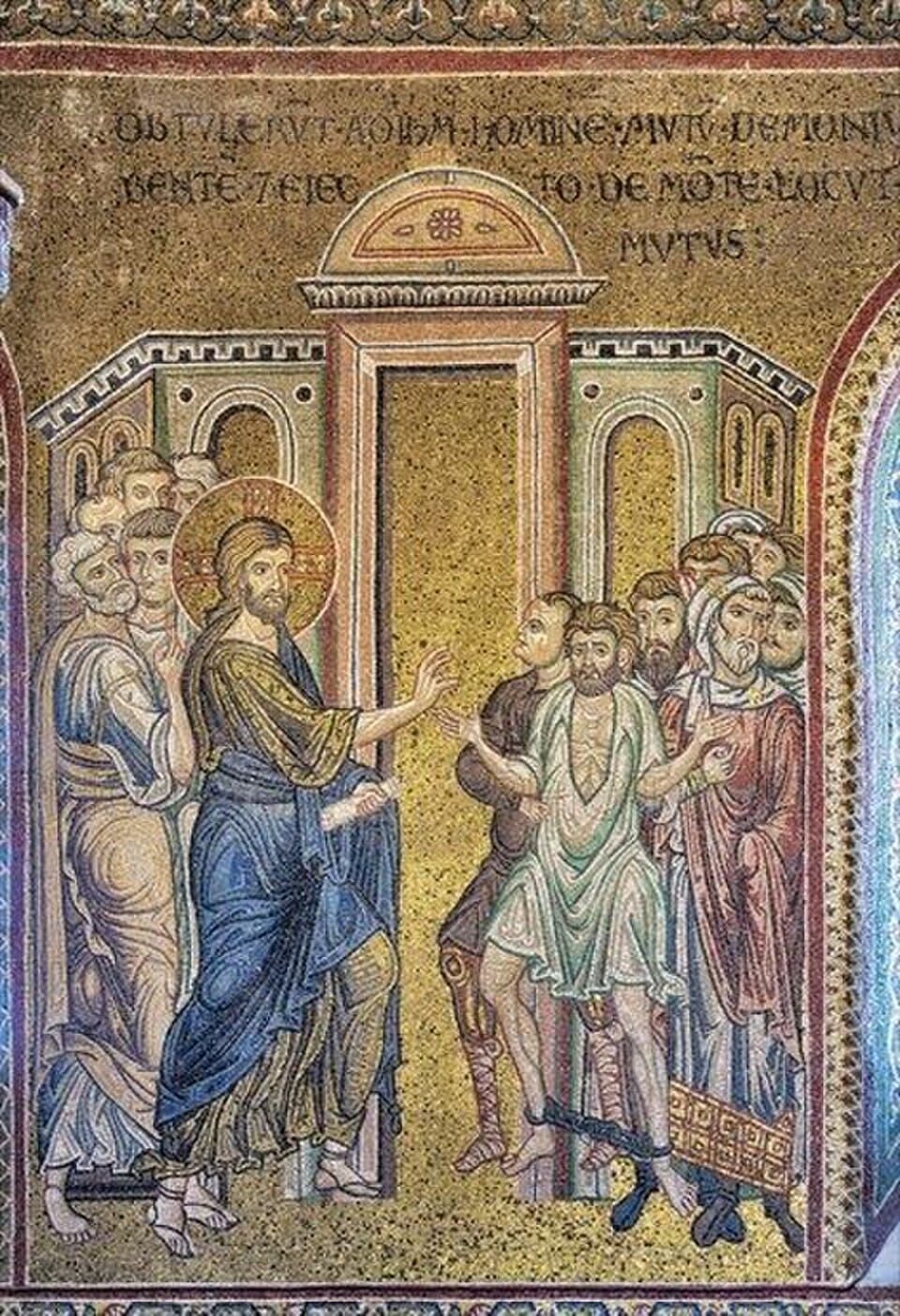
Against so gracious a background the Gospel opens upon an ugly accusation. A man has been delivered, and the crowd, unable to deny the deliverance, disputes its source. Our Lord answers first with a plain truth about ruin, that a kingdom divided against itself is already falling, and then with a claim of startling quietness: if it is by the finger of God that he drives out demons, then the Kingdom of God has come upon them. "The coming of God's kingdom means the defeat of Satan's." One mute man's deliverance is no isolated wonder but a notice served upon an entire dominion.
Yet Our Lord does not leave the matter at victory. He adds a parable so sober it has troubled every honest conscience that has heard it. The unclean spirit departs, wanders, finds no rest, and returns; and what it finds is a house swept clean and put in order, and empty. Finding the room vacant it brings seven others, and the last condition of that person is worse than the first. The warning is not that cleansing is useless, but that cleansing is not the whole of holiness. Shame can empty a room; only love can furnish it.
Here is the lesson, unwelcome because practical. It is not enough to renounce; something must be planted in the vacated ground. The habit laid down must be replaced by a habit taken up, the hour reclaimed from indulgence given deliberately to prayer or to some service that cannot be repaid, the confession made followed by the Eucharist received. Saint Augustine understood why a merely emptied soul cannot hold its emptiness long, for "You have made us for Yourself, and our hearts are restless until they rest in You." A heart made for God will not consent to be furnished with nothing. If Christ does not take possession of the swept room, the restlessness itself will fetch a tenant.
And the tenant, when it comes again, rarely comes in its old dress. Pope Francis observed of this very passage that evil, once expelled, returns with better manners, behaving now "in a more elegant and refined way." These are the "elegant demons," which "enter smoothly, without our even being conscious of them" — rigidity mistaken for zeal, contempt for discernment, hardness for strength. Against so courteous an enemy he commended the oldest remedy, the daily examination of conscience, by which the soul keeps watch over its own house. Tertullian called prayer "the wall of faith: her arms and missiles against the foe who keeps watch over us on all sides," and the Catechism says plainly that "Such a battle and such a victory become possible only through prayer."
This is why the warning ends in hope and not in dread. The Stronger One has already entered the house; the finger of God has touched it. The soul is not asked to hold a fortress alone, but to keep open the door through which its Defender comes in. The covenant is remembered for ever, the blessing promised to Abraham is poured out upon the nations, and the Spirit who is the pledge of our inheritance desires nothing so much as to dwell where a room stands swept. God does not clean a house in order to abandon it. He cleans it because he means to live there.
Father, you do not cleanse a soul in order to leave it empty. Take possession of every room you have swept within me, and teach me to plant a virtue where I have torn out a vice. Give me the vigilance of heart that watches without fear, and let me rest in you, for you have made me for yourself. Through Christ our Lord. Amen.
Sources & References
- “Christ ransomed us from the curse of the law by becoming a curse for us” — Galatians 3:13 (First Reading: Galatians 3:7-14, New American Bible)
- “The Lord will remember his covenant for ever.” — Responsorial Psalm refrain, Psalm 111:1b-2, 3-4, 5-6
- “the finger of God,” the house “swept clean and put in order,” and “the last condition of that person is worse than the first” — Gospel: Luke 11:15-26 (Luke 11:20, 25, 26)
- “Against all human hope, God promises descendants to Abraham, as the fruit of faith and of the power of the Holy Spirit.” — Catechism of the Catholic Church, 706
- “The coming of God’s kingdom means the defeat of Satan’s.” — Catechism of the Catholic Church, 550
- “Such a battle and such a victory become possible only through prayer.” — Catechism of the Catholic Church, 2849
- “You have made us for Yourself, and our hearts are restless until they rest in You.” — St. Augustine, Confessions, Book I, 1
- Prayer as “the wall of faith: her arms and missiles against the foe who keeps watch over us on all sides” — Tertullian, On Prayer, 29
- “in a more elegant and refined way,” the “elegant demons” who “enter smoothly, without our even being conscious of them,” and the daily examination of conscience — Pope Francis, Address to the Roman Curia, 22 December 2022 (carried as Vatican News, Word of the Day, 9 October 2026)
La casa barrida y el corazón vigilante
📖 Sagrada Escritura Diaria
Viernes 9 de octubre de 2026 — Viernes de la XXVII semana del Tiempo Ordinario
Lecturas: Gálatas 3, 7-14 • Salmo 111, 1-6 • Lucas 11, 15-26
Hay en las lecturas de este día una lógica que el alma no percibe de inmediato, y que después ya no puede dejar de lado. San Pablo hace descansar todo el peso de la salvación sobre la fe y no sobre el libro de cuentas de la observancia: los que tienen fe son hijos de Abraham, y en ellos la antigua promesa llega por fin a su florecimiento. El Catecismo lo expresa con grande economía: "Contra toda esperanza humana, Dios promete a Abraham una descendencia, como fruto de la fe y del poder del Espíritu Santo." Nada de esto se merece. La Ley podía dejar al descubierto la deuda, mas no pagarla; y por eso "Cristo nos rescató de la maldición de la Ley", trocando la sentencia en bendición, para que los de lejos recibieran el Espíritu prometido. Debajo de todo ello el salmo pone un suelo de roca: el Señor se acuerda de su alianza para siempre.
Sobre fondo tan lleno de gracia, el Evangelio se abre con una acusación fea. Un hombre ha sido liberado, y la gente, incapaz de negar la liberación, discute su origen. El Señor responde primero con una verdad sencilla acerca de la ruina, que un reino dividido contra sí mismo ya se está desmoronando, y después con una afirmación de sorprendente sosiego: si es por el dedo de Dios que él expulsa a los demonios, entonces el Reino de Dios ha llegado a ellos. "La venida del Reino de Dios es la derrota del reino de Satanás." La liberación de un solo hombre mudo no es un prodigio aislado, sino una notificación entregada a todo un dominio.
Pero el Señor no deja el asunto en la victoria. Añade una parábola tan seria que ha inquietado a toda conciencia honrada que la ha escuchado. El espíritu inmundo sale, vaga, no halla reposo y vuelve; y lo que encuentra es una casa barrida y puesta en orden, y vacía. Al hallar el cuarto desocupado trae otros siete, y la última condición de aquel hombre resulta peor que la primera. La advertencia no es que la purificación sea inútil, sino que la purificación no es toda la santidad. La vergüenza puede vaciar un cuarto; sólo el amor puede amueblarlo.
Aquí está la lección, incómoda porque es práctica. No basta renunciar; algo debe plantarse en el terreno que quedó libre. El hábito depuesto ha de ser reemplazado por un hábito asumido, la hora rescatada de la complacencia entregada deliberadamente a la oración o a algún servicio que no pueda ser pagado, la confesión hecha seguida por la Eucaristía recibida. San Agustín comprendió por qué un alma apenas vaciada no puede sostener mucho tiempo su vacío, pues "nos hiciste para ti, y nuestro corazón está inquieto hasta que descanse en ti." Un corazón hecho para Dios no consentirá en ser amueblado con nada. Si Cristo no toma posesión del cuarto barrido, la inquietud misma irá a buscar un inquilino.
Y el inquilino, cuando vuelve, rara vez vuelve con su traje antiguo. El Papa Francisco observó a propósito de este mismo pasaje que el mal, una vez expulsado, regresa con mejores modales: si antes aparecía vulgar y violento, ahora "se comporta de manera más elegante y educada." Son los "demonios educados", que "entran con educación, sin que uno se dé cuenta": la rigidez confundida con celo, el desprecio con discernimiento, la dureza con fortaleza. Contra enemigo tan cortés recomendó el remedio más antiguo, "la práctica cotidiana del examen de conciencia", por la cual el alma vigila su propia casa. Tertuliano llamó a la oración el muro de la fe, sus armas y sus dardos contra el enemigo que nos acecha por todas partes, y el Catecismo dice con sencillez que "este combate y esta victoria sólo son posibles con la oración."
Por esto la advertencia termina en esperanza y no en temor. El Más Fuerte ha entrado ya en la casa; el dedo de Dios la ha tocado. No se le pide al alma sostener sola una fortaleza, sino mantener abierta la puerta por donde entra su Defensor. La alianza es recordada para siempre, la bendición prometida a Abraham se derrama sobre las naciones, y el Espíritu, que es la prenda de nuestra herencia, no desea nada tanto como habitar donde un cuarto ha quedado barrido. Dios no limpia una casa para abandonarla. La limpia porque quiere vivir en ella.
Padre, tú no purificas un alma para dejarla vacía. Toma posesión de cada cuarto que has barrido dentro de mí, y enséñame a plantar una virtud donde he arrancado un vicio. Dame la vigilancia del corazón que vela sin temor, y déjame descansar en ti, pues me has hecho para ti. Por Jesucristo nuestro Señor. Amén.
Fuentes y referencias
- “Cristo nos rescató de la maldición de la Ley” — Gálatas 3, 13 (Primera lectura: Gálatas 3, 7-14)
- “El Señor se acuerda de su alianza para siempre” — Salmo responsorial, Salmo 111, 1-6
- “el dedo de Dios,” la casa “barrida y puesta en orden,” y la última condición peor que la primera — Evangelio: Lucas 11, 15-26 (Lc 11, 20. 25. 26)
- “Contra toda esperanza humana, Dios promete a Abraham una descendencia, como fruto de la fe y del poder del Espíritu Santo.” — Catecismo de la Iglesia Católica, 706
- “La venida del Reino de Dios es la derrota del reino de Satanás.” — Catecismo de la Iglesia Católica, 550
- “este combate y esta victoria sólo son posibles con la oración.” — Catecismo de la Iglesia Católica, 2849
- “nos hiciste para ti, y nuestro corazón está inquieto hasta que descanse en ti.” — San Agustín, Confesiones, libro I, 1
- La oración como muro de la fe, sus armas y sus dardos contra el enemigo que nos acecha por todas partes — Tertuliano, Sobre la oración, 29 (paráfrasis en español; cita textual verificada en inglés)
- “se comporta de manera más elegante y educada,” los “demonios educados” que “entran con educación, sin que uno se dé cuenta,” y “la práctica cotidiana del examen de conciencia” — Papa Francisco, Discurso a la Curia Romana, 22 de diciembre de 2022