
📖 Daily Scripture
Tuesday, August 11, 2026 — Memorial of Saint Clare, Virgin
Readings: Ezekiel 2:8—3:4 • Psalm 119:14, 24, 72, 103, 111, 131 • Matthew 18:1-5, 10, 12-14
There is a strange and tender scene at the opening of today's first reading. A hand is stretched out to the prophet, holding a written scroll, and the writing upon it is lamentation and wailing and woe; and yet the command that accompanies it is not that he study it, nor admire it, nor copy it out, but that he eat it. "Son of man, eat what is before you; eat this scroll, then go, speak to the house of Israel." The word of God is not given to the soul as a thing to be regarded from without, as one regards a monument or an heirloom; it is given as bread is given, to be taken in, to be consumed, to become the very substance of the one who receives it.
And when Ezekiel obeys, the wonder follows: the scroll of lamentation is "as sweet as honey" in his mouth. The Psalmist sings the same discovery: "How sweet to my palate are your promises, sweeter than honey to my mouth!" The sweetness does not lie in the message, which is heavy with sorrow; it lies in the communion, in the taking of God's word into oneself, in the obedience that makes the soul one thing with what God speaks. The Catechism teaches that "in Sacred Scripture, the Church constantly finds her nourishment and her strength," welcoming it not as a human word but as what it really is, the word of God. And St. Jerome states the converse with his accustomed severity: "Ignorance of the Scriptures is ignorance of Christ." The soul that does not feed upon the word does not merely lack information; it grows hungry without knowing the name of its hunger.
The Gospel carries the same lesson into gentler imagery. The disciples ask who is greatest in the Kingdom of heaven, and the Lord answers not with an argument but with a child, placed silently in their midst. "Unless you turn and become like children, you will not enter the Kingdom of heaven." What is it in the child that heaven so prizes? Not innocence merely, for the child will lose that soon enough; it is receptivity. A child does not earn its bread but receives it; it does not establish its own life but is given life, daily, from hands other than its own. The child, like the prophet, opens its mouth and takes what is offered. Greatness in the Kingdom is measured not by what the soul can produce but by what it is willing to receive.
Pope Francis, meditating upon this very Gospel, observed that children remind us "that we are always sons and daughters," and that "we did not give ourselves life but that we received it. The great gift of life is the first gift that we received." Here the prophet's scroll and the Lord's child become one teaching. The soul is not the author of its existence, nor the source of its truth, nor the maker of its own salvation; it is, from first to last, a receiver. "To become a child in relation to God is the condition for entering the kingdom."
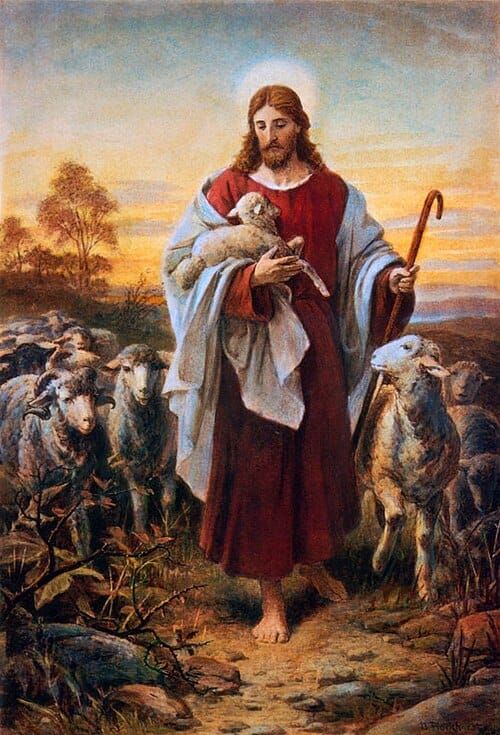
And littleness, far from making the soul negligible, surrounds it with an astonishing dignity. "See that you do not despise one of these little ones," says the Lord, "for I say to you that their angels in heaven always look upon the face of my heavenly Father." The Church has always taken these words in entire earnest: "Beside each believer stands an angel as protector and shepherd leading him to life." And should the little one stray, the Shepherd himself leaves the ninety-nine upon the hills and goes searching, and rejoices over the one found more than over all the rest, for it is not the will of the Father that one of these little ones be lost. The small are not overlooked in the economy of God; they are precisely the ones watched, guarded, and sought.
St. Clare, whose memory the Church keeps today, staked her whole existence upon this truth. Born to nobility in Assisi, she left rank and inheritance behind and chose to be little and poor with the poor Christ, and in forty years of hidden prayer behind the walls of San Damiano she tasted what Ezekiel tasted: that the word of God, received wholly, is sweet beyond every possession she had renounced.
The lesson for the soul, then, is twofold and plain: feed daily upon the word of God, and consent to be small. The world proposes a greatness of accumulation and self-sufficiency, and it leaves the heart famished; the Kingdom proposes a greatness of receiving, and it satisfies. "You have made us for yourself, O Lord, and our heart is restless until it rests in you," wrote St. Augustine, who had wearied himself in every other pasture first. The soul that opens its mouth to the word, that becomes a child before its Father, that lets itself be found and carried when it strays, discovers at last that it was never despised and never forgotten, but loved from before its beginning, and led home upon the shoulders of God.
Lord Jesus, teach me to open my mouth for your word before I open it for my own. Make me small within, that I may enter where only the little pass; feed me with your promises, sweeter than honey; and when I wander, seek me out and lay me on your shoulders and carry me home. Through Christ our Lord. Amen.
Sources & References
- "Son of man, eat what is before you… as sweet as honey in my mouth" — Ezekiel 2:8—3:4 (First Reading, USCCB Lectionary)
- "How sweet to my palate are your promises, sweeter than honey to my mouth!" — Psalm 119:103 (Responsorial Psalm)
- "Unless you turn and become like children…"; "their angels in heaven always look upon the face of my heavenly Father"; the lost sheep — Matthew 18:1-5, 10, 12-14 (Gospel)
- "In Sacred Scripture, the Church constantly finds her nourishment and her strength…" — Catechism of the Catholic Church, 104
- "To become a child in relation to God is the condition for entering the kingdom." — Catechism of the Catholic Church, 526
- "Beside each believer stands an angel as protector and shepherd leading him to life." — Catechism of the Catholic Church, 336, quoting St. Basil the Great, Adversus Eunomium III, 1
- "Ignorance of the Scriptures is ignorance of Christ." — St. Jerome, Commentary on Isaiah, Prologue (cited in CCC 133)
- "You have made us for yourself, O Lord…" — St. Augustine, Confessions I, 1
- Papal insight — Pope Francis, General Audience, 18 March 2015; featured in Vatican News "Word of the Day," 11 August 2026
- Liturgical day and readings — USCCB Daily Readings, August 11, 2026 (Lectionary 414)
El sabor de la Palabra y el corazón de un niño
📖 Sagrada Escritura Diaria
Martes 11 de agosto de 2026 — Memoria de Santa Clara, virgen
Lecturas: Ezequiel 2, 8—3, 4 • Salmo 118, 14. 24. 72. 103. 111. 131 • Mateo 18, 1-5. 10. 12-14
Hay una escena extraña y entrañable al comienzo de la primera lectura de hoy. Una mano se tiende hacia el profeta con un libro enrollado, y lo escrito en él son lamentaciones y amenazas; y sin embargo, la orden que lo acompaña no es que lo estudie, ni que lo admire, ni que lo copie, sino que lo coma. "Hijo de hombre, come lo que tienes aquí; cómete este libro y vete a hablar a los hijos de Israel". La palabra de Dios no se da al alma como algo que se contempla desde fuera, como se contempla un monumento o una reliquia de familia; se da como se da el pan, para ser recibida, consumida, convertida en la sustancia misma de quien la recibe.
Y cuando Ezequiel obedece, sigue el prodigio: el libro de lamentaciones le sabe "dulce como la miel". El salmista canta el mismo descubrimiento: "¡Qué dulces al paladar son tus promesas! Más que la miel en la boca". La dulzura no está en el mensaje, cargado de dolor; está en la comunión, en el acoger la palabra de Dios dentro de sí, en la obediencia que hace del alma una sola cosa con lo que Dios dice. El Catecismo enseña que "en la Sagrada Escritura, la Iglesia encuentra sin cesar su alimento y su fuerza", porque en ella no recibe solamente una palabra humana, sino lo que es realmente: Palabra de Dios. Y san Jerónimo afirma lo contrario con su acostumbrada severidad: "La ignorancia de las Escrituras es ignorancia de Cristo". El alma que no se alimenta de la palabra no carece simplemente de conocimientos; pasa hambre sin saber el nombre de su hambre.
El Evangelio lleva la misma lección a imágenes más tiernas. Los discípulos preguntan quién es el más grande en el Reino de los cielos, y el Señor responde no con un argumento, sino con un niño, puesto silenciosamente en medio de ellos. "Si no cambian y no se hacen como los niños, no entrarán en el Reino de los cielos". ¿Qué es lo que el cielo aprecia tanto en el niño? No es solamente la inocencia, que pronto habrá de perder; es la receptividad. El niño no gana su pan, sino que lo recibe; no se procura su propia vida, sino que la recibe cada día de manos que no son las suyas. El niño, como el profeta, abre la boca y toma lo que se le ofrece. La grandeza en el Reino no se mide por lo que el alma puede producir, sino por lo que está dispuesta a recibir.
El papa Francisco, meditando sobre este mismo Evangelio, observó que los niños nos recuerdan "que somos siempre hijos", y que "la vida no nos la hemos dado nosotros mismos sino que la hemos recibido. El gran don de la vida es el primer regalo que nos ha sido dado". Aquí el libro del profeta y el niño del Señor se vuelven una sola enseñanza. El alma no es autora de su existencia, ni fuente de su verdad, ni artífice de su propia salvación; es, del principio al fin, receptora. "Hacerse niño con relación a Dios es la condición para entrar en el Reino".
Y la pequeñez, lejos de hacer al alma insignificante, la rodea de una dignidad asombrosa. "Cuidado con despreciar a uno de estos pequeños", dice el Señor, "pues yo les digo que sus ángeles, en el cielo, ven continuamente el rostro de mi Padre". La Iglesia siempre ha tomado estas palabras con total seriedad: "Nadie podrá negar que cada fiel tiene a su lado un ángel como protector y pastor para conducir su vida". Y si el pequeño se extravía, el mismo Pastor deja las noventa y nueve en los montes y sale a buscarlo, y se alegra más por él que por todas las demás, porque el Padre celestial no quiere que se pierda ni uno solo de estos pequeños. Los pequeños no pasan inadvertidos en la economía de Dios; son precisamente los vigilados, los custodiados, los buscados.
Santa Clara, cuya memoria celebra hoy la Iglesia, apostó toda su existencia a esta verdad. Nacida en la nobleza de Asís, dejó atrás rango y herencia y eligió ser pequeña y pobre con el Cristo pobre, y en cuarenta años de oración escondida tras los muros de San Damián gustó lo que gustó Ezequiel: que la palabra de Dios, recibida por entero, es más dulce que todas las posesiones a las que había renunciado.
La lección para el alma es, pues, doble y sencilla: alimentarse cada día de la palabra de Dios y consentir en ser pequeña. El mundo propone una grandeza de acumulación y autosuficiencia, y deja el corazón hambriento; el Reino propone una grandeza de recepción, y sacia. "Nos hiciste, Señor, para ti, y nuestro corazón está inquieto hasta que descanse en ti", escribió san Agustín, que antes se había fatigado en todos los demás pastos. El alma que abre la boca a la palabra, que se hace niña ante su Padre, que se deja encontrar y llevar cuando se extravía, descubre al fin que nunca fue despreciada ni olvidada, sino amada desde antes de su comienzo, y conducida a casa sobre los hombros de Dios.
Señor Jesús, enséñame a abrir la boca a tu palabra antes de abrirla a la mía. Hazme pequeño por dentro, para entrar por donde solo pasan los pequeños; aliméntame con tus promesas, más dulces que la miel; y cuando me extravíe, sal a buscarme, ponme sobre tus hombros y llévame a casa. Por Jesucristo nuestro Señor. Amén.
Fuentes y referencias
- "Hijo de hombre, come lo que tienes aquí… me supo dulce como la miel" — Ezequiel 2, 8—3, 4 (Primera lectura, Leccionario, USCCB en español)
- "¡Qué dulces al paladar son tus promesas! Más que la miel en la boca" — Salmo 118 (119), 103 (Salmo responsorial)
- "Si no cambian y no se hacen como los niños…"; "sus ángeles, en el cielo, ven continuamente el rostro de mi Padre"; la oveja perdida — Mateo 18, 1-5. 10. 12-14 (Evangelio)
- "En la Sagrada Escritura, la Iglesia encuentra sin cesar su alimento y su fuerza…" — Catecismo de la Iglesia Católica, 104
- "Hacerse niño con relación a Dios es la condición para entrar en el Reino" — Catecismo de la Iglesia Católica, 526
- "Nadie podrá negar que cada fiel tiene a su lado un ángel como protector y pastor para conducir su vida" — Catecismo de la Iglesia Católica, 336, citando a san Basilio Magno, Adversus Eunomium III, 1
- "La ignorancia de las Escrituras es ignorancia de Cristo" — San Jerónimo, Comentario a Isaías, Prólogo (citado en CIC 133)
- "Nos hiciste, Señor, para ti…" — San Agustín, Confesiones I, 1
- Reflexión papal — Papa Francisco, Audiencia general, 18 de marzo de 2015 (texto oficial en español, vatican.va); presentada en Vatican News, "Palabra del día", 11 de agosto de 2026
- Día litúrgico y lecturas — USCCB, Lecturas de hoy, 11 de agosto de 2026 (Leccionario 414)