
📖 Daily Scripture
July 8, 2026 — Wednesday of the Fourteenth Week in Ordinary Time
Readings: Hosea 10:1-3, 7-8, 12 • Psalm 105:2-3, 4-5, 6-7 • Matthew 10:1-7
The prophet Hosea sets before the soul a strange and searching image: a nation that flourishes, whose vineyard grows heavy with fruit, and whose very abundance becomes the occasion of its ruin. For as Israel's harvests multiplied, so did her altars; as her land grew rich, so did the monuments she raised to idols. Prosperity did not draw her nearer to God but scattered her heart among a hundred lesser gods. "Their heart is false," the prophet declares, and in that falseness lies the whole tragedy — a heart divided against itself, offering to creatures the homage owed to the Creator alone.
Here is a lesson the soul must not hurry past, for the temptation of Israel is not confined to an ancient people. Every age, and every heart within it, is tempted to consecrate its increase to something less than God — to build, out of its gifts and comforts and successes, small shrines where gratitude and trust ought to have been laid before the Lord. "The principal crime of the human race, the highest guilt charged upon the world, the whole procuring cause of judgment, is idolatry." So Tertullian wrote, and he understood that idolatry is rarely the crude bowing before wood and stone; more often it is the quiet transfer of the heart's worship to whatever we have come to prize above our Maker.
Against this dispersion the Church sets the healing discipline of adoration. "Human life finds its unity in the adoration of the one God," the Catechism teaches; "the commandment to worship the Lord alone integrates man and saves him from an endless disintegration." The divided heart is not merely a moral failing but a wound to the soul's very unity, a slow coming-apart of the person who no longer has one Lord to gather all his loves into order. To worship God alone is not to be impoverished but to be made whole.
And how is the scattered heart gathered again? Hosea gives the answer in words of great tenderness: "Sow for yourselves justice, reap the fruit of piety; break up for yourselves a new field, for it is time to seek the LORD, till he come and rain down justice upon you." The soul is bidden to break up its hardened ground, to sow deliberate acts of justice and mercy, and above all to seek — for the seeking itself is already the beginning of return. "Let the hearts of those who seek the Lord rejoice," sings the Psalmist, and the Catechism reminds us that God never ceases to call every man to seek him, so as to find life and happiness. The restless disintegration of the idolater finds its cure only in the One for whom the heart was made; as Augustine confessed, "You have made us for yourself, O Lord, and our heart is restless until it rests in you."
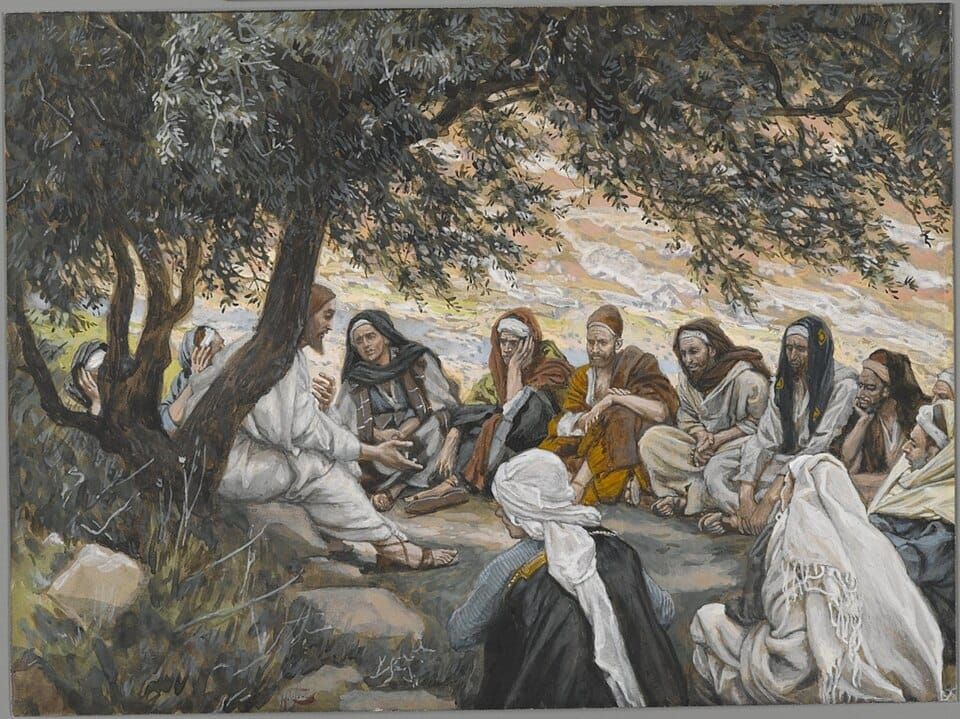
The Gospel shows this seeking crowned with a mission. Jesus summons the Twelve, gives them a share in his own authority, and sends them to the lost sheep with a single proclamation: "The Kingdom of heaven is at hand." From the beginning of his public life, the Catechism observes, Jesus chose certain men, twelve in number, to be with him and to participate in his mission. Yet these were not flawless men; they were fishermen and a tax collector, zealous but frail, and one who would betray. The Lord did not wait for them to be perfect before he sent them, but sent them that they might be made so. The Kingdom advances not by spectacle or human strength but, as one Pope has said, silently and humbly, like a great tree rising from the smallest of seeds. And this is the soul's consolation: that the God who asks for an undivided heart does not demand a finished one, but takes the poor and willing heart and, in the seeking, makes it whole.
Lord, break up the hardened ground within me, and tear down whatever altars I have raised to lesser things. Gather my divided heart into the single love of You, and teach me to seek Your face until I find my rest in You. Send me, imperfect as I am, to sow justice and to proclaim that Your Kingdom is near. Through Christ our Lord. Amen.
Sources & References
- "Their heart is false… Sow for yourselves justice, reap the fruit of piety; break up for yourselves a new field, for it is time to seek the LORD" — Hosea 10:1-3, 7-8, 12 (First Reading)
- "Let the hearts of those who seek the Lord rejoice" — Psalm 105:2-3, 4-5, 6-7 (Responsorial Psalm; refrain: "Seek always the face of the Lord")
- "The Kingdom of heaven is at hand" / the calling of the Twelve — Matthew 10:1-7 (Gospel)
- "Human life finds its unity in the adoration of the one God… saves him from an endless disintegration" — Catechism of the Catholic Church, no. 2114
- "God never ceases to call every man to seek him, so as to find life and happiness" — Catechism of the Catholic Church, no. 30
- "Jesus chose certain men, twelve in number, to be with him and to participate in his mission" — Catechism of the Catholic Church, no. 551
- "The principal crime of the human race… is idolatry" — Tertullian, On Idolatry, ch. 1
- "You have made us for yourself, O Lord, and our heart is restless until it rests in you" — St. Augustine, Confessions, Book I, ch. 1
- Reflection on the Kingdom's silent, humble growth and the imperfect Twelve — Pope Benedict XVI, Homily, 15 June 2008 (via Vatican News, "Word of the Day," 8 July 2026)
El corazón indiviso
📖 Sagrada Escritura Diaria
8 de julio de 2026 — Miércoles de la XIV semana del Tiempo ordinario
Lecturas: Oseas 10, 1-3. 7-8. 12 • Salmo 104, 2-3. 4-5. 6-7 • Mateo 10, 1-7
El profeta Oseas coloca ante el alma una imagen extraña y penetrante: una nación que florece, cuya viña se carga de fruto, y cuya misma abundancia se convierte en ocasión de su ruina. Pues cuanto más se multiplicaban las cosechas de Israel, más se multiplicaban sus altares; cuanto más rico era el país, más ricos eran los monumentos que levantaba a los ídolos. La prosperidad no la acercó a Dios, sino que dispersó su corazón entre cien dioses menores. "Su corazón está dividido", declara el profeta, y en esa división está toda la tragedia: un corazón dividido contra sí mismo, que ofrece a las criaturas el homenaje debido solo al Creador.
He aquí una lección ante la cual el alma no debe pasar de prisa, porque la tentación de Israel no queda encerrada en un pueblo antiguo. Cada época, y cada corazón dentro de ella, se ve tentado a consagrar su abundancia a algo menor que Dios, a construir, con sus dones y comodidades y éxitos, pequeños santuarios donde debían haberse depositado la gratitud y la confianza ante el Señor. "El crimen principal del género humano, la culpa suprema imputada al mundo, la causa entera del juicio, es la idolatría." Así escribió Tertuliano, quien comprendió que la idolatría rara vez es la burda postración ante la madera y la piedra; más a menudo es la callada transferencia del culto del corazón a aquello que hemos llegado a estimar por encima de nuestro Hacedor.
Frente a esta dispersión, la Iglesia propone la disciplina sanadora de la adoración. "La vida humana se unifica en la adoración del Dios Único", enseña el Catecismo; "el mandamiento de adorar al único Señor da unidad al hombre y lo salva de una dispersión infinita." El corazón dividido no es solo una falla moral, sino una herida a la unidad misma del alma, una lenta desintegración de la persona que ya no tiene un solo Señor que recoja todos sus amores en orden. Adorar solo a Dios no es empobrecerse, sino ser hecho íntegro.
¿Y cómo se recoge de nuevo el corazón disperso? Oseas da la respuesta con palabras de gran ternura: "Siembren justicia y cosecharán misericordia; preparen sus tierras para la siembra, pues ya es tiempo de buscar al Señor, para que venga y llueva la salvación sobre ustedes." El alma es invitada a romper su tierra endurecida, a sembrar actos deliberados de justicia y de misericordia, y sobre todo a buscar, pues el buscar mismo es ya el comienzo del regreso. "Siéntase feliz el que lo busca", canta el salmista, y el Catecismo nos recuerda que Dios no cesa de llamar a todo hombre a buscarlo para que viva y encuentre la felicidad. La inquieta desintegración del idólatra halla su cura únicamente en Aquel para quien el corazón fue hecho; como confesó San Agustín: "Nos hiciste, Señor, para ti, y nuestro corazón está inquieto hasta que descanse en ti."
El Evangelio muestra esta búsqueda coronada con una misión. Jesús llama a los Doce, les da parte en su propia autoridad, y los envía a las ovejas perdidas con una sola proclamación: "Ya se acerca el Reino de los cielos." El Catecismo observa que, desde el comienzo de su vida pública, Jesús eligió a unos hombres en número de doce para estar con Él y participar en su misión. Y sin embargo, no eran hombres impecables; eran pescadores y un publicano, fervorosos pero frágiles, y uno que lo traicionaría. El Señor no esperó a que fueran perfectos para enviarlos, sino que los envió para que llegaran a serlo. El Reino avanza no por el espectáculo ni por la fuerza humana, sino, como ha dicho un Papa, en silencio y con humildad, como un gran árbol que se alza de la más pequeña de las semillas. Y este es el consuelo del alma: que el Dios que pide un corazón indiviso no exige un corazón acabado, sino que toma el corazón pobre y dispuesto y, en el buscar, lo hace íntegro.
Señor, rompe la tierra endurecida dentro de mí y derriba cualquier altar que haya levantado a las cosas menores. Recoge mi corazón dividido en el único amor de Ti, y enséñame a buscar Tu rostro hasta hallar mi descanso en Ti. Envíame, imperfecto como soy, a sembrar justicia y a proclamar que Tu Reino está cerca. Por Jesucristo nuestro Señor. Amén.
Fuentes y referencias
- "Su corazón está dividido… Siembren justicia y cosecharán misericordia; preparen sus tierras para la siembra, pues ya es tiempo de buscar al Señor" — Oseas 10, 1-3. 7-8. 12 (Primera lectura)
- "Siéntase feliz el que lo busca" — Salmo 104, 2-3. 4-5. 6-7 (Salmo responsorial; respuesta: "Recurramos al Señor y a su poder")
- "Ya se acerca el Reino de los cielos" / el llamado de los Doce — Mateo 10, 1-7 (Evangelio)
- "La vida humana se unifica en la adoración del Dios Único… lo salva de una dispersión infinita" — Catecismo de la Iglesia Católica, n. 2114
- "Dios no cesa de llamar a todo hombre a buscarlo para que viva y encuentre la felicidad" — Catecismo de la Iglesia Católica, n. 30
- "Jesús eligió a unos hombres en número de doce para estar con Él y participar en su misión" — Catecismo de la Iglesia Católica, n. 551
- "El crimen principal del género humano… es la idolatría" — Tertuliano, Sobre la idolatría, cap. 1
- "Nos hiciste, Señor, para ti, y nuestro corazón está inquieto hasta que descanse en ti" — San Agustín, Confesiones, libro I, cap. 1
- Reflexión sobre el crecimiento silencioso y humilde del Reino y los Doce imperfectos — Papa Benedicto XVI, Homilía, 15 de junio de 2008 (vía Vatican News, "Palabra del día", 8 de julio de 2026)