
📖 Daily Scripture
Monday, August 3, 2026 — Monday of the Eighteenth Week in Ordinary Time
Readings: Jeremiah 28:1-17 • Psalm 119:29, 43, 79, 80, 95, 102 • Matthew 14:22-36
The morning's first reading opens upon a scene of two voices in the same temple, both invoking the same God, and only one of them sent. Hananiah promised what every heart in Jerusalem longed to hear: that within two years the yoke would be broken, the vessels restored, the exiles brought home. Jeremiah's answer is among the most humanly beautiful lines in all the prophets — Amen! thus may the LORD do! — for he too desired that the consoling word should prove true. The true prophet is not the man who takes pleasure in hard sayings; he is the man who will not purchase relief at the price of truth.
What follows is a warning the soul does well to carry with it through the whole of its day. By breaking a wooden yoke, you forge an iron yoke. The burden God permits is not removed by our refusal of it; it is only hardened. Hananiah did not lighten Judah's captivity by a single hour, and he shortened his own life by many years. It is worth pausing to ask, without ceremony and without flattery, how often the same thing is done in miniature: in the counsel we go on seeking until we find someone who will give us the answer we had already chosen; in the account of our own conduct we quietly settle upon because it costs us nothing; in the resolution deferred on the grounds that the moment is not yet ripe. In each instance a wooden yoke is broken, and an iron one silently takes its place.
The Psalm supplies the only remedy. Remove from me the way of falsehood, and favor me with your law. The way of falsehood is rarely a road that someone else has laid down for us; far more often it is one we have paved ourselves, and paved smoothly, and lit at intervals for our own convenience. Against it the Church sets a single steadying fact — God is Truth itself, whose words cannot deceive — and upon that fact a soul may lean the entire weight of its life without fear of the ground giving way.
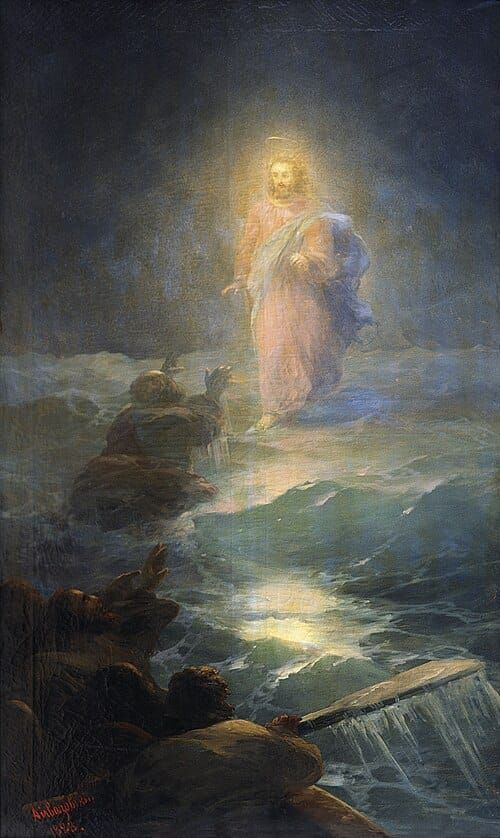
The Gospel carries the same lesson out onto the water. Peter did not begin to sink when the wind rose, for the wind had been contrary the whole night through; he began to sink when he looked at it. His faith failed not by any declaration but by a shift of attention. The most common yet most hidden temptation is our lack of faith, and it expresses itself less by declared incredulity than by our actual preferences — and a preference is precisely what Peter displayed when he preferred the evidence of the gale to the voice that had said Come. So absolutely nothing does it avail to be near Christ, not being near Him by faith.
Yet the Lord did not still the wind. He stretched out His hand. Chrysostom observed that when our part is wanting, then God's part also is at a stand; and this is true, yet that same hour on the water shows that our part may be reduced to three words — Lord, save me — and God's part will still not be wanting. Augustine, imagining himself speaking to the sinking apostle, said that the Lord leaned down and took you by the hand; with your strength alone you cannot rise; hold tight to the hand of the One who reaches down to you. He did not say this to Peter alone.
The practical labour, then, is neither dramatic nor obscure. To live, grow, and persevere in the faith until the end we must nourish it with the word of God — which means returning each day to the word that judges us rather than to the word that flatters us, and preferring, in the ordinary and unwatched decisions where character is actually made, the harder truth of Jeremiah to the pleasant arithmetic of Hananiah.
And the end of the passage is all consolation. Those who came to land at Gennesaret asked only to touch the tassel on His cloak, and as many as touched it were healed. The hand that reached down into the water reaches still. It is stronger than any wind, and it has never once been withdrawn from a soul that cried out for it.
Lord, teach me to love the truth more than the comfort I would make of it. When the wind rises and my eyes fall from You, take me by the hand before I have finished sinking. Keep within me a heart that would rather be corrected by You than consoled by anyone else. Through Christ our Lord. Amen.
Sources & References
- "Amen! thus may the LORD do!" and "By breaking a wooden yoke, you forge an iron yoke!" — Jeremiah 28:1-17, First Reading
- "Remove from me the way of falsehood, and favor me with your law." — Psalm 119:29; refrain, Psalm 119:68b
- "Come." / "Lord, save me." / "as many as touched it were healed" — Matthew 14:22-36, Gospel
- "God is Truth itself, whose words cannot deceive." — Catechism of the Catholic Church, 215
- "The most common yet most hidden temptation is our lack of faith. It expresses itself less by declared incredulity than by our actual preferences." — Catechism of the Catholic Church, 2732
- "To live, grow, and persevere in the faith until the end we must nourish it with the word of God." — Catechism of the Catholic Church, 162
- "So absolutely nothing does it avail to be near Christ, not being near Him by faith." and "when our part is wanting, then God's part also is at a stand" — St. John Chrysostom, Homily 50 on Matthew
- "leaned down and took you by the hand… Hold tight to the hand of the One who reaches down to you." — St. Augustine, Enarrationes in Psalmos 95, 7 (PL 36, 1233)
- Papal commentary on today's Gospel — Pope Benedict XVI, Angelus, 7 August 2011, as presented in Vatican News, "Word of the Day," 3 August 2026
- Readings — USCCB, Daily Readings for 3 August 2026
El yugo de madera y la mano tendida
📖 Sagrada Escritura Diaria
Lunes, 3 de agosto de 2026 — Lunes de la XVIII semana del Tiempo ordinario
Lecturas: Jeremías 28, 1-17 • Salmo 118, 29. 43. 79. 80. 95. 102 • Mateo 14, 22-36
La primera lectura de esta mañana abre sobre una escena de dos voces en el mismo templo, ambas invocando al mismo Dios, y una sola de ellas enviada. Jananías prometió lo que todo corazón de Jerusalén anhelaba escuchar: que dentro de dos años el yugo quedaría roto, los objetos del templo devueltos, los desterrados de vuelta en casa. La respuesta de Jeremías se cuenta entre las líneas humanamente más hermosas de todos los profetas — Amén. Que así lo haga el Señor —, porque también él deseaba que la palabra consoladora resultara verdadera. El verdadero profeta no es el hombre que se complace en las palabras duras; es el hombre que no compra el alivio al precio de la verdad.
Lo que sigue es una advertencia que el alma hará bien en llevar consigo a lo largo de todo el día. Has roto un yugo de madera, pero yo lo sustituiré por uno de hierro. La carga que Dios permite no se quita con nuestra negativa a llevarla; solamente se endurece. Jananías no aligeró el cautiverio de Judá ni una sola hora, y acortó su propia vida en muchos años. Vale la pena detenerse a preguntar, sin ceremonias y sin halagos, cuántas veces se hace lo mismo en pequeño: en el consejo que seguimos buscando hasta encontrar a alguien que nos dé la respuesta que ya habíamos elegido; en la versión de nuestra propia conducta sobre la que nos instalamos calladamente porque no nos cuesta nada; en el propósito aplazado con el pretexto de que el momento aún no ha madurado. En cada caso se rompe un yugo de madera, y otro de hierro ocupa en silencio su lugar.
El Salmo ofrece el único remedio. Apártame de los caminos falsos, y dame la gracia de cumplir tu voluntad. El camino falso rara vez es una senda que otro ha trazado para nosotros; con mucha más frecuencia es una que hemos pavimentado nosotros mismos, y pavimentado con esmero, e iluminado de trecho en trecho para nuestra propia comodidad. Frente a él la Iglesia coloca un solo hecho que sostiene — Dios es la Verdad misma, sus palabras no pueden engañar —, y sobre ese hecho el alma puede apoyar el peso entero de su vida sin temor a que el suelo ceda.
El Evangelio lleva la misma lección hasta las aguas. Pedro no comenzó a hundirse cuando se levantó el viento, pues el viento había sido contrario durante toda la noche; comenzó a hundirse cuando lo miró. Su fe no falló por ninguna declaración, sino por un desplazamiento de la atención. La tentación más frecuente, la más oculta, es nuestra falta de fe, y ésta se expresa menos en una incredulidad declarada que en unas preferencias de hecho — y una preferencia fue precisamente lo que Pedro mostró cuando prefirió la evidencia del vendaval a la voz que había dicho Ven. De nada aprovecha en absoluto estar cerca de Cristo, si no se está cerca de Él por la fe.
Y sin embargo el Señor no calmó el viento. Tendió su mano. Crisóstomo observó que cuando falta nuestra parte, también la parte de Dios queda detenida; y esto es verdad, pero aquella misma hora sobre el agua muestra que nuestra parte puede quedar reducida a dos palabras — Sálvame, Señor — y la parte de Dios seguirá sin faltar. San Agustín, imaginando que se dirige al apóstol que se hunde, dijo que el Señor se inclinó y te tomó de la mano; sólo con tus fuerzas no puedes levantarte; aprieta la mano de Aquel que desciende hasta ti. Y esto no lo dijo sólo a Pedro.
El trabajo práctico, entonces, no es ni dramático ni oscuro. Para vivir, crecer y perseverar hasta el fin en la fe debemos alimentarla con la Palabra de Dios — lo cual significa volver cada día a la palabra que nos juzga y no a la palabra que nos halaga, y preferir, en las decisiones ordinarias y no vigiladas donde de verdad se forja el carácter, la verdad más dura de Jeremías a la agradable aritmética de Jananías.
Y el final del pasaje es todo consuelo. Los que llegaron a Genesaret pidieron solamente tocar el borde de su manto, y cuantos lo tocaron quedaron curados. La mano que descendió hasta el agua sigue descendiendo. Es más fuerte que cualquier viento, y jamás ha sido retirada de un alma que clamó por ella.
Señor, enséñame a amar la verdad más que el consuelo que yo quisiera fabricar de ella. Cuando se levante el viento y mis ojos se aparten de Ti, tómame de la mano antes de que haya acabado de hundirme. Conserva dentro de mí un corazón que prefiera ser corregido por Ti antes que consolado por cualquier otro. Por Jesucristo nuestro Señor. Amén.
Fuentes y referencias
- "Amén. Que así lo haga el Señor" y "Has roto un yugo de madera, pero yo lo sustituiré por uno de hierro" — Jeremías 28, 1-17, Primera lectura
- "Apártame de los caminos falsos, y dame la gracia de cumplir tu voluntad." — Salmo 118, 29; respuesta, Salmo 118, 68b
- "Ven." / "¡Sálvame, Señor!" / "cuantos lo tocaron, quedaron curados" — Mateo 14, 22-36, Evangelio
- "Dios es la Verdad misma, sus palabras no pueden engañar." — Catecismo de la Iglesia Católica, 215
- "La tentación más frecuente, la más oculta, es nuestra falta de fe. Esta se expresa menos en una incredulidad declarada que en unas preferencias de hecho." — Catecismo de la Iglesia Católica, 2732
- "Para vivir, crecer y perseverar hasta el fin en la fe debemos alimentarla con la Palabra de Dios." — Catecismo de la Iglesia Católica, 162
- "De nada aprovecha estar cerca de Cristo, si no se está cerca de Él por la fe" y "cuando falta nuestra parte, también la parte de Dios queda detenida" — San Juan Crisóstomo, Homilía 50 sobre San Mateo
- "se inclinó y te tomó de la mano… Aprieta la mano de Aquel que desciende hasta ti." — San Agustín, Enarrationes in Psalmos 95, 7 (PL 36, 1233)
- Comentario papal sobre el Evangelio de hoy — Papa Benedicto XVI, Ángelus, 7 de agosto de 2011, según Vatican News, "Palabra del día," 3 de agosto de 2026
- Lecturas — USCCB, Lecturas de Hoy del 3 de agosto de 2026