
📖 Daily Scripture
Tuesday, September 1, 2026 — Tuesday of the Twenty-second Week in Ordinary Time
Readings: 1 Corinthians 2:10b-16 • Psalm 145:8-9, 10-11, 12-13ab, 13cd-14 • Luke 4:31-37
There is in every soul an interior country which no other traveller has entered, a region of thought and desire and half-formed intention which the soul alone inhabits, and which even the soul does not wholly know. Saint Paul takes this hiddenness as his starting point: as no one knows what pertains to a man except the spirit that is within him, so no one knows what pertains to God except the Spirit of God. It is a startling comparison, for it grants to the human person a genuine privacy, an inwardness that is real, and then declares that this inwardness has been visited. The Spirit who scrutinizes the depths of God has been given, so that what was once impenetrable might become the soul's own inheritance. The Catechism sets the mystery down in a single line: "No one comprehends the thoughts of God except the Spirit of God."
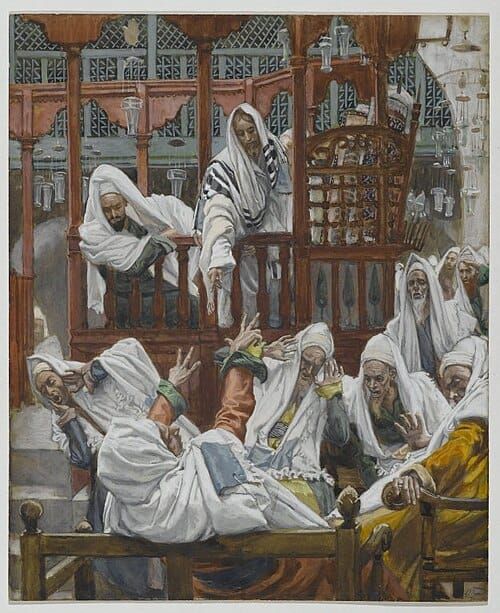
Yet the gift is not illumination only. In the synagogue at Capernaum the people were astonished, and their astonishment fell not upon the beauty of what was said but upon its authority: here was a word that accomplished what it uttered. "Be quiet! Come out of him!" — and the thing was done. The unclean spirit knew the Holy One of God before the congregation did, and the man himself, so long the dwelling of another's will, was given back to himself without harm. To possess the mind of Christ, then, is not to hold a lofty opinion about Him; it is to stand under a word that commands, and to be changed by standing there.
There is a comfortable error which imagines the interior life a neutral chamber, a private study in which the soul reasons at leisure and admits or refuses whatever it pleases. The reading of this day forbids that comfort. The natural man, the Apostle says, cannot receive the things of the Spirit of God, for to him they are foolishness — not because he is unintelligent, but because he lacks the light by which such things are seen. And what is not governed by the Spirit does not for that reason remain ungoverned. The man in the synagogue had not chosen his tenant. Neither does the soul choose, in any deliberate hour, the resentment nursed in silence until it hardens into a settled habit of judgment, or the appetite indulged until it begins to dictate the hour and the plan, or the vanity that starts as a small pleasure in being well thought of and ends by arranging an entire life around that opinion. Each enters as a guest. Each, unresisted, becomes a master.
The remedy is not a deeper inspection of oneself, for the sickness is precisely that the self cannot see itself truly. The remedy is to bring the inner chamber under the authority of a word that is not one's own. The Church has always understood the work of redemption to be already at labour in the teaching of Christ, "in his word which purifies its hearers" — and this purifying is a practical thing, undertaken in ordinary hours. It means reading the Scriptures as a command rather than as information, and letting a single sentence stand over the day's decisions. It means the honest evening reckoning in which the soul asks not what was pleasant but what was true. It means, above all, the sacrament of confession, where the word once spoken at Capernaum is spoken again over one's own life, quietly, and by name.
That deliverance is real, and the Church names it plainly: "Jesus' exorcisms free some individuals from the domination of demons." Yet the Gospel is careful to record that the Lord silenced the very spirit which proclaimed Him. Benedict XVI saw the reason: the liberation of the human race was not to be won by a display of power but by the Cross, and the devil's whole labour was to divert Him toward "the human logic of a powerful and successful Messiah." The soul should learn patience from this. Deliverance from a long habit is seldom a single stroke; it is more often the slow and unspectacular way of the Cross, in which one is thrown down before one is set free, and rises without harm.
For that is the direction of the entire work. Saint Irenaeus taught that Christ recapitulated in Himself the long history of mankind, so that "what we had lost in Adam, that is, being in the image and likeness of God, we might recover in Christ Jesus"; and Saint Basil, that "through the Holy Spirit we are restored to paradise, led back to the Kingdom of heaven, and adopted as children." The Psalm of this day says the same in the plainest words: the Lord lifts up all who are falling and raises up all who are bowed down. The interior country is not to be abandoned to whatever wishes to occupy it. It is to be given over, room by room, to the One who alone knows its depths, and who has come not to destroy but to restore.
Father, Your Son spoke at Capernaum with authority, and the unclean spirit obeyed Him. Speak that word now over the rooms within me that I have never dared to open. Give me Your Spirit, that I may know what I could never reason my way toward, and grant me the mind of Christ, that I may love what He loves. Where some long habit has made itself master, cast it out gently, and let it do me no harm in the going. Through Christ our Lord. Amen.
Sources & References
- "The Spirit scrutinizes everything, even the depths of God" — First Reading, 1 Corinthians 2:10b-16 (USCCB Lectionary 432)
- "The Lord lifts up all who are falling and raises up all who are bowed down" — Responsorial Psalm, Psalm 145:8-9, 10-11, 12-13ab, 13cd-14
- "Be quiet! Come out of him!" — Gospel, Luke 4:31-37
- "No one comprehends the thoughts of God except the Spirit of God" — Catechism of the Catholic Church, 687
- "in his word which purifies its hearers" — Catechism of the Catholic Church, 517
- "Jesus' exorcisms free some individuals from the domination of demons" — Catechism of the Catholic Church, 550
- "what we had lost in Adam, that is, being in the image and likeness of God, we might recover in Christ Jesus" — St. Irenaeus of Lyons, Against Heresies 3, 18, 1, cited in Catechism of the Catholic Church, 518
- "through the Holy Spirit we are restored to paradise, led back to the Kingdom of heaven, and adopted as children" — St. Basil the Great, On the Holy Spirit 15, 36, cited in Catechism of the Catholic Church, 736
- "the human logic of a powerful and successful Messiah" — Pope Benedict XVI, Angelus, 1 February 2009, as presented in Vatican News, Word of the Day, 1 September 2026
- Liturgical day and citations: USCCB Daily Readings, Tuesday of the Twenty-second Week in Ordinary Time, Lectionary 432
La Palabra que manda en lo profundo
📖 Sagrada Escritura Diaria
Martes, 1 de septiembre de 2026 — Martes de la XXII semana del Tiempo ordinario
Lecturas: 1 Corintios 2, 10-16 • Salmo 144, 8-9. 10-11. 12-13ab. 13cd-14 • Lucas 4, 31-37
Hay en toda alma un país interior en el que ningún otro viajero ha entrado, una región de pensamientos, de deseos y de intenciones a medio formar que sólo el alma habita y que ni siquiera el alma conoce del todo. San Pablo toma esa condición escondida como punto de partida: así como nadie conoce lo que hay en el hombre sino el espíritu del hombre que está dentro de él, así tampoco nadie conoce lo que hay en Dios sino el Espíritu de Dios. Es una comparación asombrosa, porque concede a la persona humana una intimidad verdadera, una interioridad real, y a continuación declara que esa interioridad ha sido visitada. El Espíritu que conoce perfectamente todo, hasta lo más profundo de Dios, ha sido dado, para que lo que antes era impenetrable llegue a ser herencia propia del alma. El Catecismo asienta el misterio en una sola línea: "Nadie conoce lo íntimo de Dios, sino el Espíritu de Dios".
Pero el don no es solamente iluminación. En la sinagoga de Cafarnaúm todos estaban asombrados, y su asombro no recaía sobre la belleza de lo que se decía, sino sobre su autoridad: allí había una palabra que realizaba lo que pronunciaba. "Cállate y sal de ese hombre", y la cosa quedó hecha. El espíritu inmundo reconoció al Santo de Dios antes que la asamblea, y aquel hombre, morada durante tanto tiempo de una voluntad ajena, fue devuelto a sí mismo sin sufrir daño alguno. Poseer el modo de pensar de Cristo, entonces, no consiste en tener acerca de Él una opinión elevada; consiste en permanecer bajo una palabra que manda, y en ser transformado por el hecho de permanecer allí.
Existe un error cómodo que imagina la vida interior como una habitación neutral, un estudio privado en el que el alma razona con calma y admite o rechaza lo que le place. La lectura de este día prohíbe esa comodidad. El hombre, con su sola inteligencia, dice el Apóstol, no puede comprender las cosas del Espíritu de Dios, porque para él son una locura; y no porque carezca de inteligencia, sino porque le falta la luz con la que tales cosas se ven. Y lo que no está gobernado por el Espíritu no queda, por eso mismo, sin gobierno. El hombre de la sinagoga no había escogido a su huésped. Tampoco el alma escoge, en ninguna hora deliberada, el rencor alimentado en silencio hasta endurecerse en un hábito fijo de juzgar, ni el apetito consentido hasta que empieza a dictar la hora y el plan, ni la vanidad que comienza como un pequeño placer de ser bien considerado y termina por ordenar toda una vida en torno a esa opinión. Cada uno entra como huésped. Cada uno, si no se le resiste, se vuelve amo.
El remedio no es una inspección más profunda de sí mismo, porque la enfermedad consiste precisamente en que el yo no puede verse a sí mismo con verdad. El remedio es someter la habitación interior a la autoridad de una palabra que no es la propia. La Iglesia siempre ha entendido que la obra de la redención actúa ya en la enseñanza de Cristo, "en su palabra que purifica a sus oyentes", y esa purificación es algo práctico, que se emprende en las horas ordinarias. Significa leer las Escrituras como un mandato y no como una información, y dejar que una sola frase se mantenga por encima de las decisiones del día. Significa el examen sincero de la tarde, en el que el alma pregunta no qué fue agradable, sino qué fue verdadero. Significa, sobre todo, el sacramento de la confesión, donde la palabra pronunciada una vez en Cafarnaúm vuelve a pronunciarse sobre la propia vida, en silencio y por el nombre de cada uno.
Esa liberación es real, y la Iglesia la nombra con sencillez: "Los exorcismos de Jesús liberan a los hombres del dominio de los demonios". Sin embargo, el Evangelio tiene cuidado de dejar constancia de que el Señor hizo callar al mismo espíritu que lo proclamaba. Benedicto XVI vio la razón: la liberación del género humano no había de conquistarse mediante una demostración de poder, sino mediante la cruz, y todo el empeño del diablo consistía en desviarlo hacia "la lógica humana de un Mesías poderoso y lleno de éxito". De esto debe el alma aprender paciencia. La liberación de un hábito antiguo rara vez es un solo golpe; es más bien el camino lento y sin espectáculo de la cruz, en el que uno es derribado antes de quedar libre, y se levanta sin haber sufrido daño.
Porque ésa es la dirección de toda la obra. San Ireneo enseñó que Cristo recapituló en sí mismo la larga historia de la humanidad, de suerte que "lo que perdimos en Adán, es decir, el ser imagen y semejanza de Dios, lo recuperamos en Cristo Jesús"; y san Basilio, que "por el Espíritu Santo se nos concede de nuevo la entrada en el paraíso, la posesión del reino de los cielos, la recuperación de la adopción de hijos". El salmo de este día lo dice con las palabras más llanas: da su apoyo el Señor al que tropieza y al agobiado alivia. El país interior no ha de abandonarse a cualquiera que desee ocuparlo. Ha de entregarse, habitación por habitación, a Aquel que es el único que conoce sus profundidades, y que no ha venido a destruir, sino a restaurar.
Padre, tu Hijo habló en Cafarnaúm con autoridad, y el espíritu inmundo le obedeció. Pronuncia ahora esa palabra sobre las habitaciones que hay dentro de mí y que nunca me he atrevido a abrir. Dame tu Espíritu, para que conozca lo que jamás podría alcanzar razonando, y concédeme el modo de pensar de Cristo, para que ame lo que Él ama. Donde algún hábito antiguo se haya hecho dueño, expúlsalo con dulzura, y que al salir no me haga daño alguno. Por Jesucristo nuestro Señor. Amén.
Fuentes y referencias
- "El Espíritu conoce perfectamente todo, hasta lo más profundo de Dios" — Primera lectura, 1 Corintios 2, 10-16 (Leccionario 432, USCCB)
- "Da su apoyo el Señor al que tropieza y al agobiado alivia" — Salmo responsorial, Salmo 144, 8-9. 10-11. 12-13ab. 13cd-14
- "Cállate y sal de ese hombre" — Evangelio, Lucas 4, 31-37
- "Nadie conoce lo íntimo de Dios, sino el Espíritu de Dios" — Catecismo de la Iglesia Católica, 687
- "en su palabra que purifica a sus oyentes" — Catecismo de la Iglesia Católica, 517
- "Los exorcismos de Jesús liberan a los hombres del dominio de los demonios" — Catecismo de la Iglesia Católica, 550
- "lo que perdimos en Adán, es decir, el ser imagen y semejanza de Dios, lo recuperamos en Cristo Jesús" — San Ireneo de Lyon, Adversus haereses 3, 18, 1, citado en el Catecismo de la Iglesia Católica, 518
- "Por el Espíritu Santo se nos concede de nuevo la entrada en el paraíso, la posesión del reino de los cielos, la recuperación de la adopción de hijos" — San Basilio Magno, Liber de Spiritu Sancto 15, 36, citado en el Catecismo de la Iglesia Católica, 736
- "la lógica humana de un Mesías poderoso y lleno de éxito" — Benedicto XVI, Ángelus, 1 de febrero de 2009 (texto oficial en vatican.va)
- Día litúrgico y citas: Lecturas diarias de la USCCB, Martes de la XXII semana del Tiempo ordinario, Leccionario 432