
📖 Daily Scripture
Saturday, August 1, 2026 — Memorial of Saint Alphonsus Liguori, Bishop and Doctor of the Church
Readings: Jeremiah 26:11-16, 24 • Psalm 69:15-16, 30-31, 33-34 • Matthew 14:1-12
Two men stand under judgment in today's readings, and neither of them chose the ground on which he stood. Jeremiah is dragged into the court of the house of the Lord by priests and prophets who have already pronounced his sentence, and he offers in his defence nothing but the plain fact of his errand: it was the Lord who sent him. John lies bound in a fortress cell, having said to a king the one sentence a king least wished to hear — that it was not lawful for him to have his brother's wife. The prophet is spared; the forerunner is not. Yet the difference in their outcomes tells us less about their fidelity than about the freedom of God, who is master both of the deliverance and of the delay.
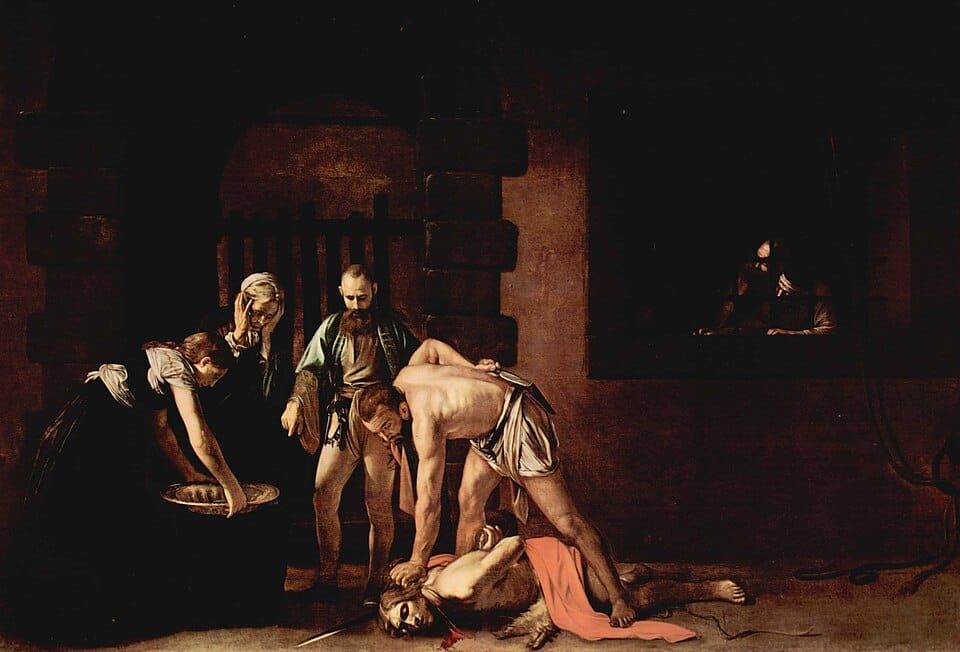
It is Herod, and not John, whom the Gospel invites the soul to study, for Herod is the more familiar figure. He is not a man of settled malice. He heard John gladly enough to fear him, and regarded him as a prophet, and when the girl asked for his head the king was distressed. Everything within him knew the deed to be wrong. And still he gave the order — not because his conscience had been overthrown by argument, but because there were guests at the table. He had sworn an oath in company, and he would rather commit a murder than be thought a man who does not keep his word before company. This is the peculiar cowardice the Gospel sets before us, and it is not a royal vice; it is a household one.
For the soul rarely abandons the truth in a single stroke. It surrenders the truth by degrees, in rooms where the truth would be unwelcome — in the silence kept while a name is being torn apart, in the laughter joined rather than withheld, in the conviction quietly softened so that no one at the table need be made uncomfortable. Herod's banquet is repeated wherever a person prefers the good opinion of the room to the judgment of God. And the Church, knowing how heavy that pressure is, does not leave the matter to our discretion: in situations that require witness to the faith, the Christian must profess it without equivocation, and must keep a clear conscience toward God and toward men.
That conscience is not a private feeling to be consulted and then overruled by the company we keep. Present at the heart of the person, it enjoins him at the appropriate moment to do good and to avoid evil; and when he listens to his conscience, the prudent man can hear God speaking. Herod heard, and hurried past the hearing. Because conscience can be silenced, it must first be fed: in the formation of conscience the Word of God is the light for our path, and we must assimilate it in faith and prayer and put it into practice. A conscience nourished on nothing will have nothing to say when the platter is called for.
The Church has never taught that suffering by itself sanctifies. It is not the punishment but the cause that makes the martyr, as Augustine reminds us. What crowned John was not the sword but the truth he would not withdraw for a king's pleasure. Martyrdom is the supreme witness given to the truth of the faith: it means bearing witness even unto death. And such witness is never wasted, for the blood of Christians is seed — what tyranny buries, God plants.
Nor is the truth we owe our neighbour a harsh thing. The bishop the Church honours today, a doctor of the moral life, found a balanced synthesis of the laws of God and the dynamics of man's conscience and freedom, and held to it with a charitable, understanding, and patient attitude towards his brethren. Truth spoken without love becomes a weapon; love that will not speak the truth becomes flattery. Between the two the saints walk.
The Psalm places on the lips of the soul the prayer of everyone who has ever been out of his depth — Lord, in your great love, answer me — and answers it in the same breath: the Lord hears the poor, and his own who are in bonds he spurns not. John's disciples, when everything had been taken from them, came and took away the body and buried him, and then they went and told Jesus. That is where every faithful sorrow ends. Nothing given for the truth is lost; it is only carried to Him.
Lord, You know how easily I trade Your truth for the comfort of a room. Teach me to fear Your judgment more than the opinion of anyone seated at my table, and to speak what is true with such charity that it wounds nothing but the lie. When the cost comes, let me not withdraw within me the word You have given. Through Christ our Lord. Amen.
Sources & References
- "Now, therefore, reform your ways and your deeds"; "it was the Lord who sent me" — Jeremiah 26:11-16, 24 (First Reading)
- "Lord, in your great love, answer me"; "the LORD hears the poor, and his own who are in bonds he spurns not" — Psalm 69:15-16, 30-31, 33-34 (Responsorial Psalm)
- "It is not lawful for you to have her"; "The king was distressed"; "they went and told Jesus" — Matthew 14:1-12 (Gospel)
- "In situations that require witness to the faith, the Christian must profess it without equivocation"; "a clear conscience toward God and toward men" — Catechism of the Catholic Church, 2471
- "enjoins him at the appropriate moment to do good and to avoid evil"; "When he listens to his conscience, the prudent man can hear God speaking" — Catechism of the Catholic Church, 1777
- "In the formation of conscience the Word of God is the light for our path" — Catechism of the Catholic Church, 1785
- "Martyrdom is the supreme witness given to the truth of the faith: it means bearing witness even unto death" — Catechism of the Catholic Church, 2473
- "It is not the punishment but the cause that makes the martyr" — St. Augustine, Letter 89, 2 (cf. Sermon 327)
- "The blood of Christians is seed" — Tertullian, Apology 50, 13
- "a balanced synthesis of the laws of God and the dynamics of man's conscience and freedom"; "a charitable, understanding, and patient attitude towards his brethren" — Pope Leo XIV, Message to the 17th International Congress of Moral Theology, 20 August 2025 (Vatican News)
- Readings: USCCB, Memorial of Saint Alphonsus Liguori, 1 August 2026 (Lectionary 406)
La palabra que Herodes no pudo silenciar
📖 Sagrada Escritura Diaria
Sábado, 1 de agosto de 2026 — Memoria de San Alfonso María de Ligorio, obispo y doctor de la Iglesia
Lecturas: Jeremías 26, 11-16. 24 • Salmo 68, 15-16. 30-31. 33-34 • Mateo 14, 1-12
Dos hombres comparecen hoy ante un tribunal, y ninguno de los dos eligió el terreno en que fue puesto. A Jeremías lo arrastran al atrio de la casa del Señor unos sacerdotes y profetas que ya han pronunciado su sentencia, y en su defensa no ofrece más que el hecho desnudo de su encargo: es el Señor quien lo ha enviado. Juan yace encadenado en la cárcel de una fortaleza, después de haber dicho a un rey la única frase que un rey no deseaba oír: que no le estaba permitido tenerla por mujer. Al profeta lo perdonan; al precursor, no. Pero la diferencia de sus desenlaces dice menos de su fidelidad que de la libertad de Dios, dueño lo mismo de la liberación que de la demora.
Es Herodes, y no Juan, a quien el Evangelio invita al alma a estudiar, porque Herodes es la figura más conocida. No es un hombre de malicia asentada. Escuchaba a Juan lo bastante como para temerle, lo tenía por profeta, y cuando la joven pidió su cabeza, el rey se entristeció. Todo en él sabía que aquello estaba mal. Y aun así dio la orden: no porque un argumento hubiera derribado su conciencia, sino porque había invitados a la mesa. Había jurado delante de todos, y prefirió cometer un asesinato antes que pasar por hombre que no cumple su palabra delante de todos. Ésta es la cobardía peculiar que el Evangelio pone ante nosotros, y no es un vicio de reyes: es un vicio doméstico.
Porque el alma rara vez abandona la verdad de un solo golpe. La entrega por grados, en las salas donde la verdad resultaría incómoda: en el silencio que se guarda mientras despedazan un nombre, en la risa que se acompaña en lugar de retenerse, en la convicción que se suaviza en voz baja para que nadie en la mesa tenga que sentirse molesto. El banquete de Herodes se repite dondequiera que alguien prefiere la buena opinión de la sala al juicio de Dios. Y la Iglesia, que sabe cuánto pesa esa presión, no deja el asunto a nuestro arbitrio: en las situaciones que exigen dar testimonio de la fe, el cristiano debe profesarla sin ambigüedad, y debe guardar una conciencia limpia ante Dios y ante los hombres.
Esa conciencia no es un sentimiento privado que se consulta y luego se deja anular por la compañía que uno frecuenta. Presente en el corazón de la persona, la conciencia moral le ordena, en el momento oportuno, practicar el bien y evitar el mal; y el hombre prudente, cuando escucha la conciencia moral, puede oír a Dios que le habla. Herodes oyó, y pasó de largo por lo oído. Y precisamente porque la conciencia puede ser acallada, antes hay que alimentarla: en la formación de la conciencia, la Palabra de Dios es la luz de nuestro caminar, y es preciso que la asimilemos en la fe y la oración, y la pongamos en práctica. Una conciencia alimentada de nada no tendrá nada que decir cuando pidan la bandeja.
La Iglesia nunca ha enseñado que el sufrimiento santifique por sí solo. No es la pena, sino la causa, la que hace al mártir, recuerda san Agustín. Lo que coronó a Juan no fue la espada, sino la verdad que no quiso retirar por el gusto de un rey. El martirio es el supremo testimonio de la verdad de la fe; designa un testimonio que llega hasta la muerte. Y ese testimonio jamás se pierde, porque la sangre de los cristianos es semilla: lo que la tiranía entierra, Dios lo siembra.
Tampoco es cosa dura la verdad que debemos al prójimo. El obispo que la Iglesia honra hoy, doctor de la vida moral, supo encontrar una síntesis equilibrada entre las exigencias de la ley de Dios y la dinámica de la conciencia y la libertad humanas, y la sostuvo con una actitud caritativa, comprensiva y paciente hacia sus hermanos. La verdad dicha sin amor se vuelve arma; el amor que no se atreve a decir la verdad se vuelve halago. Entre los dos caminan los santos.
El salmo pone en labios del alma la oración de todo el que alguna vez se ha hundido por encima de sus fuerzas —por tu gran misericordia, escúchame, Señor— y en el mismo aliento la responde: el Señor jamás desoye al pobre, no olvida al que se encuentra encadenado. Los discípulos de Juan, cuando ya todo les había sido quitado, recogieron el cuerpo, lo sepultaron, y luego fueron a avisarle a Jesús. Ahí termina toda pena fiel. Nada de lo entregado por la verdad se pierde: sólo es llevado hasta Él.
Señor, tú sabes con qué facilidad cambio tu verdad por la comodidad de una sala. Enséñame a temer tu juicio más que la opinión de cualquiera que se siente a mi mesa, y a decir lo verdadero con una caridad que no hiera sino a la mentira. Cuando llegue el precio, no permitas que retire dentro de mí la palabra que has puesto. Por Jesucristo nuestro Señor. Amén.
Fuentes y referencias
- «corrijan su conducta y sus obras»; «el Señor me ha enviado» — Jeremías 26, 11-16. 24 (Primera lectura)
- «Por tu gran misericordia, escúchame, Señor»; «el Señor jamás desoye al pobre, no olvida al que se encuentra encadenado» — Salmo 68, 15-16. 30-31. 33-34 (Salmo responsorial)
- «no le estaba permitido tenerla por mujer»; «el rey se entristeció»; «fueron a avisarle a Jesús» — Mateo 14, 1-12 (Evangelio)
- «En las situaciones que exigen dar testimonio de la fe, el cristiano debe profesarla sin ambigüedad»; «conciencia limpia ante Dios y ante los hombres» — Catecismo de la Iglesia Católica, 2471
- «le ordena, en el momento oportuno, practicar el bien y evitar el mal»; «El hombre prudente, cuando escucha la conciencia moral, puede oír a Dios que le habla» — Catecismo de la Iglesia Católica, 1777
- «En la formación de la conciencia, la Palabra de Dios es la luz de nuestro caminar» — Catecismo de la Iglesia Católica, 1785
- «El martirio es el supremo testimonio de la verdad de la fe; designa un testimonio que llega hasta la muerte» — Catecismo de la Iglesia Católica, 2473
- «No es la pena, sino la causa, la que hace al mártir» — San Agustín, Carta 89, 2 (cf. Sermón 327)
- «La sangre de los cristianos es semilla» — Tertuliano, Apologético 50, 13
- «una síntesis equilibrada entre las exigencias de la ley de Dios y la dinámica de la conciencia y la libertad humanas»; «una actitud caritativa, comprensiva y paciente» — Papa León XIV, Mensaje al XVII Congreso Internacional de Teología Moral, 20 de agosto de 2025 (Vatican News)
- Lecturas: USCCB, Memoria de San Alfonso María de Ligorio, 1 de agosto de 2026 (Leccionario 406)