
📖 Daily Scripture
Tuesday, August 4, 2026 — Memorial of Saint John Vianney, Priest
Readings: Jeremiah 30:1-2, 12-15, 18-22 • Psalm 102:16-18, 19-21, 29, 22-23 • Matthew 14:22-36
There is a severity in the words given to Jeremiah this morning which the soul would rather not hear, and which it is nevertheless necessary to hear. Incurable is your wound, grievous your bruise; there is none to plead your cause, no remedy for your running sore, no healing for you. It is not a physician's diagnosis but a verdict, and it is pronounced by the very One to whom the wounded had looked for relief. Yet it must be observed that the Lord does not describe the wound in order to abandon it. He describes it because the soul has grown accustomed to it, has learned to live beside it, has taken its ache for the ordinary weather of life; and what has grown familiar is never repented of.
For no sooner has the sentence fallen than the same voice turns: See! I will restore the tents of Jacob, his dwellings I will pity; city shall be rebuilt upon hill, and palace restored as it was. The wound was called incurable that the healing might be known to be His. Had there remained any remedy of our own devising, any ointment of habit or philosophy or good intention, we should have applied it and called ourselves whole, and the promise that closes the passage — you shall be my people, and I will be your God — would have been a courtesy rather than a rescue.
This is the first lesson the day presses upon the soul: that we are seldom in danger from the wounds we cannot hide, and almost always from the wounds we can. Affliction that is public drives a man to prayer. Affliction that is private and manageable — the quiet grudge, the small dishonesty long since made a habit, the affection given to what cannot return it — is another matter altogether. Illness can lead to anguish, self-absorption, sometimes even despair and revolt against God; it can also make a person more mature, helping him discern in his life what is not essential so that he can turn toward that which is. Everything depends upon whether the wound is carried to Him or carried away from Him.
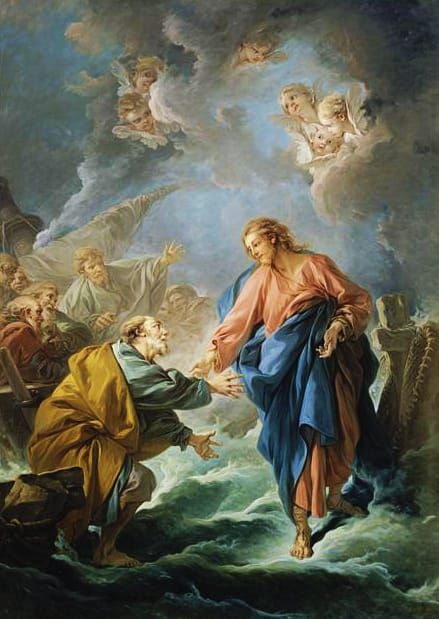
The Gospel sets the same truth upon the water. Peter's faith is real; he does not step out upon presumption but upon a word — Lord, if it is you, command me to come to you on the water — and the word is given, and he walks. What undoes him is not the sea, which he had already overcome, but the wind, which he had not thought to fear. So absolutely nothing does it avail to be near Christ, not being near Him by faith, wrote Chrysostom of this scene, adding a sentence that deserves to be carried through the whole of a day: when our part is wanting, then God's part also is at a stand.
And yet the sinking is not the end of the story but the beginning of the lesson. Augustine, preaching upon this very passage, would have the soul understand that no one is made strong by God, but he who feels himself weak of his own self; and that the cry wrung out of Peter as the water took him — Lord, save me — is not the failure of faith but its purest act. Say, "I perish," that you perish not. There is no shorter road from the wound to the healing than that.
It is worth noticing where the peril actually lay. Peter was not undone by anything outward, and the Holy Father has warned in our own time that ritualism does not make one grow in goodness, that it can lead one to neglect, or even to justify, choices and attitudes that are uncharitable, that wound the soul and close the heart. A man may keep every observance and still be sinking, because the wind he fears is inside him. The Church is plain about the remedy: the human heart is heavy and hardened; God must give man a new heart. Conversion is first of all a work of the grace of God who makes our hearts return to him. God gives us the strength to begin anew.
The concrete duty of this day, then, is neither large nor obscure. It is to name one wound honestly — the one the soul has learned to manage rather than surrender — and to hold it up rather than hide it: in the confessional, where the priest whose memorial is kept today spent whole days and nights doing nothing else; and in the quiet of prayer, since to live, grow, and persevere in the faith until the end we must nourish it with the word of God, and we must beg the Lord to increase our faith. Nothing more is asked. The hand does not wait for the sinking to finish.
For that is the mercy the Gospel takes care to record. Immediately Jesus stretched out his hand and caught him. Not after the lesson had been learned, not after the doubt had been repented of, but immediately; and afterward the gentle questioning, and afterward the wind dying down, and afterward the worship. The wound that was called incurable was so called only that the soul might at last stop treating it, and let itself be healed.
Lord, I have wounds I have learned to live with. Teach me to bring them to you before they harden into habit, and give me the courage to cry out early rather than late. When the wind rises within me, stretch out your hand, and let me find that you were never further off than a word. Through Christ our Lord. Amen.
Sources & References
- "Incurable is your wound, grievous your bruise; there is none to plead your cause, no remedy for your running sore, no healing for you." — Jeremiah 30:12-13, First Reading, Lectionary 408, USCCB Daily Readings, 4 August 2026
- "See! I will restore the tents of Jacob, his dwellings I will pity; city shall be rebuilt upon hill, and palace restored as it was." — Jeremiah 30:18
- "You shall be my people, and I will be your God." — Jeremiah 30:22
- "The Lord will build up Zion again, and appear in all his glory." — Responsorial Psalm 102:17
- "Lord, if it is you, command me to come to you on the water." / "Lord, save me!" / "Immediately Jesus stretched out his hand and caught him." — Matthew 14:28, 30, 31
- "Illness can lead to anguish, self-absorption, sometimes even despair and revolt against God. It can also make a person more mature, helping him discern in his life what is not essential so that he can turn toward that which is." — Catechism of the Catholic Church, 1501
- "The human heart is heavy and hardened. God must give man a new heart. Conversion is first of all a work of the grace of God who makes our hearts return to him… God gives us the strength to begin anew." — Catechism of the Catholic Church, 1432
- "To live, grow, and persevere in the faith until the end we must nourish it with the word of God; we must beg the Lord to increase our faith." — Catechism of the Catholic Church, 162
- "So absolutely nothing does it avail to be near Christ, not being near Him by faith." / "when our part is wanting, then God's part also is at a stand." — St. John Chrysostom, Homily 50 on Matthew, on Matthew 14:23-36 (Nicene and Post-Nicene Fathers, First Series, vol. 10)
- "No one is made strong by God, but he who feels himself weak of his own self." / "Say, 'I perish,' that you perish not." — St. Augustine, Sermon 26 on the New Testament [LXXVI Ben.], on Matthew 14:25 (Nicene and Post-Nicene Fathers, First Series, vol. 6)
- "Ritualism… does not make one grow in goodness. On the contrary, it can sometimes lead one to neglect, or even to justify, one's choices and attitudes or those of others, that are uncharitable, that wound the soul and close the heart." — Pope Francis, Angelus, 1 September 2024; carried as the papal commentary for 4 August 2026 in Vatican News, "Word of the Day"
La herida que sólo Él puede sanar
📖 Sagrada Escritura Diaria
Martes 4 de agosto de 2026 — Memoria de San Juan María Vianney, presbítero
Lecturas: Jeremías 30, 1-2. 12-15. 18-22 • Salmo 101, 16-18. 19-21. 29 y 22-23 • Mateo 14, 22-36
Hay en las palabras dirigidas hoy a Jeremías una severidad que el alma preferiría no escuchar, y que sin embargo le es necesario escuchar. Tu quebranto es irremediable e incurables tus heridas. Estás desahuciado. No es el diagnóstico de un médico, sino una sentencia, y la pronuncia precisamente Aquel de quien el herido esperaba alivio. Con todo, conviene advertir que el Señor no describe la herida para abandonarla. La describe porque el alma se ha acostumbrado a ella, ha aprendido a vivir a su lado, ha tomado su dolor por el clima ordinario de la vida; y de aquello que se ha vuelto familiar nadie se arrepiente jamás.
Pues apenas ha caído la sentencia, la misma voz se vuelve: Yo cambiaré la suerte del pueblo de Israel: lo haré volver a su patria; me apiadaré de sus casas, la ciudad será reedificada sobre sus propias ruinas. La herida fue llamada incurable para que la curación se reconociera como suya. Si hubiera quedado algún remedio de nuestra propia invención, algún ungüento de costumbre, de filosofía o de buena intención, lo habríamos aplicado y nos habríamos declarado sanos, y la promesa que cierra el pasaje —ustedes serán mi pueblo y yo seré su Dios— habría sido una cortesía y no un rescate.
Ésta es la primera lección que el día impone al alma: que rara vez corremos peligro por las heridas que no podemos ocultar, y casi siempre por aquellas que sí podemos. La aflicción pública empuja al hombre a la oración. La aflicción privada y manejable —el rencor callado, la pequeña deshonestidad convertida hace tiempo en costumbre, el afecto entregado a lo que no puede devolverlo— es cosa muy distinta. La enfermedad puede conducir a la angustia, al repliegue sobre sí mismo, a veces incluso a la desesperación y a la rebelión contra Dios; y puede también hacer a la persona más madura, ayudándole a discernir en su vida lo que no es esencial para volverse hacia aquello que sí lo es. Todo depende de si la herida se lleva hacia Él o lejos de Él.
El Evangelio pone la misma verdad sobre el agua. La fe de Pedro es real; no baja de la barca por presunción, sino sobre una palabra —Señor, si eres tú, mándame ir a ti caminando sobre el agua—, y la palabra le es dada, y camina. Lo que lo derriba no es el mar, que ya había vencido, sino el viento, que no había pensado temer. De nada aprovecha en absoluto estar cerca de Cristo, si no se está cerca de Él por la fe, escribió Crisóstomo sobre esta escena, y añadió una frase digna de acompañarnos el día entero: cuando falta nuestra parte, también la parte de Dios queda detenida.
Y sin embargo el hundimiento no es el final de la historia, sino el comienzo de la lección. Agustín, predicando sobre este mismo pasaje, quiere que el alma entienda que nadie es fortalecido por Dios sino aquel que se siente débil por sí mismo; y que el grito arrancado a Pedro cuando el agua lo cubría —¡Sálvame, Señor!— no es el fracaso de la fe, sino su acto más puro. Di «perezco», para que no perezcas. No hay camino más corto de la herida a la curación que ése.
Vale la pena advertir dónde estaba realmente el peligro. A Pedro no lo derribó nada exterior, y el Santo Padre ha advertido en nuestro tiempo que el ritualismo no hace crecer en el bien, y que a veces puede llevar a descuidar, o incluso a justificar, opciones y actitudes contrarias a la caridad, que hieren el alma y cierran el corazón. Un hombre puede guardar todas las observancias y estar hundiéndose, porque el viento que teme está dentro de él. La Iglesia es clara acerca del remedio: el corazón del hombre es torpe y endurecido; es preciso que Dios dé al hombre un corazón nuevo. La conversión es primeramente una obra de la gracia de Dios que hace volver a Él nuestros corazones. Dios es quien nos da la fuerza para comenzar de nuevo.
El deber concreto de este día, pues, no es grande ni oscuro. Consiste en nombrar con honradez una herida —aquella que el alma ha aprendido a administrar en lugar de entregar— y en levantarla en vez de esconderla: en el confesionario, donde el sacerdote cuya memoria se celebra hoy pasó días y noches enteros sin hacer otra cosa; y en el silencio de la oración, pues para vivir, crecer y perseverar hasta el fin en la fe debemos alimentarla con la Palabra de Dios, y debemos pedir al Señor que nos la aumente. No se pide nada más. La mano no espera a que el hundimiento termine.
Porque ésa es la misericordia que el Evangelio se cuida de dejar escrita. Inmediatamente Jesús le tendió la mano y lo sostuvo. No después de aprendida la lección, no después de arrepentida la duda, sino inmediatamente; y después la pregunta serena, y después el viento que se calma, y después la adoración. La herida fue llamada incurable únicamente para que el alma dejara al fin de curarse a sí misma y se dejara sanar.
Señor, tengo heridas con las que he aprendido a convivir. Enséñame a llevártelas antes de que se endurezcan en costumbre, y dame el valor de clamar temprano y no tarde. Cuando el viento se levante dentro de mí, tiéndeme tu mano, y déjame descubrir que nunca estuviste más lejos que una palabra. Por Jesucristo nuestro Señor. Amén.
Fuentes y referencias
- «Tu quebranto es irremediable e incurables tus heridas. Estás desahuciado.» — Jeremías 30, 12-13, Primera lectura, Leccionario 408, Lecturas del día de la USCCB, 4 de agosto de 2026
- «Yo cambiaré la suerte del pueblo de Israel: lo haré volver a su patria; me apiadaré de sus casas, la ciudad será reedificada sobre sus propias ruinas.» — Jeremías 30, 18
- «Ustedes serán mi pueblo y yo seré su Dios.» — Jeremías 30, 22
- «El Señor es nuestro Dios.» — Salmo responsorial 101, 17
- «Señor, si eres tú, mándame ir a ti caminando sobre el agua.» / «¡Sálvame, Señor!» / «Inmediatamente Jesús le tendió la mano, lo sostuvo.» — Mateo 14, 28. 30. 31
- «La enfermedad puede conducir a la angustia, al repliegue sobre sí mismo, a veces incluso a la desesperación y a la rebelión contra Dios.» — Catecismo de la Iglesia Católica, 1501
- «El corazón del hombre es torpe y endurecido. Es preciso que Dios dé al hombre un corazón nuevo… La conversión es primeramente una obra de la gracia de Dios que hace volver a Él nuestros corazones… Dios es quien nos da la fuerza para comenzar de nuevo.» — Catecismo de la Iglesia Católica, 1432
- «Para vivir, crecer y perseverar hasta el fin en la fe debemos alimentarla con la Palabra de Dios; debemos pedir al Señor que nos la aumente.» — Catecismo de la Iglesia Católica, 162
- «De nada aprovecha estar cerca de Cristo si no se está cerca de Él por la fe.» / «Cuando falta nuestra parte, también la parte de Dios queda detenida.» — San Juan Crisóstomo, Homilía 50 sobre San Mateo, sobre Mateo 14, 23-36 (traducción castellana del texto de los Nicene and Post-Nicene Fathers, 1.ª serie, vol. 10)
- «Nadie es fortalecido por Dios sino aquel que se siente débil por sí mismo.» / «Di "perezco", para que no perezcas.» — San Agustín, Sermón 26 sobre el Nuevo Testamento [LXXVI Ben.], sobre Mateo 14, 25 (traducción castellana del texto de los Nicene and Post-Nicene Fathers, 1.ª serie, vol. 6)
- «El ritualismo… no hace crecer en el bien, es más, a veces puede llevar a descuidar, o incluso a justificar, en uno mismo y en los demás, opciones y actitudes contrarias a la caridad, que hieren el alma y cierran el corazón.» — Papa Francisco, Ángelus, 1 de septiembre de 2024; recogido como comentario papal del 4 de agosto de 2026 en Vatican News, «Palabra del día»