
📖 Daily Scripture
Friday, July 3, 2026 — Feast of Saint Thomas, Apostle
Readings: Ephesians 2:19-22 • Psalm 117:1bc, 2 • John 20:24-29
The doors were locked, and yet He came. A week had passed since that first Easter evening — a week in which one soul, absent when the Lord appeared, carried its doubt alone. Thomas had heard the testimony of his brethren, "We have seen the Lord," and had answered with the hard condition of the senses: unless I see, unless I touch, I will not believe. There is something in this demand that the soul recognizes in itself; for who among us has not, in some hour of darkness, asked of God a proof He had not promised, and made our faith wait upon our sight?
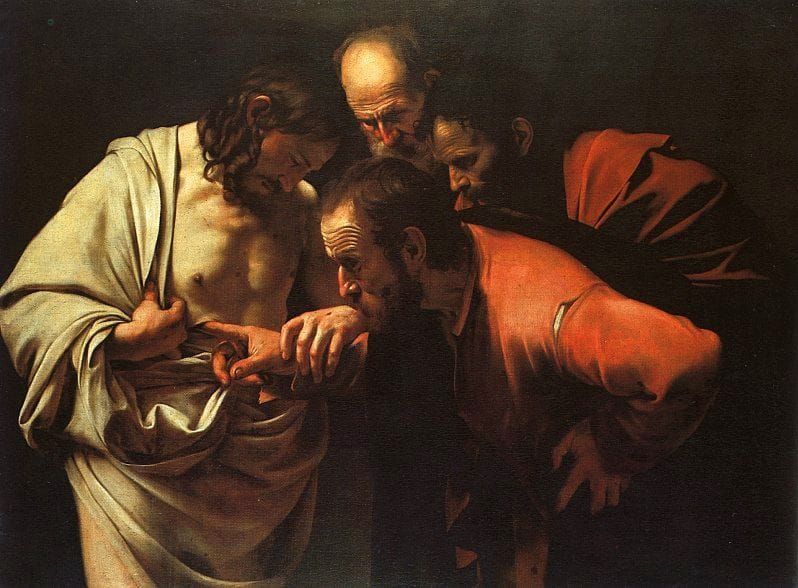
Yet consider what Thomas asked to see. Not the face of the Master, not the voice that had called him by name, but the wounds — the marks of the nails, the opened side. Pope Benedict XVI, meditating on this Gospel, observed that for Thomas the signs that confirm Jesus' identity are now above all His wounds, "in which he reveals to us how much he loved us," and that in this the Apostle was not mistaken. The risen Christ is known by what His love has cost Him. The soul that would find its Lord must seek Him there, in the pierced hands and side, where mercy has left its everlasting evidence.
And when the Lord came again, He did not rebuke His doubting servant with distance, but drew him near: put your finger here; bring your hand. Thomas answered with the most complete confession the Gospels record: "My Lord and my God!" Saint Augustine marks the wonder of it — Thomas "saw and touched the man, and acknowledged the God whom he neither saw nor touched." The senses carried him to the threshold; faith alone crossed it. So it is with every soul: what the eye perceives is never the whole of what God gives, and the act of faith always outruns the evidence that occasions it.
Here is the lesson the feast presses upon the conscience. Doubt, honestly owned and brought to Christ, is not the enemy of faith but may become its servant. Saint Gregory the Great dared to say that "the disbelief of Thomas has done more for our faith than the faith of the other disciples," for in his touching, our uncertainty was healed. But mark where the healing came: not in the week of solitary brooding, but in the assembly, when Thomas had returned to the company of the Apostles. The soul that nurses its doubts apart from the household of God finds them grow; the soul that carries them into that household finds them answered by the Lord who stands in its midst. The Catechism teaches that "faith is a gift of God, a supernatural virtue infused by him" — not a conquest of our reasoning, but a grace received, and received where grace is given.
And this is the deeper consolation of today's first reading: "You are no longer strangers and sojourners, but you are fellow citizens with the holy ones and members of the household of God." The Church is apostolic because she is founded on the apostles, built upon that foundation with Christ Jesus Himself as the capstone; and the very man who doubted is now a stone in the foundation on which the soul securely rests. What God did with Thomas's weakness He does still: He builds His dwelling out of healed doubters. "Faith is certain," the Catechism says. "It is more certain than all human knowledge because it is founded on the very word of God who cannot lie." Upon that word the soul may lean when sight fails; and leaning, it inherits the benediction reserved for the latter ages: blessed are those who have not seen and have believed. The psalm bids all nations praise Him, for steadfast is His kindness; and His kindness is nowhere more steadfast than in this — that He keeps His wounds, that we may keep our faith.
Lord Jesus, my Lord and my God, teach me to seek You in Your wounds, where Your love for me is written past all erasing. When doubt rises within me, let it drive me not into solitude but into Your household, where You stand in the midst and speak peace. Grant me the faith that is more certain than sight, and make of my weakness, as You made of Thomas's, a foundation stone for others. Through Christ our Lord. Amen.
Sources & References
- "We have seen the Lord" … "My Lord and my God!" … "Blessed are those who have not seen and have believed" — Gospel, John 20:24-29 (Lectionary 593, USCCB)
- "You are no longer strangers and sojourners… members of the household of God… with Christ Jesus himself as the capstone" — First Reading, Ephesians 2:19-22
- "Go out to all the world and tell the Good News" (refrain, cf. Mark 16:15); "steadfast is his kindness" — Responsorial Psalm, Psalm 117:1bc, 2
- "in which he reveals to us how much he loved us" — Pope Benedict XVI, General Audience, 27 September 2006 (via Vatican News, Word of the Day, 3 July 2026)
- "saw and touched the man, and acknowledged the God whom he neither saw nor touched" — St. Augustine, Tractates on the Gospel of John, 121, 5
- "the disbelief of Thomas has done more for our faith than the faith of the other disciples" — St. Gregory the Great, Homilies on the Gospels, 26
- "Faith is a gift of God, a supernatural virtue infused by him" — Catechism of the Catholic Church, 153
- "Faith is certain… founded on the very word of God who cannot lie" — Catechism of the Catholic Church, 157
- "The Church is apostolic because she is founded on the apostles" — Catechism of the Catholic Church, 857
La herida que sana nuestra duda
📖 Sagrada Escritura Diaria
Viernes, 3 de julio de 2026 — Fiesta de santo Tomás, Apóstol
Lecturas: Efesios 2, 19-22 • Salmo 116, 1. 2 • Juan 20, 24-29
Las puertas estaban cerradas, y sin embargo Él vino. Había pasado una semana desde aquella primera tarde de Pascua — una semana en la que un alma, ausente cuando el Señor se apareció, cargó a solas con su duda. Tomás había oído el testimonio de sus hermanos, "Hemos visto al Señor", y había respondido con la dura condición de los sentidos: si no veo, si no toco, no creeré. Hay algo en esta exigencia que el alma reconoce en sí misma; pues ¿quién de nosotros no ha pedido a Dios, en alguna hora de oscuridad, una prueba que Él no había prometido, haciendo esperar la fe hasta que viera?
Pero considérese qué pidió ver Tomás. No el rostro del Maestro, no la voz que lo había llamado por su nombre, sino las heridas — la señal de los clavos, el costado abierto. El Papa Benedicto XVI, meditando este Evangelio, observó que para Tomás las señales que confirman la identidad de Jesús son ahora sobre todo sus heridas, en las cuales nos revela cuánto nos ha amado, y que en esto el Apóstol no se equivocó. Al Cristo resucitado se le conoce por lo que su amor le ha costado. El alma que quiera hallar a su Señor debe buscarlo allí, en las manos y el costado traspasados, donde la misericordia ha dejado su testimonio eterno.
Y cuando el Señor vino de nuevo, no reprendió a su siervo dubitativo con la distancia, sino que lo atrajo hacia sí: acerca tu dedo; trae acá tu mano. Tomás respondió con la confesión más completa que registran los Evangelios: "¡Señor mío y Dios mío!". San Agustín señala la maravilla: Tomás "veía y tocaba al hombre, y confesaba al Dios que no veía ni tocaba". Los sentidos lo llevaron hasta el umbral; solo la fe lo cruzó. Así sucede con toda alma: lo que el ojo percibe nunca es la totalidad de lo que Dios da, y el acto de fe siempre va más allá de la evidencia que lo ocasiona.
He aquí la lección que esta fiesta imprime en la conciencia. La duda, reconocida con honradez y llevada a Cristo, no es enemiga de la fe, sino que puede convertirse en su servidora. San Gregorio Magno se atrevió a decir que "más aprovechó para nuestra fe la incredulidad de Tomás que la fe de los discípulos que creyeron", porque al tocar él, fue sanada nuestra incertidumbre. Pero adviértase dónde llegó la sanación: no en la semana de cavilación solitaria, sino en la asamblea, cuando Tomás había vuelto a la compañía de los Apóstoles. El alma que alimenta sus dudas apartada de la casa de Dios las ve crecer; el alma que las lleva dentro de esa casa las encuentra respondidas por el Señor que está en medio. El Catecismo enseña que "la fe es un don de Dios, una virtud sobrenatural infundida por él" — no una conquista de nuestro razonamiento, sino una gracia recibida, y recibida allí donde la gracia se da.
Y este es el consuelo más hondo de la primera lectura de hoy: "Ya no son ustedes extranjeros ni advenedizos; son conciudadanos de los santos y pertenecen a la familia de Dios". La Iglesia es apostólica porque está fundada sobre los apóstoles, edificada sobre ese cimiento siendo Cristo Jesús la piedra angular; y el mismo hombre que dudó es ahora piedra del cimiento sobre el cual el alma descansa segura. Lo que Dios hizo con la debilidad de Tomás lo sigue haciendo: construye su morada con dubitativos sanados. "La fe es cierta", dice el Catecismo, "más cierta que todo conocimiento humano, porque se funda en la Palabra misma de Dios, que no puede mentir". Sobre esa Palabra puede apoyarse el alma cuando falla la vista; y apoyándose, hereda la bendición reservada a los últimos tiempos: dichosos los que creen sin haber visto. El salmo invita a todas las naciones a alabarlo, porque grande es su amor hacia nosotros; y su amor en nada es más grande que en esto: que Él conserva sus heridas para que nosotros conservemos la fe.
Señor Jesús, Señor mío y Dios mío, enséñame a buscarte en tus heridas, donde tu amor por mí está escrito para siempre. Cuando la duda se levante dentro de mí, que no me empuje a la soledad sino a tu casa, donde Tú estás en medio y hablas paz. Concédeme la fe que es más cierta que la vista, y haz de mi debilidad, como hiciste de la de Tomás, piedra de cimiento para otros. Por Jesucristo nuestro Señor. Amén.
Fuentes y referencias
- "Hemos visto al Señor" … "¡Señor mío y Dios mío!" … "dichosos los que creen sin haber visto" — Evangelio, Juan 20, 24-29 (Leccionario 593, USCCB en español)
- "Ya no son ustedes extranjeros ni advenedizos… pertenecen a la familia de Dios… siendo Cristo Jesús la piedra angular" — Primera lectura, Efesios 2, 19-22
- "Vayan por todo el mundo y prediquen el Evangelio" (estribillo, cf. Mc 16, 15); "grande es su amor hacia nosotros" — Salmo Responsorial, Salmo 116, 1. 2
- Las heridas "en las cuales nos revela cuánto nos ha amado" — Papa Benedicto XVI, Audiencia General, 27 de septiembre de 2006 (vía Vatican News, Palabra del día, 3 de julio de 2026)
- "veía y tocaba al hombre, y confesaba al Dios que no veía ni tocaba" — San Agustín, Tratados sobre el Evangelio de San Juan, 121, 5
- "más aprovechó para nuestra fe la incredulidad de Tomás que la fe de los discípulos que creyeron" — San Gregorio Magno, Homilías sobre los Evangelios, 26
- "La fe es un don de Dios, una virtud sobrenatural infundida por él" — Catecismo de la Iglesia Católica, 153
- "La fe es cierta… se funda en la Palabra misma de Dios, que no puede mentir" — Catecismo de la Iglesia Católica, 157
- "La Iglesia es apostólica porque está fundada sobre los apóstoles" — Catecismo de la Iglesia Católica, 857