
📖 Daily Scripture
Monday, August 31, 2026 — Monday of the Twenty-second Week in Ordinary Time
Readings: 1 Corinthians 2:1-5 • Psalm 119:97-102 • Luke 4:16-30
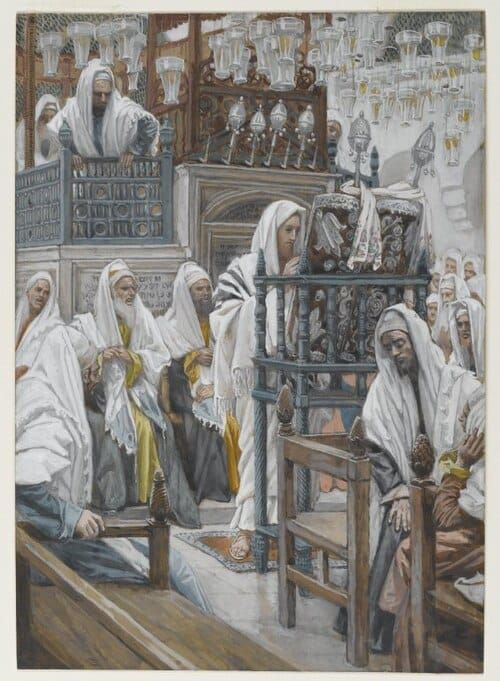
The scene in the synagogue at Nazareth turns upon a single quiet gesture. A man rises, receives the scroll, finds the place, and reads aloud words the town had heard a hundred times; then, having rolled the scroll and handed it back and taken his seat, he tells them that the words are no longer waiting. Today this Scripture passage is fulfilled in your hearing. The eyes of all were fixed upon him, and for one moment the prophecy and its fulfilment stood together in the same small room, the whole long expectation of Israel resting upon the face of a man they had watched grow up.
And it was precisely this — that they had watched him grow up — which undid them. Is this not the son of Joseph? The question is not hostile; it is admiring, almost affectionate. Yet in it lies the tragedy of the passage, for they measured the greatness of what they heard by the smallness of what they already knew, and the measure proved fatal. Their familiarity, which ought to have opened a door, became a shutter drawn across a window. Grace stood among them in a form so ordinary that they could not consent to be astonished by it, and within the hour admiration had curdled into fury.
Here is the lesson the soul must take, and it is a searching one. The gravest obstacle to God is seldom ignorance; it is far more often a settled and comfortable acquaintance. A soul raised within the Church, that has learned the prayers and can supply the answers and has never known a season without the sacraments, stands in a particular danger of mistaking possession for encounter. To have handled holy things for many years is not the same as to have been changed by them. Augustine, who lost long years to this very confusion, confessed it in words no one has bettered: Late have I loved you, Beauty so ancient and so new, late have I loved you. You were within me, but I was outside, and there I sought you. Nearness to God is no protection whatever against the habit of looking elsewhere.
Against such presumption the Apostle sets his own poverty of manner. He would not carry Corinth by eloquence, and he says so plainly: I came to you in weakness and fear and much trembling. He had resolved to know nothing among them except Jesus Christ, and him crucified, so that your faith might rest not on human wisdom but on the power of God. The Church teaches the same discipline of mind. What moves us to believe is not that revealed truths appear true and intelligible in the light of our natural reason; we believe because of the authority of God himself who reveals them, who can neither deceive nor be deceived. A faith propped upon our own cleverness will stand exactly as long as our cleverness stands, and no longer.
The Psalm supplies the remedy, and it is a daily one: How I love your law, O Lord! It is my meditation all the day. The soul that returns each morning to the Scriptures is not merely gathering information; it is consenting to be taught, and consenting again tomorrow, and so wearing away by patient repetition the crust that familiarity lays down. The Church urges upon all the faithful the frequent reading of the divine Scriptures, that they may learn the surpassing knowledge of Jesus Christ, and sets beside that counsel the old warning: Ignorance of the Scriptures is ignorance of Christ.
Yet the reading is never an end in itself. The Christian faith is not a religion of the book; it is the religion of the Word of God, not a written and mute word, but the Word which is incarnate and living. The scroll at Nazareth was rolled up and handed back to the attendant; the Person remained, seated, waiting to be recognised. So it is at every Mass and every hour of prayer: the text is the door, and the Lord himself is what lies beyond it.
The practical resolve, then, is a small and difficult one: to come to today's word as a beggar rather than an heir. The liberty proclaimed in that synagogue was announced to captives, to the blind, to the oppressed and to the poor, and only the soul willing to be numbered among them will hear that today spoken to itself. When the men of Nazareth had done their worst, he passed through the midst of them and went away — but he did not go far, and he has not gone far from any of us. The same patience that waited upon that town waits still, and the year of grace is not yet closed.
Lord, you came among your own and were not received; do not let me lose you through the dullness of long familiarity. Teach me to hear your word today as though for the first time, and grant me the poverty of heart that alone can receive it. Open within me the eyes that habit has closed, that I may know you and love you and follow where you lead. Through Christ our Lord. Amen.
Sources & References
- "Today this Scripture passage is fulfilled in your hearing." — Luke 4:21
- "Is this not the son of Joseph?" — Luke 4:22
- "He passed through the midst of them and went away." — Luke 4:30
- "I came to you in weakness and fear and much trembling." — 1 Corinthians 2:3
- "Jesus Christ, and him crucified" — 1 Corinthians 2:2
- "so that your faith might rest not on human wisdom but on the power of God" — 1 Corinthians 2:5
- "How I love your law, O Lord! It is my meditation all the day." — Psalm 119:97
- "because of the authority of God himself who reveals them, who can neither deceive nor be deceived" — Catechism of the Catholic Church 156 (citing First Vatican Council, Dei Filius 3: DS 3008)
- "the surpassing knowledge of Jesus Christ" and "Ignorance of the Scriptures is ignorance of Christ" — Catechism of the Catholic Church 133 (citing Dei Verbum 25; Philippians 3:8; St. Jerome, Commentary on Isaiah, Prologue)
- "not a written and mute word, but the Word which is incarnate and living" — Catechism of the Catholic Church 108 (citing St. Bernard of Clairvaux, Homilia super missus est 4, 11)
- "Late have I loved you, Beauty so ancient and so new… You were within me, but I was outside, and there I sought you." — St. Augustine, Confessions X, 27
- Papal insight on today's Gospel: Pope Francis, Angelus of 26 January 2025, as reproduced in Vatican News, Word of the Day, 31 August 2026
- Readings: USCCB Daily Readings, August 31, 2026
Demasiado cerca para ser creído
📖 Sagrada Escritura Diaria
Lunes 31 de agosto de 2026 — Lunes de la XXII semana del Tiempo ordinario
Lecturas: 1 Corintios 2, 1-5 • Salmo 118, 97-102 • Lucas 4, 16-30
La escena en la sinagoga de Nazaret gira en torno a un solo gesto callado. Un hombre se levanta, recibe el volumen, encuentra el pasaje y lee en voz alta unas palabras que aquel pueblo había oído cien veces; luego, habiendo enrollado el libro, devuelto al encargado y tomado asiento, les dice que esas palabras ya no están esperando: Hoy mismo se ha cumplido este pasaje de la Escritura, que ustedes acaban de oír. Los ojos de todos los asistentes estaban fijos en él, y por un instante la profecía y su cumplimiento se hallaron juntos en la misma sala pequeña, y toda la larga espera de Israel descansó sobre el rostro de un hombre a quien habían visto crecer.
Y fue precisamente eso — haberlo visto crecer — lo que los perdió. ¿No es éste el hijo de José? La pregunta no es hostil; es admirativa, casi afectuosa. Sin embargo, en ella está toda la tragedia del pasaje, porque midieron la grandeza de lo que oían con la pequeñez de lo que ya creían saber, y la medida resultó mortal. Su familiaridad, que debía haber abierto una puerta, se convirtió en una contraventana echada sobre la ventana. La gracia estaba en medio de ellos bajo una forma tan común que no consintieron en asombrarse, y en menos de una hora la admiración se agrió en ira.
Aquí está la lección que el alma debe recoger, y es una lección penetrante. El obstáculo más grave para Dios rara vez es la ignorancia; con mucha mayor frecuencia es un trato asentado y cómodo. El alma criada dentro de la Iglesia, que ha aprendido las oraciones, sabe dar las respuestas y nunca ha conocido una temporada sin sacramentos, corre un peligro particular: confundir la posesión con el encuentro. Haber manejado durante años las cosas santas no es lo mismo que haber sido transformado por ellas. Agustín, que perdió largos años en esa misma confusión, lo confesó con palabras que nadie ha mejorado: ¡Tarde te amé, hermosura tan antigua y tan nueva, tarde te amé! Tú estabas dentro de mí, y yo fuera, y por fuera te buscaba. La cercanía de Dios no protege en absoluto contra la costumbre de mirar hacia otra parte.
Frente a semejante presunción, el Apóstol pone su propia pobreza de medios. No quiso ganar a Corinto por la elocuencia, y lo dice sin rodeos: Me presenté ante ustedes débil y temblando de miedo. Había resuelto no hablarles sino de Jesucristo, más aún, de Jesucristo crucificado, a fin de que la fe de ustedes dependiera del poder de Dios y no de la sabiduría de los hombres. La Iglesia enseña la misma disciplina del espíritu. El motivo de creer no radica en que las verdades reveladas aparezcan como verdaderas e inteligibles a la luz de nuestra razón natural: creemos a causa de la autoridad de Dios mismo que revela y que no puede engañarse ni engañarnos. Una fe apuntalada sobre nuestra propia agudeza durará exactamente lo que dure nuestra agudeza, y ni un día más.
El salmo ofrece el remedio, y es un remedio diario: ¡Cuánto amo tu voluntad! Todo el día la estoy meditando. El alma que vuelve cada mañana a las Escrituras no está simplemente recogiendo noticias; está consintiendo en ser enseñada, y consintiendo de nuevo mañana, y desgastando así, por repetición paciente, la costra que deposita la costumbre. La Iglesia recomienda a todos los fieles la lectura asidua de las divinas Escrituras para que adquieran la ciencia suprema de Jesucristo, y junto a ese consejo coloca la antigua advertencia: desconocer la Escritura es desconocer a Cristo.
Con todo, la lectura nunca es un fin en sí misma. La fe cristiana no es una religión del Libro; es la religión de la Palabra de Dios, no de un verbo escrito y mudo, sino del Verbo encarnado y vivo. En Nazaret el volumen fue enrollado y devuelto al encargado; la Persona permaneció, sentada, esperando ser reconocida. Así ocurre en cada Misa y en cada hora de oración: el texto es la puerta, y el Señor mismo es lo que hay detrás.
El propósito práctico es, pues, pequeño y difícil: acercarse a la palabra de hoy como un mendigo y no como un heredero. La libertad proclamada en aquella sinagoga fue anunciada a los cautivos, a los ciegos, a los oprimidos y a los pobres, y sólo el alma dispuesta a contarse entre ellos oirá que ese hoy le está dirigido. Cuando los hombres de Nazaret hubieron hecho lo peor, él, pasando por en medio de ellos, se alejó de allí; pero no se fue lejos, y de ninguno de nosotros se ha ido lejos. La misma paciencia que esperó a aquel pueblo espera todavía, y el año de gracia aún no se ha cerrado.
Señor, viniste a los tuyos y no fuiste recibido; no permitas que te pierda por el embotamiento de una larga familiaridad. Enséñame a escuchar hoy tu palabra como si fuera la primera vez, y concédeme la pobreza de corazón que es la única capaz de recibirla. Abre dentro de mí los ojos que la costumbre ha cerrado, para que te conozca, te ame y te siga adonde me lleves. Por Jesucristo nuestro Señor. Amén.
Fuentes y referencias
- «Hoy mismo se ha cumplido este pasaje de la Escritura, que ustedes acaban de oír» — Lucas 4, 21
- «¿No es éste el hijo de José?» — Lucas 4, 22
- «Pasando por en medio de ellos, se alejó de allí» — Lucas 4, 30
- «Me presenté ante ustedes débil y temblando de miedo» — 1 Corintios 2, 3
- «De Jesucristo, más aún, de Jesucristo crucificado» — 1 Corintios 2, 2
- «A fin de que la fe de ustedes dependiera del poder de Dios y no de la sabiduría de los hombres» — 1 Corintios 2, 5
- «¡Cuánto amo tu voluntad! Todo el día la estoy meditando» — Salmo 118, 97
- «A causa de la autoridad de Dios mismo que revela y que no puede engañarse ni engañarnos» — Catecismo de la Iglesia Católica 156 (cf. Concilio Vaticano I, Dei Filius 3: DS 3008)
- «La ciencia suprema de Jesucristo» y «desconocer la Escritura es desconocer a Cristo» — Catecismo de la Iglesia Católica 133 (cf. Dei Verbum 25; Flp 3, 8; San Jerónimo, Commentarii in Isaiam, Prólogo)
- «No de un verbo escrito y mudo, sino del Verbo encarnado y vivo» — Catecismo de la Iglesia Católica 108 (cf. San Bernardo de Claraval, Homilia super missus est 4, 11)
- «¡Tarde te amé, hermosura tan antigua y tan nueva, tarde te amé! Tú estabas dentro de mí, y yo fuera, y por fuera te buscaba» — San Agustín, Confesiones X, 27
- Enseñanza papal sobre el Evangelio de hoy: Papa Francisco, Ángelus del 26 de enero de 2025, reproducido en Vatican News, Palabra del día, 31 de agosto de 2026
- Lecturas: USCCB, Lecturas de Hoy, 31 de agosto de 2026