
📖 Daily Scripture
Sunday, July 26, 2026 — Seventeenth Sunday in Ordinary Time
Readings: 1 Kings 3:5, 7-12 • Psalm 119:57, 72, 76-77, 127-128, 129-130 • Romans 8:28-30 • Matthew 13:44-52
When the young king Solomon, newly set upon a throne too great for him, was offered by God whatever he might desire, he asked neither for long life nor for riches nor for triumph over his enemies, but for a listening heart, that he might discern good from evil. There is a whole education of the soul hidden in that single choice. For the measure of a man is taken not by what he possesses but by what he most deeply wants; and the secret history of every life is written in the quiet preferences of the heart, in the things it reaches for when it thinks no one is watching. Solomon, standing at the threshold of power, wanted wisdom above all, and in wanting rightly he received far more than he had asked.
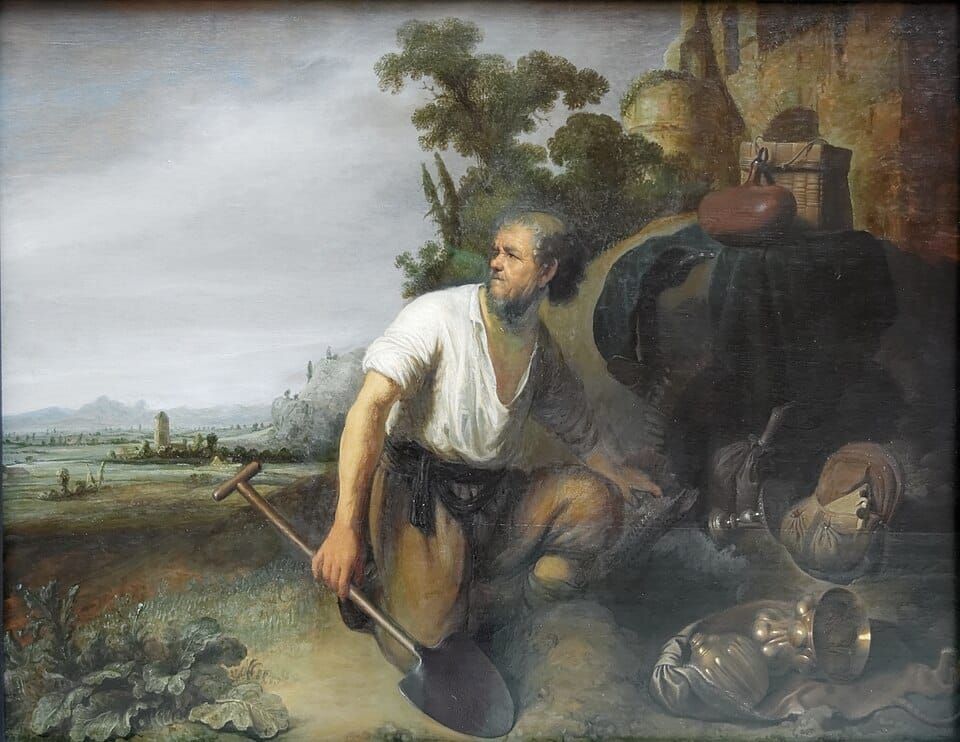
The Gospel sets before the soul the same reckoning, though under other images. A man walking through an ordinary field stumbles upon a buried treasure; a merchant, long accustomed to weighing lesser stones, at last beholds the one pearl beyond all price. Neither hesitates. Each, in a rush of joy, goes and sells all that he has to make the treasure his own. It is a striking detail that Our Lord dwells not upon the cost but upon the gladness, for the man who has truly seen does not experience the surrender of everything else as loss. He has found the thing his whole life was quietly seeking, and beside it all former possessions have grown strangely light. Grace does not so much take from us as it rearranges us, setting each lesser love beneath the one Love for which we were made.
Here the wisdom Solomon begged for shows its true purpose, for wisdom is nothing other than the art of valuing rightly, of knowing what is worth a whole life and what is not. The Church teaches that the parables ask of us a radical choice: to gain the kingdom, one must give everything, and words are not enough, for deeds are required. And she warns the soul that true happiness is not found in riches or in human power or in any earthly achievement, but in God alone, the source of every good. The tragedy of a wasted life is never that it wanted too much, but that it wanted too little, spending itself to buy fields with no treasure in them.
Saint Augustine, who squandered his youth upon lesser pearls before he found the true one, confessed the reason for all our restlessness: You have made us for yourself, O Lord, and our heart is restless until it rests in You. This is why the merchant could not be content among his ordinary wares; he was made for the pearl. And Saint Gregory the Great, pressing the parable to its sharpest point, declared that the kingdom of God is worth as much as you have, meaning that God asks of us not a fixed sum but the whole of ourselves, the surrender proportioned to each soul's all.
Yet the soul need not fear that so total a gift will be met with silence, for Saint Paul assures us that all things work for good for those who love God. The One who calls us to sell everything does not leave us impoverished; He gathers up even our losses, our failures, our long detours, and weaves them into the pattern of glory He foreknew for us before the world began. To sell all for the field is not, in the end, to be stripped bare, but to exchange a handful of counterfeit coins for a treasure that no rust consumes and no thief can reach.
Teach me, O Lord, to want the one thing necessary, and to want it wholly. Loosen my grip upon the lesser treasures I have clutched so long, and let the joy of finding You make every surrender light. Give me, like Solomon, an understanding heart, that I may know what is worth a life and choose it without looking back. Through Christ our Lord. Amen.
Sources & References
- "an understanding heart… to distinguish right from wrong" — First Reading, 1 Kings 3:5, 7-12
- "Lord, I love your commands" — Responsorial Psalm, Psalm 119:57, 72, 76-77, 127-128, 129-130
- "all things work for good for those who love God" — Second Reading, Romans 8:28-30
- Treasure, pearl, and net parables — Gospel, Matthew 13:44-52
- "to gain the kingdom, one must give everything… deeds are required" — Catechism of the Catholic Church, §546
- "true happiness is not found in riches… but in God alone, the source of every good" — Catechism of the Catholic Church, §1723
- Divine providence, "in everything God works for good with those who love him" (Rom 8:28) — Catechism of the Catholic Church, §313
- "You have made us for yourself, O Lord, and our heart is restless until it rests in You" — St. Augustine, Confessions, Book I, ch. 1
- "The kingdom of God is worth as much as you have" — St. Gregory the Great, Forty Gospel Homilies, Homily 5
- Papal insight (joyful sacrifice for the treasure and the pearl) — Pope Francis, Angelus, 30 July 2017
Lo que el alma fue hecha para buscar
📖 Sagrada Escritura Diaria
Domingo 26 de julio de 2026 — XVII Domingo del Tiempo Ordinario
Lecturas: 1 Reyes 3, 5. 7-12 • Salmo 118, 57 y 72. 76-77. 127-128. 129-130 • Romanos 8, 28-30 • Mateo 13, 44-52
Cuando el joven rey Salomón, recién puesto sobre un trono demasiado grande para él, recibió de Dios el ofrecimiento de pedir cuanto quisiera, no pidió larga vida, ni riquezas, ni la derrota de sus enemigos, sino un corazón dócil que supiera distinguir el bien del mal. En aquella sola elección se esconde toda una educación del alma. Pues la medida de un hombre no se toma por lo que posee, sino por lo que más hondamente desea; y la historia secreta de cada vida está escrita en las calladas preferencias del corazón, en aquello que busca cuando cree que nadie lo observa. Salomón, de pie en el umbral del poder, quiso ante todo la sabiduría, y al querer rectamente recibió mucho más de lo que había pedido.
El Evangelio pone ante el alma esa misma cuenta, aunque bajo otras imágenes. Un hombre que camina por un campo cualquiera tropieza con un tesoro escondido; un comerciante, habituado desde antiguo a sopesar piedras menores, contempla al fin la única perla que no tiene precio. Ninguno vacila. Cada uno, en un arranque de alegría, va y vende cuanto tiene para hacer suyo el tesoro. Es notable que el Señor no se detenga en el costo, sino en el gozo, porque quien de veras ha visto no siente la renuncia a todo lo demás como una pérdida. Ha hallado aquello que toda su vida buscaba en silencio, y a su lado las antiguas posesiones se han vuelto extrañamente ligeras. La gracia no nos quita tanto como nos reordena, colocando cada amor menor por debajo del único Amor para el cual fuimos hechos.
Aquí la sabiduría que Salomón suplicó muestra su verdadero fin, pues la sabiduría no es otra cosa que el arte de valorar rectamente, de saber qué merece una vida entera y qué no. Enseña la Iglesia que las parábolas nos piden una elección radical: para ganar el Reino hay que darlo todo, y no bastan las palabras, porque se requieren las obras. Y advierte al alma que la verdadera felicidad no se halla en las riquezas ni en el poder humano ni en ningún logro terreno, sino sólo en Dios, fuente de todo bien. La tragedia de una vida malograda nunca es haber deseado demasiado, sino haber deseado demasiado poco, gastándose en comprar campos que no guardaban tesoro alguno.
San Agustín, que malgastó su juventud en perlas menores antes de encontrar la verdadera, confesó la razón de toda nuestra inquietud: Nos hiciste, Señor, para ti, y nuestro corazón está inquieto hasta que descanse en ti. Por eso el comerciante no podía contentarse entre sus mercancías ordinarias: estaba hecho para la perla. Y san Gregorio Magno, llevando la parábola a su punto más agudo, declaró que el Reino de Dios vale cuanto tienes, queriendo decir que Dios no nos pide una suma fija, sino todo nuestro ser, la entrega proporcionada al todo de cada alma.
Y sin embargo, no ha de temer el alma que un don tan total sea recibido con silencio, pues san Pablo nos asegura que todo contribuye para bien de los que aman a Dios. Aquel que nos llama a venderlo todo no nos deja empobrecidos: recoge incluso nuestras pérdidas, nuestros fracasos, nuestros largos rodeos, y los entreteje en el designio de gloria que previó para nosotros antes de la creación del mundo. Vender todo por el campo no es, al cabo, quedar despojado, sino cambiar un puñado de monedas falsas por un tesoro que ningún moho corroe y ningún ladrón alcanza.
Enséñame, Señor, a desear lo único necesario, y a desearlo por entero. Afloja mi mano de los tesoros menores que tanto tiempo he apretado, y haz que el gozo de encontrarte vuelva ligera toda renuncia. Dame, como a Salomón, un corazón dócil y entendido, para que sepa qué vale una vida y lo elija sin volver la mirada atrás. Por Jesucristo nuestro Señor. Amén.
Fuentes y referencias
- "sabiduría de corazón… para distinguir entre el bien y el mal" — Primera lectura, 1 Reyes 3, 5. 7-12
- "Yo amo, Señor, tus mandamientos" — Salmo responsorial, Salmo 118, 57 y 72. 76-77. 127-128. 129-130
- "todo contribuye para bien de los que aman a Dios" — Segunda lectura, Romanos 8, 28-30
- Parábolas del tesoro, la perla y la red — Evangelio, Mateo 13, 44-52
- "para ganar el Reino hay que darlo todo… se requieren las obras" — Catecismo de la Iglesia Católica, §546
- "la verdadera felicidad no se halla en las riquezas… sino sólo en Dios, fuente de todo bien" — Catecismo de la Iglesia Católica, §1723
- La divina providencia, "todo contribuye al bien de los que aman a Dios" (Rom 8, 28) — Catecismo de la Iglesia Católica, §313
- "Nos hiciste, Señor, para ti, y nuestro corazón está inquieto hasta que descanse en ti" — San Agustín, Confesiones, Libro I, cap. 1
- "El Reino de Dios vale cuanto tienes" — San Gregorio Magno, Homilías sobre los Evangelios, Homilía 5
- Perspectiva papal (el gozo del sacrificio por el tesoro y la perla) — Papa Francisco, Ángelus, 30 de julio de 2017