
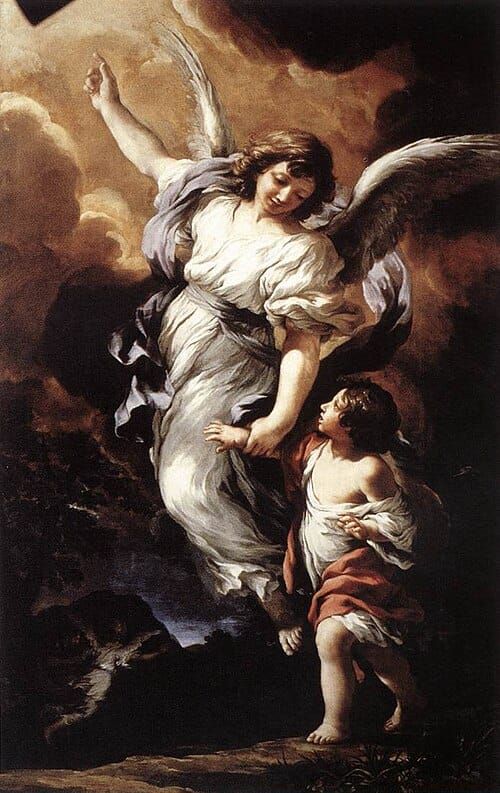
📖 Daily Scripture
Friday, October 2, 2026 — Memorial of the Holy Guardian Angels
Readings: Job 38:1, 12-21; 40:3-5 • Psalm 139:1-3, 7-8, 9-10, 13-14ab • Matthew 18:1-5, 10
The questions the Lord puts to Job out of the storm are not cruelty but mercy, for they are the only questions capable of restoring a man to his right proportion. Have you commanded the morning, and shown the dawn its place? Each question opens upon an immensity the soul had not troubled to consider, and the effect, rightly received, is not to crush the hearer but to widen him. Job had been speaking of God as one speaks of a neighbour whose motives may be weighed and found wanting; and so he is asked, Which is the way to the dwelling place of light, and where is the abode of darkness? He does not know. No one has ever known it.
His answer is among the shortest in Scripture and among the greatest: I am of little account; what can I answer you? I put my hand over my mouth. It is the moment at which argument gives way to adoration, and the soul, having run out of things to say about God, becomes capable at last of listening to Him.
Then the Psalm turns that immensity inward. The God whose measureless works have just silenced a man declares in the same breath, O Lord, you have probed me and you know me, and again, Truly you have formed my inmost being; you knit me in my mother's womb. The soul imagines that greatness and nearness must be rivals, that a God vast enough to found the sea must be too vast to attend one obscure life; Scripture forbids the division: Even there your hand shall guide me, and your right hand hold me fast.
Against that background the disciples' question must be heard — Who is the greatest in the Kingdom of heaven? — for it is Job's error in miniature, the old instinct to measure and to rank. Christ offers no argument, but calls a child over, places it in their midst, and says, unless you turn and become like children, you will not enter the Kingdom of heaven. The child's greatness is that it has never once calculated its own greatness; it receives its life as a gift and does not audit the gift. And then Christ adds what Job could not have known: their angels in heaven always look upon the face of my heavenly Father. Where the light dwells, Job had asked. It dwells where those angels stand, and they have been given to the small and the overlooked.
The Church speaks of them soberly. "Angel" is the name of their office, not of their nature, and that office is service: From its beginning until death, human life is surrounded by their watchful care and intercession, for Beside each believer stands an angel as protector and shepherd leading him to life. St. Jerome, meditating on this verse, drew from it a conclusion about us rather than them: How great the dignity of the soul, since each one has from his birth an angel commissioned to guard it. That dignity is not earned, and obscurity cannot forfeit it.
Here is the lesson to carry out of this day. The soul's habitual sin is seldom spectacular; it is the quiet, ceaseless work of measuring — against a colleague, against a sibling, against the person one was ten years ago. Such measuring exhausts, and it is idolatrous besides, installing the self as the scale of all things. To become like a child is not to think meanly of oneself; it is to stop being the measure, and to let oneself be guided. Guidance is offered in very small currency: the slight check before the sharp word, the nudge toward the duty one has been circling all week. Such promptings are easily argued down, and the soul that argues them down daily will find at last that it no longer hears them. To heed one of them today is to begin again the obedience of a child.
For humility is the foundation of prayer, and the one with nothing left to prove has at last something to say: Man is a beggar before God. The beggar is the honest figure here, and the one who is heard; nor does he walk unaccompanied. The darkness whose abode Job could not locate has already been crossed by a guide who sees the Father's face continually, and who was sent not to a great man but to this one. No road is so dim that the right hand of God is not already holding it fast.
Lord, teach me to stop measuring myself, and to receive my life from your hand as a child receives it. Open my ears to the quiet counsel you have set beside me, and give me the grace to heed it today rather than to argue with it. Hold me fast where I cannot see, and bring me at last to the light in which your angels contemplate your face. Through Christ our Lord. Amen.
Sources & References
- "I am of little account; what can I answer you? I put my hand over my mouth." — Job 40:4-5, First Reading (Job 38:1, 12-21; 40:3-5)
- "Which is the way to the dwelling place of light, and where is the abode of darkness?" — Job 38:19
- "O Lord, you have probed me and you know me." — Psalm 139:1
- "Truly you have formed my inmost being; you knit me in my mother's womb." — Psalm 139:13
- "Even there your hand shall guide me, and your right hand hold me fast." — Psalm 139:10
- "Unless you turn and become like children, you will not enter the Kingdom of heaven." — Matthew 18:3
- "Their angels in heaven always look upon the face of my heavenly Father." — Matthew 18:10
- "'Angel' is the name of their office, not of their nature." — Catechism of the Catholic Church 329, quoting St. Augustine, Enarratio in Psalmum 103, 1, 15
- "From its beginning until death, human life is surrounded by their watchful care and intercession." — Catechism of the Catholic Church 336
- "Beside each believer stands an angel as protector and shepherd leading him to life." — Catechism of the Catholic Church 336, quoting St. Basil the Great, Adversus Eunomium III, 1
- "How great the dignity of the soul, since each one has from his birth an angel commissioned to guard it." — St. Jerome, Commentary on Matthew, Book II, on Matthew 18:10
- "Humility is the foundation of prayer" and "Man is a beggar before God." — Catechism of the Catholic Church 2559, the latter quoting St. Augustine, Sermo 56, 6, 9
- Papal insight for this memorial — "How is my relationship with my guardian angel?" — Pope Francis, homily at the Casa Santa Marta, "We all have an angel," 2 October 2014; drawn upon by Vatican News, Word of the Day, 2 October 2026
- Readings: USCCB, Mass readings for 2 October 2026, Memorial of the Holy Guardian Angels
Donde habita la luz
📖 Sagrada Escritura Diaria
Viernes 2 de octubre de 2026 — Memoria de los Santos Ángeles Custodios
Lecturas: Job 38, 1. 12-21; 40, 3-5 • Salmo 138, 1-3. 7-8. 9-10. 13-14ab • Mateo 18, 1-5. 10
Las preguntas que el Señor le dirige a Job desde el seno de la tormenta no son crueldad sino misericordia, porque son las únicas preguntas capaces de devolver a un hombre a su justa proporción. ¿Le has dado órdenes alguna vez a la mañana, o le has señalado su lugar a la aurora? Cada pregunta abre ante el alma una inmensidad que no se había detenido a considerar, y su efecto, bien recibido, no es aplastar al que escucha sino ensancharlo. Job había estado hablando de Dios como se habla de un vecino cuyos motivos pueden pesarse y hallarse faltos; y por eso se le pregunta: ¿Sabes en dónde vive la luz y en dónde habitan las tinieblas? No lo sabe. Nadie lo ha sabido jamás.
Su respuesta es de las más breves de la Escritura y de las más grandes: He hablado a la ligera, ¿qué puedo responder? Me taparé la boca con la mano. Es el instante en que la discusión cede el paso a la adoración, y el alma, habiéndose quedado sin cosas que decir acerca de Dios, se vuelve por fin capaz de escucharlo.
Entonces el Salmo vuelve hacia dentro aquella inmensidad. El Dios cuyas obras inconmensurables acaban de silenciar a un hombre declara en el mismo aliento: Tú me conoces, Señor, profundamente, y de nuevo: Tú formaste mis entrañas, me tejiste en el seno materno. El alma imagina que la grandeza y la cercanía han de ser rivales, que un Dios lo bastante vasto para fundar los abismos del mar será demasiado vasto para atender una vida oscura; la Escritura prohíbe esa división: también allí tu mano me conduce y tu diestra me sostiene.
Sobre ese fondo hay que escuchar la pregunta de los discípulos — ¿Quién es más grande en el Reino de los cielos? —, porque es el error de Job en miniatura, el antiguo instinto de medir y de ordenar en rangos. Cristo no ofrece ningún argumento, sino que llama a un niño, lo pone en medio de ellos y dice: si no cambian y no se hacen como los niños, no entrarán en el Reino de los cielos. La grandeza del niño está en que nunca ha calculado su propia grandeza; recibe su vida como un don y no audita el don. Y entonces Cristo añade lo que Job no podía saber: sus ángeles, en el cielo, ven continuamente el rostro de mi Padre, que está en el cielo. ¿Dónde habita la luz?, había preguntado Job. Habita allí donde están esos ángeles, y han sido dados a los pequeños y a los que nadie advierte.
La Iglesia habla de ellos con sobriedad. El nombre de ángel indica su oficio, no su naturaleza, y ese oficio es el servicio: desde su comienzo hasta la muerte, la vida humana está rodeada de su custodia y de su intercesión, porque nadie podrá negar que cada fiel tiene a su lado un ángel como protector y pastor para conducir su vida. San Jerónimo, meditando este versículo, sacó de él una conclusión acerca de nosotros más que de ellos: Grande es la dignidad de las almas, cuando cada una de ellas, desde el momento de nacer, tiene un ángel destinado para su custodia. Esa dignidad no se gana, y la oscuridad no puede perderla.
He aquí la lección que conviene llevarse de este día. El pecado habitual del alma rara vez es espectacular; es el trabajo callado e incesante de medirse — frente a un colega, frente a un hermano, frente a la persona que uno era hace diez años. Ese medir agota, y además es idolátrico, pues instala al yo como la medida de todas las cosas. Hacerse como un niño no consiste en pensar pobremente de sí mismo; consiste en dejar de ser uno la medida y en dejarse conducir. Y la conducción se ofrece en moneda muy pequeña: el leve freno antes de la palabra cortante, el empujón interior hacia el deber que se lleva una semana rodeando. Tales mociones se rebaten con facilidad, y el alma que las rebate cada día descubrirá al cabo que ya no las oye. Atender hoy a una sola de ellas es empezar de nuevo la obediencia de un niño.
Porque la humildad es la base de la oración, y quien ya no tiene nada que demostrar tiene por fin algo que decir: el hombre es un mendigo de Dios. El mendigo es aquí la figura veraz, y la que es escuchada; y no camina sin compañía. Las tinieblas cuya morada Job no supo situar han sido ya atravesadas por un guía que ve continuamente el rostro del Padre, y que no fue enviado a un hombre grande, sino a éste. No hay camino tan en penumbra que la diestra de Dios no lo esté sosteniendo ya.
Señor, enséñame a dejar de medirme y a recibir mi vida de tu mano como la recibe un niño. Abre mi oído al consejo silencioso que has puesto a mi lado, y dame la gracia de atenderlo hoy en lugar de discutirlo. Sostenme donde no puedo ver, y llévame al fin a la luz en la que tus ángeles contemplan tu rostro. Por Jesucristo nuestro Señor. Amén.
Fuentes y referencias
- «He hablado a la ligera, ¿qué puedo responder? Me taparé la boca con la mano.» — Job 40, 4-5; primera lectura (Job 38, 1. 12-21; 40, 3-5)
- «¿Sabes en dónde vive la luz y en dónde habitan las tinieblas?» — Job 38, 19
- «Tú me conoces, Señor, profundamente.» — Salmo 138, 1
- «Tú formaste mis entrañas, me tejiste en el seno materno.» — Salmo 138, 13
- «También allí tu mano me conduce y tu diestra me sostiene.» — Salmo 138, 10
- «Si no cambian y no se hacen como los niños, no entrarán en el Reino de los cielos.» — Mateo 18, 3
- «Sus ángeles, en el cielo, ven continuamente el rostro de mi Padre, que está en el cielo.» — Mateo 18, 10
- «El nombre de ángel indica su oficio, no su naturaleza.» — Catecismo de la Iglesia Católica 329, citando a san Agustín, Enarratio in Psalmum 103, 1, 15
- «Nadie podrá negar que cada fiel tiene a su lado un ángel como protector y pastor para conducir su vida.» — Catecismo de la Iglesia Católica 336, citando a san Basilio el Grande, Adversus Eunomium 3, 1
- «Grande es la dignidad de las almas, cuando cada una de ellas, desde el momento de nacer, tiene un ángel destinado para su custodia.» — San Jerónimo, Comentario a san Mateo, libro II, sobre Mateo 18, 10
- «La humildad es la base de la oración» y «el hombre es un mendigo de Dios» — Catecismo de la Iglesia Católica 2559; la segunda cita es de san Agustín, Sermo 56, 6, 9
- Enseñanza papal para esta memoria — «¿Cómo es mi relación con mi ángel custodio?» — papa Francisco, homilía en la Casa Santa Marta, «Todos tenemos un ángel», 2 de octubre de 2014; recogida por Vatican News, Palabra del día, 2 de octubre de 2026
- Lecturas: USCCB, lecturas de la Misa del 2 de octubre de 2026, Memoria de los Santos Ángeles Custodios