
📖 Daily Scripture
Tuesday, October 20, 2026 — Tuesday of the Twenty-ninth Week in Ordinary Time
Readings: Ephesians 2:12-22 • Psalm 85:9ab-10, 11-12, 13-14 • Luke 12:35-38
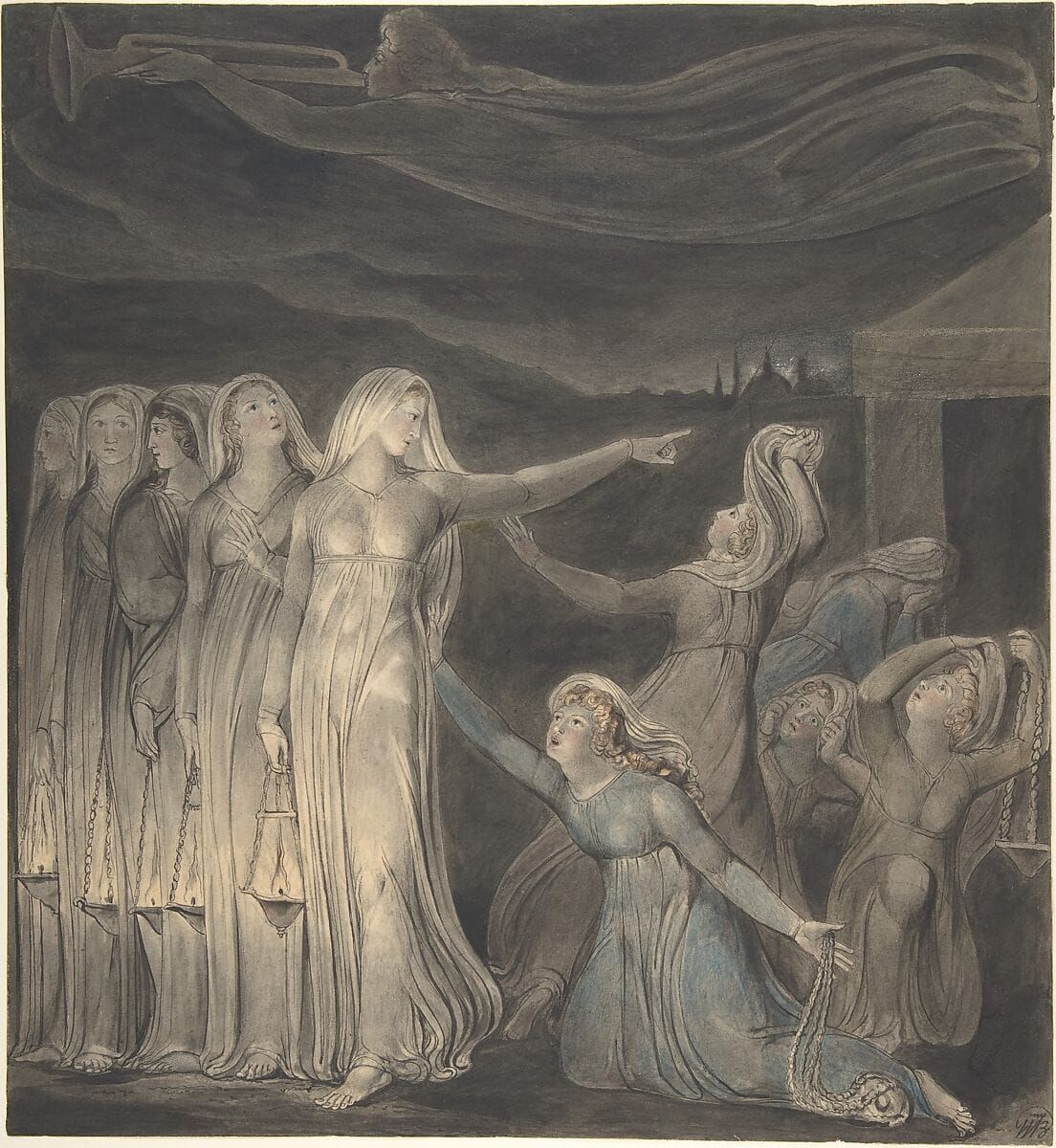
There is a particular hour of the night, known to every servant who has waited for a master delayed at a wedding feast, when the lamp burns low, the house falls silent, and the temptation is not so much to rebel as simply to sleep. It is to this hour that the Lord speaks when He bids His disciples, “Gird your loins and light your lamps.” He does not ask for some single heroic act, performed once and then laid aside, but for a steady disposition of the soul, a readiness renewed with every passing hour, so that whenever He comes, whether at the second watch or the third, He may find the door opened to Him without delay.
Yet the soul may fairly ask what it is that keeps the lamp alight through so long a night. Saint Paul, writing to the Ephesians, answers by reminding them of what they once were: strangers to the covenants, without hope and without God in the world. And then, as though throwing open a window upon the dawn, he declares, “But now in Christ Jesus you who once were far off have become near by the Blood of Christ.” The flame that burns in the watchful heart is not kindled by its own effort; it is borrowed, so to speak, from the Cross, where “he is our peace,” and where the dividing wall of enmity was broken down in His own flesh. The Church teaches that “Earthly peace is the image and fruit of the peace of Christ,” and so the peace which the soul is called to keep is no mere absence of trouble, but a share in that reconciliation which the Son accomplished between heaven and earth, and between one man and another.
Here lies the lesson, and it is a searching one. The soul that would be found ready when the Master knocks must not suffer any wall of enmity to be rebuilt within it which Christ has already thrown down. It is possible to keep the outward forms of devotion while quietly nursing a resentment, holding a brother at arm’s length, or regarding some neighbor as an outsider still, when the Apostle has declared that we are “no longer strangers and sojourners.” Every such wall is a shadow cast across the lamp. Saint Cyprian, who knew the bitterness of division in his own day, wrote with a severity born of love: “He can no longer have God for his Father, who has not the Church for his mother.” The household of God is not a dwelling one may inhabit alone; to wait for the Lord is to wait for Him among His family, reconciled.
And how is such a readiness preserved? The Catechism answers simply: “In prayer the disciple keeps watch, attentive to Him Who Is and Him Who Comes,” and adds that “only by keeping watch in prayer can one avoid falling into temptation.” Prayer is the oil of the lamp. Without it the flame gutters, however sincere the intention. Pope Francis, reflecting on this very Gospel, observed that “A person is ready when he or she is completely given to God and to his or her brothers and sisters.” Readiness, then, is not anxious vigilance, nor a nervous scanning of the horizon, but the quiet gift of oneself each day, offered upward in prayer and outward in charity.
For such a soul the Psalmist’s promise is fulfilled: “Kindness and truth shall meet.” And the Gospel holds out a still more astonishing hope. The Master, finding His servants awake, will gird Himself, seat them at table, and wait upon them. “Blessed are those servants whom the master finds vigilant on his arrival.” Saint Augustine confessed that God has made us for Himself, and that “our heart is restless until it rests in you.” The long watch of this life is the restlessness of love; its ending is the rest of the wedding feast, where He who was our peace upon the Cross becomes our joy forever, and the servant, astonished, is served by his Lord.
Father of mercies, who in Your Son have brought near those who were far off, keep the lamp of prayer burning within me through every hour of the night. Teach me to tear down whatever wall of resentment I have raised against my neighbor, and make me ready to open to Him the moment He knocks. Through Christ our Lord. Amen.
Sources & References
- “Gird your loins and light your lamps” — Luke 12:35 (NABRE, USCCB daily readings, October 20, 2026)
- “Blessed are those servants whom the master finds vigilant on his arrival” — Luke 12:37
- “But now in Christ Jesus you who once were far off have become near by the Blood of Christ” — Ephesians 2:13
- “He is our peace” — Ephesians 2:14
- “No longer strangers and sojourners” — Ephesians 2:19
- “Kindness and truth shall meet” — Psalm 85:11
- “Earthly peace is the image and fruit of the peace of Christ” — Catechism of the Catholic Church, 2305
- “In prayer the disciple keeps watch, attentive to Him Who Is and Him Who Comes”; “only by keeping watch in prayer can one avoid falling into temptation” — Catechism of the Catholic Church, 2612
- “He can no longer have God for his Father, who has not the Church for his mother” — St. Cyprian of Carthage, On the Unity of the Catholic Church, 6
- “Our heart is restless until it rests in you” — St. Augustine, Confessions, I.1
- “A person is ready when he or she is completely given to God and to his or her brothers and sisters” — Pope Francis, Address to Members of the Secular Institute of Oblate Missionary Cooperators, November 20, 2021 (featured in Vatican News “Word of the Day,” October 20, 2026)
Con las lámparas encendidas en la casa de la paz
📖 Sagrada Escritura Diaria
Martes, 20 de octubre de 2026 — Martes de la XXIX semana del Tiempo ordinario
Lecturas: Efesios 2, 12-22 • Salmo 84, 9ab-10. 11-12. 13-14 • Lucas 12, 35-38
Hay una hora particular de la noche, conocida por todo siervo que ha esperado a un señor retrasado en un banquete de bodas, en que la lámpara arde débilmente, la casa queda en silencio y la tentación no es tanto la de rebelarse cuanto la de dormirse sin más. A esa hora habla el Señor cuando dice a sus discípulos: «Estén listos, con la túnica puesta y las lámparas encendidas». No pide un único acto heroico, realizado una vez y luego dejado de lado, sino una disposición constante del alma, una prontitud que se renueva a cada hora que pasa, para que, venga cuando venga, sea en la segunda vigilia o en la tercera, encuentre la puerta abierta sin demora.
Con todo, el alma puede preguntarse con razón qué es lo que mantiene encendida la lámpara a lo largo de una noche tan larga. San Pablo, escribiendo a los efesios, responde recordándoles lo que antes eran: extraños a las alianzas, sin esperanza y sin Dios en el mundo. Y luego, como quien abre una ventana a la aurora, declara: «Pero ahora, unidos a Cristo Jesús, ustedes, que antes estaban lejos, están cerca, en virtud de la sangre de Cristo». La llama que arde en el corazón vigilante no se enciende por su propio esfuerzo; es, por así decirlo, prestada de la Cruz, donde «él es nuestra paz», y donde el muro de enemistad que dividía fue derribado en su propia carne. La Iglesia enseña que «la paz terrenal es imagen y fruto de la paz de Cristo», y así la paz que el alma está llamada a guardar no es mera ausencia de inquietud, sino participación en aquella reconciliación que el Hijo realizó entre el cielo y la tierra, y entre un hombre y otro.
Aquí está la lección, y es una lección que escudriña el corazón. El alma que desea ser hallada preparada cuando el Señor llame no debe consentir que se levante de nuevo dentro de ella ningún muro de enemistad que Cristo ya ha derribado. Es posible conservar las formas exteriores de la devoción mientras se alimenta en silencio un resentimiento, se mantiene a un hermano a distancia o se mira a algún prójimo todavía como a un extraño, cuando el Apóstol ha declarado: «ya no son ustedes extranjeros ni advenedizos». Cada uno de esos muros es una sombra que cae sobre la lámpara. San Cipriano, que conoció la amargura de la división en su propio tiempo, escribió con una severidad nacida del amor: «no puede tener a Dios como padre quien no tiene a la Iglesia como madre». La casa de Dios no es una morada que se pueda habitar a solas; esperar al Señor es esperarlo en medio de su familia, reconciliada.
¿Y cómo se conserva tal prontitud? El Catecismo responde con sencillez: «En la oración, el discípulo espera atento a Aquel que es y que viene», y añade que «velando en la oración es como no se cae en la tentación». La oración es el aceite de la lámpara. Sin ella la llama vacila, por sincera que sea la intención. El papa Francisco, reflexionando sobre este mismo Evangelio, observó que «una persona está preparada cuando se entrega completamente a Dios y a sus hermanos». La prontitud, pues, no es una vigilancia ansiosa ni un nervioso escrutar del horizonte, sino la callada entrega de sí mismo cada día, ofrecida hacia lo alto en la oración y hacia fuera en la caridad.
Para un alma así se cumple la promesa del salmista: «La misericordia y la verdad se encontraron». Y el Evangelio ofrece una esperanza todavía más asombrosa. El Señor, al encontrar despiertos a sus siervos, se ceñirá, los hará sentar a la mesa y los servirá. «Dichosos aquellos a quienes su señor, al llegar, encuentre en vela». San Agustín confesó que Dios nos hizo para sí, y que «nuestro corazón está inquieto hasta que descanse en ti». La larga vigilia de esta vida es la inquietud del amor; su término es el descanso del banquete de bodas, donde Aquel que fue nuestra paz en la Cruz se convierte en nuestro gozo para siempre, y el siervo, asombrado, es servido por su Señor.
Padre de misericordia, que en tu Hijo has acercado a los que estaban lejos, mantén encendida dentro de mí la lámpara de la oración en cada hora de la noche. Enséñame a derribar todo muro de resentimiento que haya levantado contra mi prójimo, y prepárame para abrirle a Él en el instante en que llame. Por Jesucristo nuestro Señor. Amén.
Fuentes y referencias
- «Estén listos, con la túnica puesta y las lámparas encendidas» — Lucas 12, 35 (Leccionario, USCCB lecturas del 20 de octubre de 2026)
- «Dichosos aquellos a quienes su señor, al llegar, encuentre en vela» — Lucas 12, 37
- «Pero ahora, unidos a Cristo Jesús, ustedes, que antes estaban lejos, están cerca, en virtud de la sangre de Cristo» — Efesios 2, 13
- «Él es nuestra paz» — Efesios 2, 14
- «Ya no son ustedes extranjeros ni advenedizos» — Efesios 2, 19
- «La misericordia y la verdad se encontraron» — Salmo 84, 11
- «La paz terrenal es imagen y fruto de la paz de Cristo» — Catecismo de la Iglesia Católica, 2305
- «En la oración, el discípulo espera atento a Aquel que es y que viene»; «velando en la oración es como no se cae en la tentación» — Catecismo de la Iglesia Católica, 2612
- «No puede tener a Dios como padre quien no tiene a la Iglesia como madre» — San Cipriano de Cartago, La unidad de la Iglesia católica, 6 (cap. 4 en otras numeraciones; citado por Benedicto XVI, Audiencia general, 6 de junio de 2007)
- «Nuestro corazón está inquieto hasta que descanse en ti» — San Agustín, Confesiones, I, 1
- «Una persona está preparada cuando se entrega completamente a Dios y a sus hermanos» — Papa Francisco, Discurso a las Cooperadoras Oblatas Misioneras de la Inmaculada, 20 de noviembre de 2021 (presentado en «La Palabra del día» de Vatican News, 20 de octubre de 2026)