The September Letter
Thirteen new books, 115 meals, and one classic on the interior life.
|
Writings and resources that help everyday believers pray, grow in holiness, and carry Christ to the people around them.
“Whoever follows me will not walk in darkness, but will have the light of life.” — John 8:12

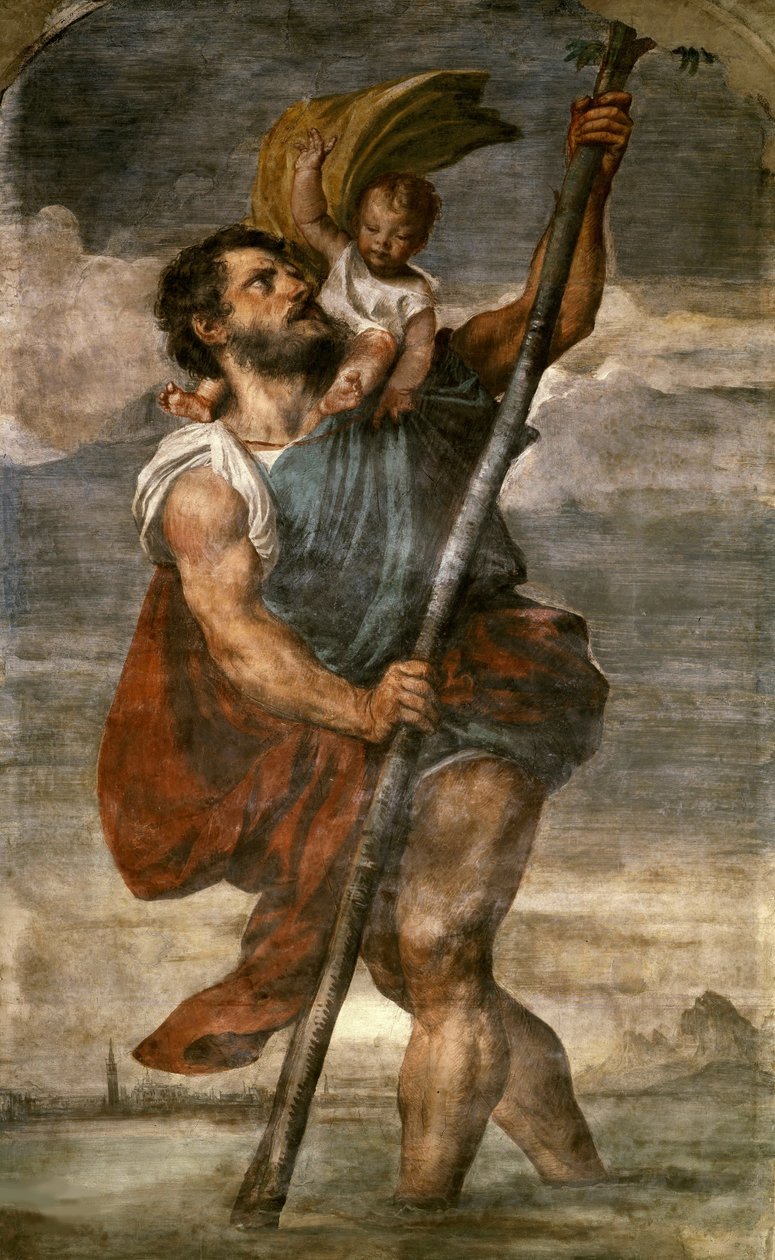
Saint Christopher, the Christ-bearer · Titian, c. 1524
Christ Bearer Apostolate is a lay community founded and operated by Catholics with a single mission: to bear Christ to the world in both word and work. Our name is our mission — from the Greek Christophoros, "Christ-bearer," the vocation of every disciple: to receive Christ and carry Him to everyone we meet.
Through Christ Bearer Press, we publish works rooted in Sacred Scripture, the Fathers and Doctors of the Church, and the great traditions of the faith — spreading the Gospel through the written word.
We serve Christ in the marginalized and the suffering through the corporal works of mercy: to feed the hungry, give drink to the thirsty, clothe the naked, shelter the homeless, visit the sick and imprisoned, and bury the dead.
“To know Christ, to bear Christ, and to give Him to the world.”
A faith that is proclaimed and a mercy that is practiced. Christophoros — a Christ-bearer.
Devotion isn't sentiment; it's formation — drawn from the depth of the Catholic tradition: the saints, Scripture, and the liturgical year.
Small, faithful habits of prayer change a life. We make the next step obvious and doable.
Resources rooted in the fullness of the faith — depth without jargon, formation that lasts.
The faith is meant to be shared. Become a Christ-bearer in your family, parish, and community.
Lifelong faithful, finding your way back, or simply curious — there's a place to begin.
New devotionals and reflections — delivered here and to your inbox.
Thirteen new books, 115 meals, and one classic on the interior life.
|
📖 Daily Scripture Sunday, October 4, 2026 — Twenty-seventh Sunday in Ordinary Time Readings: Isaiah 5:1-7 • Psalm 80:9, 12, 13-
📖 Daily Scripture
Sunday, October 4, 2026 — Twenty-seventh Sunday in Ordinary Time
Readings: Isaiah 5:1-7 • Psalm 80:9, 12, 13-14, 15-16, 19-20 • Philippians 4:6-9 • Matthew 21:33-43
There is a tenderness in the way the prophet begins, as though he could not come to his grievance except by way of a song. He sings of his friend's vineyard: the stones carried out by hand, the choice vines set in the cleared earth, the watchtower raised, the winepress hewn in the rock. Nothing is wanting; nothing is grudged. And the Gospel repeats the same careful inventory — the hedge set round about, the press dug, the tower built — before it comes at last to the one thing lacking, which is the fruit.
The soul does well to linger over that inventory before hurrying on to the judgment at the end, for the inventory is its own. Whatever it possesses it has received: the hours of its life, the faith it did not invent, the affections by which it loves at all. The Church has always understood herself as a choice vineyard planted by the heavenly cultivator; yet she has never confused the planting with the Planter, for "the true vine is Christ who gives life and fruitfulness to the branches, that is, to us, who through the Church remain in Christ, without whom we can do nothing."
What, then, was the sin of the tenants? Not idleness merely, for the idle may still be busy from morning to night. Their fault lay further back, in a forgetting so gradual that they could not have named the day it began — the day on which the vineyard stopped being lent and began, in their own minds, to be owned. Each servant who came for the rent carried, simply by arriving, the unwelcome news that the land was not theirs; and it is a short road from that resentment to the son lying dead in the dust of his father's own field.
Here is the lesson, and it stands nearer to the soul than any vineyard. Ingratitude is not a small coldness of temperament; it is the first step of a long violence, for one who believes he has made himself will in the end defend what he thinks he has made, and defend it against God. The Holy Father has said plainly that ingratitude generates violence and takes peace away, while a simple word of thanks can restore it. The duty laid upon the soul this day is therefore modest and searching at once: to say, deliberately and by name, what has been given to it, and to say it to Someone.
The Apostle writes to the Philippians out of a prison and bids them have no anxiety at all, but in everything, by prayer and petition, with thanksgiving, to make their requests known to God; and the promise he attaches is worth weighing: "the peace of God that surpasses all understanding will guard your hearts and minds in Christ Jesus." It is not a peace achieved, but a peace posted like a sentry over a gate the soul cannot hold alone. And since, as the Church teaches, "every event and need can become an offering of thanksgiving," no hour is too ordinary for the rent to be paid. Prayer, as the great bishop of Constantinople insisted, "is possible even while walking in public or strolling alone, or seated in your shop, while buying or selling, or even while cooking." The fruit of this vineyard is not grown in extraordinary seasons; it is grown in the common hours. Nor is the harvest God's work alone, for the Church says with Augustine that "God created us without us: but he did not will to save us without us." Grace does not dispense with the hand; it lends the hand its strength.
And the parable, which seems to end in dispossession, ends in fact in architecture. "The Lord compared himself to the stone which the builders rejected, but which was made into the corner-stone." What the tenants threw over the wall, God laid at the corner of a new house, and the kingdom passed to a people that would produce its fruit. The Owner of the vineyard has not withdrawn to count His losses; He is still sending, still standing at the gate of a soul long slow with its rent, and the last messenger He sends is His own Son. Whatever the vintage of the past has been, this morning the ground is leased again, and leased by Love.
Lord, You planted what I did not plant and fenced what I could not guard. Teach me to hold nothing of mine as mine, and to render You today, from this hour and in this place, the small fruit it is able to bear. Let gratitude take root within me where I have grown hard, and let Your peace stand sentry over my heart. Through Christ our Lord. Amen.
📖 Sagrada Escritura Diaria
Domingo 4 de octubre de 2026 — XXVII Domingo ordinario
Lecturas: Isaías 5, 1-7 • Salmo 79, 9 y 12. 13-14. 15-16. 19-20 • Filipenses 4, 6-9 • Mateo 21, 33-43
Hay una ternura en el modo en que comienza el profeta, como si no pudiera llegar a su queja sino por el camino de un canto. Canta la viña de su amado: las piedras retiradas a mano, las cepas selectas plantadas en la tierra limpia, la torre levantada, el lagar excavado en la roca. Nada falta; nada se escatima. Y el Evangelio repite el mismo inventario cuidadoso — la cerca puesta alrededor, el lagar cavado, la torre construida — antes de llegar por fin a lo único que falta, que es el fruto.
Bien hace el alma en detenerse en ese inventario antes de correr al juicio del final, porque el inventario es el suyo propio. Todo lo que posee lo ha recibido: las horas de su vida, la fe que no inventó, los afectos por los cuales ama siquiera. La Iglesia se ha comprendido siempre así, pues "el labrador del cielo la plantó como viña selecta"; y sin embargo nunca ha confundido la plantación con el que planta, porque "la verdadera vid es Cristo, que da vida y fecundidad a los sarmientos, es decir, a nosotros, que permanecemos en él por medio de la Iglesia y que sin él no podemos hacer nada".
¿Cuál fue, entonces, el pecado de los viñadores? No la simple pereza, pues los ociosos pueden estar ocupados de la mañana a la noche. Su falta estaba más atrás, en un olvido tan gradual que no habrían podido señalar el día en que empezó: el día en que la viña dejó de estar prestada y comenzó, en su propia mente, a ser poseída. Cada siervo que venía por la renta traía, por el solo hecho de llegar, la noticia inoportuna de que la tierra no era suya; y es corto el camino que va de ese resentimiento al hijo tendido muerto en el polvo del campo de su propio padre.
Aquí está la lección, y se halla más cerca del alma que cualquier viña. La ingratitud no es una pequeña frialdad de temperamento; es el primer paso de una larga violencia, pues quien cree haberse hecho a sí mismo defenderá al final lo que piensa haber hecho, y lo defenderá contra Dios. El Santo Padre lo ha dicho sin rodeos: "¡La ingratitud genera violencia, nos roba la paz!", mientras que un simple "gracias" puede restablecerla. Por eso el deber que se impone al alma en este día es a la vez modesto y penetrante: decir, deliberadamente y por su nombre, lo que le ha sido dado, y decírselo a Alguien.
El Apóstol escribe a los filipenses desde una prisión y les dice que no se inquieten por nada, sino que presenten en toda ocasión sus peticiones a Dios en la oración y la súplica, llenos de gratitud; y vale la pena pesar la promesa que añade: "la paz de Dios, que sobrepasa toda inteligencia, custodie sus corazones y sus pensamientos en Cristo Jesús". No es una paz conquistada, sino una paz apostada como centinela ante una puerta que el alma no puede guardar sola. Y puesto que, como enseña la Iglesia, "todo acontecimiento y toda necesidad pueden convertirse en ofrenda de acción de gracias", no hay hora demasiado ordinaria para pagar la renta. La oración, como insistió el gran obispo de Constantinopla, es siempre posible: "Conviene que el hombre ore atentamente, bien estando en la plaza o mientras da un paseo: igualmente el que está sentado ante su mesa de trabajo o el que dedica su tiempo a otras labores, que levante su alma a Dios". El fruto de esta viña no se cría en estaciones extraordinarias; se cría en las horas comunes. Ni es la cosecha obra de Dios solamente, pues la Iglesia dice con san Agustín que Dios, "que te ha creado sin ti, no te salvará sin ti". La gracia no dispensa de la mano; le presta su fuerza.
Y la parábola, que parece acabar en despojo, acaba en realidad en arquitectura. "El Señor mismo se comparó a la piedra que desecharon los constructores, pero que se convirtió en la piedra angular." Lo que los viñadores arrojaron por encima del muro, Dios lo puso en el ángulo de una casa nueva, y el Reino pasó a un pueblo que produjera sus frutos. El Dueño de la viña no se ha retirado a contar sus pérdidas; sigue enviando, sigue de pie ante la puerta de un alma atrasada por años en su renta, y el último mensajero que envía es su propio Hijo. Cualquiera que haya sido la vendimia del pasado, esta mañana la tierra se arrienda de nuevo, y se arrienda por Amor.
Señor, Tú plantaste lo que yo no planté y cercaste lo que yo no podía guardar. Enséñame a no tener por mío nada de lo mío, y a rendirte hoy, desde esta hora y en este lugar, el pequeño fruto que sea capaz de dar. Que la gratitud arraigue dentro de mí donde me he endurecido, y que tu paz quede de centinela sobre mi corazón. Por Jesucristo nuestro Señor. Amén.
📖 Daily Scripture Saturday, October 3, 2026 — Saturday of the Twenty-sixth Week in Ordinary Time Readings: Job 42:1-3, 5-6,
📖 Daily Scripture
Saturday, October 3, 2026 — Saturday of the Twenty-sixth Week in Ordinary Time
Readings: Job 42:1-3, 5-6, 12-17 • Psalm 119:66, 71, 75, 91, 125, 130 • Luke 10:17-24
The long contention is over. Job, who had held his ground against his comforters and against heaven itself, speaks at last not to defend himself but to withdraw: I know that you can do all things, and that no purpose of yours can be hindered. A soul does not arrive at that sentence by argument, but by exhaustion, and by the mercy that waits at the end of exhaustion.
What follows is the confession of a soul that has learned the difference between knowing about God and knowing him. I have dealt with great things that I do not understand. I had heard of you by word of mouth, but now my eye has seen you. The whole distance of the spiritual life lies in that small turn from the ear to the eye. A soul may hold an inheritance of true doctrine in its memory, rehearse it accurately, and still be living upon report; it is possible to be more fluent about God than acquainted with him. The distance is not closed by study. It is closed by surrender: therefore I disown what I have said, and repent in dust and ashes.
Nor was the road gentle, and the Church has never pretended otherwise. Faith in God the Father Almighty can be put to the test by the experience of evil and suffering. Job's affliction did not purchase his vision as a price paid; it broke open ground grown so hard with self-possession that nothing could be planted in it. The psalm of the day says as much without complaint: it is good for me that I have been afflicted, that I may learn your statutes. The corrections a soul would least have chosen are often the only instruments fine enough to open its eye.
The seventy-two come back with the opposite difficulty. They are not crushed but elated, and the reply they receive is a correction so quiet it can be missed: do not rejoice because the spirits are subject to you, but rejoice because your names are written in heaven. Here the lesson of the day presses close, for the soul is asked to examine not only what it does but what it is glad about. One may give oneself honestly to the work of God and feed, without noticing, upon one's own effectiveness. Such gladness is on loan, and it deserts the soul the day its usefulness is withdrawn. The joy offered in its place rests on nothing achieved and so cannot be taken away.
And then the exultation, in which the two readings meet. He rejoices in the Holy Spirit because the Father has hidden these things from the wise and the learned and has revealed them to the childlike. The evangelists have preserved a prayer in which Jesus confesses the Father, acknowledges, and blesses him because he has hidden the mysteries of the Kingdom from those who think themselves learned and has revealed them to infants, the poor of the Beatitudes. Divine revelation is not brought about in accordance with earthly logic. Job had gone through that same low door when he sat down in the ashes.
This is why humility is the foundation of prayer, and why the oldest teachers of the Church stated the matter without softening it: man is a beggar before God. A soul that comes with its hands already full has nowhere left to receive; a soul that comes empty, that lets correction finish its work and rejoices in being loved rather than in being needed, finds the veil thinner than it supposed. The revelation of your words sheds light, giving understanding to the simple.
Blessed are the eyes that see what you see. Prophets and kings desired this and were not given it, and it is given now, quietly and daily, to the unremarkable soul that consents to be small. For the glory of God is man fully alive; moreover man's life is the vision of God. Whatever ashes this hour has laid upon the soul, they are not the end of the account: Job's eye was opened, his years were lengthened, his house was filled again, and he died old and full of years. The God who hides himself from the self-sufficient is not hiding out of reluctance; he waits to be seen by those who will at last let him be God, and his patience in that waiting is itself a form of love.
Lord, I have spoken of great things I do not understand; teach me to be quiet long enough to see. Take from me the pleasure I take in my own usefulness, and set my joy where no loss can reach it, in the knowledge that you have written my name. Make me small enough within to receive what you are waiting to give. Through Christ our Lord. Amen.
📖 Sagrada Escritura Diaria
Sábado, 3 de octubre de 2026 — Sábado de la XXVI semana del Tiempo ordinario
Lecturas: Job 42, 1-3. 5-6. 12-16 • Salmo 118, 66. 71. 75. 76. 91. 125. 130 • Lucas 10, 17-24
La larga contienda ha terminado. Job, que había mantenido su postura frente a sus consoladores y frente al cielo mismo, habla al fin no para defenderse, sino para retirarse: reconozco que lo puedes todo y que ninguna cosa es imposible para ti. Un alma no llega a esa frase por argumentos, sino por agotamiento, y por la misericordia que aguarda al término del agotamiento.
Lo que sigue es la confesión de un alma que ha aprendido la diferencia entre saber de Dios y conocerlo. He hablado de grandezas que no puedo comprender y de maravillas que superan mi inteligencia. Yo te conocía sólo de oídas, pero ahora te han visto ya mis ojos. Toda la distancia de la vida espiritual se encierra en ese pequeño paso del oído a los ojos. Un alma puede guardar en la memoria una herencia entera de doctrina verdadera, repetirla con exactitud, y seguir viviendo de lo que le han contado; es posible ser más elocuente acerca de Dios que conocedor de Dios. Esa distancia no se salva con el estudio. Se salva con la entrega: por eso me retracto de mis palabras y me arrepiento, echándome polvo y ceniza.
Tampoco fue suave el camino, y la Iglesia nunca ha pretendido lo contrario. La fe en Dios Padre Todopoderoso puede ser puesta a prueba por la experiencia del mal y del sufrimiento. La aflicción de Job no compró su visión como un precio pagado; abrió un terreno endurecido por la suficiencia propia, donde nada podía sembrarse. El salmo del día dice lo mismo sin queja alguna: sufrir fue provechoso para mí, pues aprendí, Señor, tus mandamientos. Las correcciones que un alma menos habría elegido son con frecuencia los únicos instrumentos lo bastante finos para abrirle los ojos.
Los setenta y dos vuelven con la dificultad contraria. No están abatidos, sino exultantes, y la respuesta que reciben es una corrección tan callada que puede pasar inadvertida: no se alegren de que los demonios se les sometan; alégrense más bien de que sus nombres están escritos en el cielo. Aquí la lección del día aprieta de cerca, porque al alma se le pide examinar no sólo lo que hace, sino aquello de lo que se alegra. Se puede entregar uno con honradez a la obra de Dios y alimentarse, sin advertirlo, de su propia eficacia. Tal alegría es prestada, y abandona al alma el día en que se le retira su utilidad. El gozo que se le ofrece en su lugar no descansa en nada conseguido y por eso no se le puede arrebatar.
Y entonces el júbilo, en el que se encuentran las dos lecturas. Él se llena de alegría en el Espíritu Santo porque el Padre ha escondido estas cosas a los sabios y a los entendidos y las ha revelado a la gente sencilla. Los evangelistas nos han conservado una oración en la que Jesús confiesa al Padre, le da gracias y lo bendice porque ha escondido los misterios del Reino a los que se creen doctos y los ha revelado a los pequeños, los pobres de las Bienaventuranzas. La revelación divina no se realiza según la lógica terrena: los destinatarios de su comunicación han sido precisamente los pequeños. Job había pasado por esa misma puerta baja cuando se sentó entre la ceniza.
Por eso la humildad es la base de la oración, y por eso los maestros más antiguos de la Iglesia lo dijeron sin suavizarlo: el hombre es un mendigo de Dios. El alma que llega con las manos ya llenas no tiene dónde recibir; el alma que llega vacía, que deja a la corrección acabar su obra y se alegra de ser amada más que de ser necesaria, halla el velo más delgado de lo que suponía. La explicación de tu palabra da luz y entendimiento a los humildes.
Dichosos los ojos que ven lo que ustedes ven. Profetas y reyes lo desearon y no les fue concedido, y se concede ahora, en silencio y cada día, al alma común que consiente en ser pequeña. Porque la gloria de Dios es que el hombre viva, y la vida del hombre es la visión de Dios. Cualquiera sea la ceniza que esta hora haya puesto sobre el alma, no es el final de la cuenta: los ojos de Job se abrieron, sus años se alargaron, su casa volvió a llenarse, y murió anciano y colmado de años. El Dios que se esconde de los que se bastan a sí mismos no se esconde por desgana; espera ser visto por quienes al fin le dejen ser Dios, y su paciencia en esa espera es ya una forma de amor.
Señor, he hablado de grandezas que no comprendo; enséñame a callar el tiempo suficiente para ver. Quítame el gusto que tomo en mi propia utilidad, y pon mi alegría donde ninguna pérdida la alcance, en saber que has escrito mi nombre. Hazme por dentro lo bastante pequeño para recibir lo que esperas darme. Por Jesucristo nuestro Señor. Amén.
Devotionals for daily prayer and fresh translations of the Church Fathers — with study guides. Available in Kindle and paperback on Amazon.

Thirty-one daily reflections on the Most Holy Name of Jesus for the month of January.

Twenty-nine daily reflections on the household God chose — Jesus, Mary, and Joseph — for the month of February.

Thirty-one daily reflections on the Guardian of the Redeemer for the month of March.

Thirty daily reflections on the Most Blessed Sacrament for the month of April.
Thirty days with our Blessed Mother — a daily Marian devotional for the month of May.
Daily devotions to the Sacred Heart of Jesus through the month of June.
A daily devotional honoring the Most Precious Blood for the month of July.
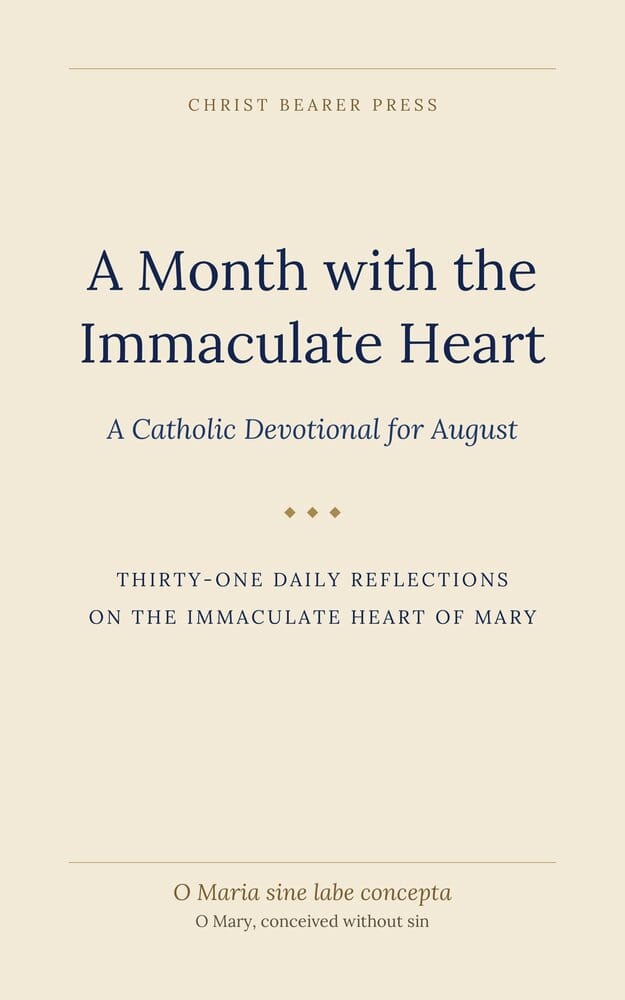
Thirty-one days with the Immaculate Heart of Mary for the month of August.
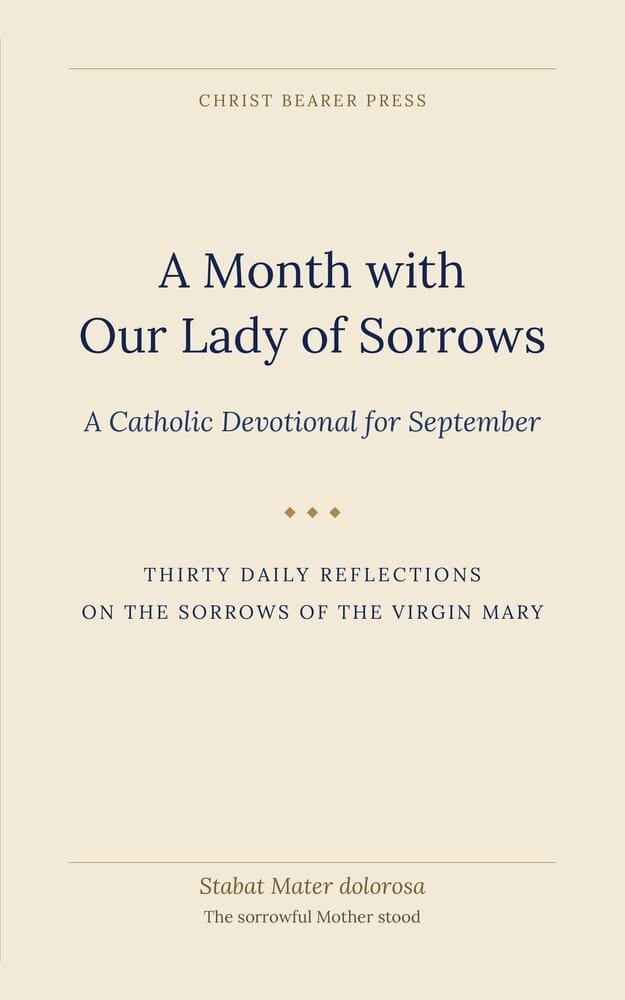
Thirty daily reflections on the Sorrows of the Virgin Mary for the month of September.
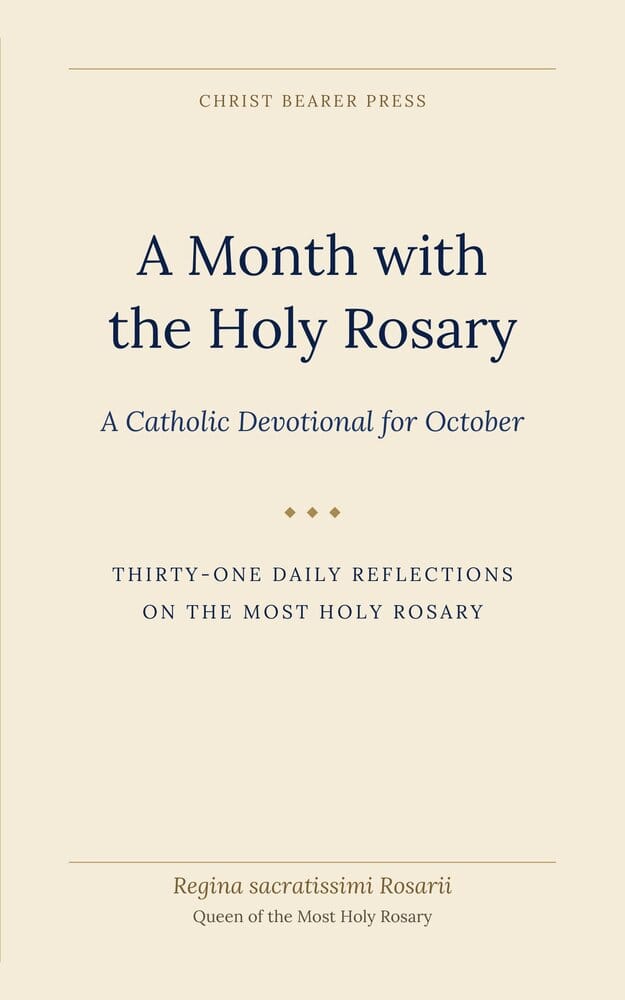
Thirty-one daily reflections on the Most Holy Rosary for the month of October.
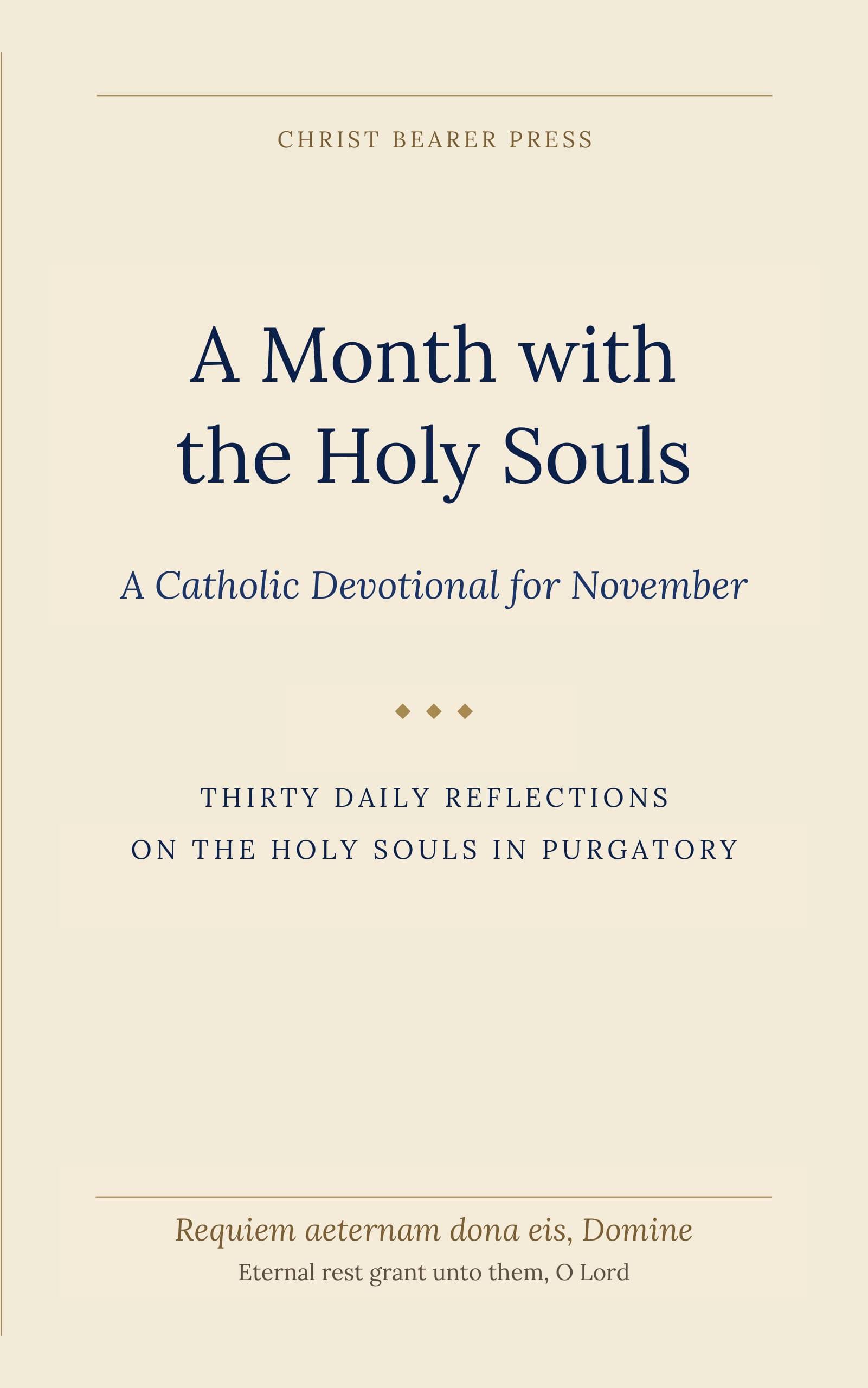
Thirty daily reflections on the Holy Souls in Purgatory for the month of November.

Thirty-one daily reflections for Advent and the Nativity, through the month of December.

Thirty-three days of preparation for the Solemnity of All Saints, followed by a novena for the Holy Souls — praying with the whole Church in heaven, on earth, and in purgatory.

Twenty-nine daily reflections for Advent, each built on the Mass readings the Church actually reads that day — with a word from the Fathers, three questions, and one concrete action to finish before nightfall.

Most Christmas devotionals stop on December 25 — this one begins there. Forty daily reflections from the manger to the Temple, walking the whole Christmas season through to Candlemas on February 2.
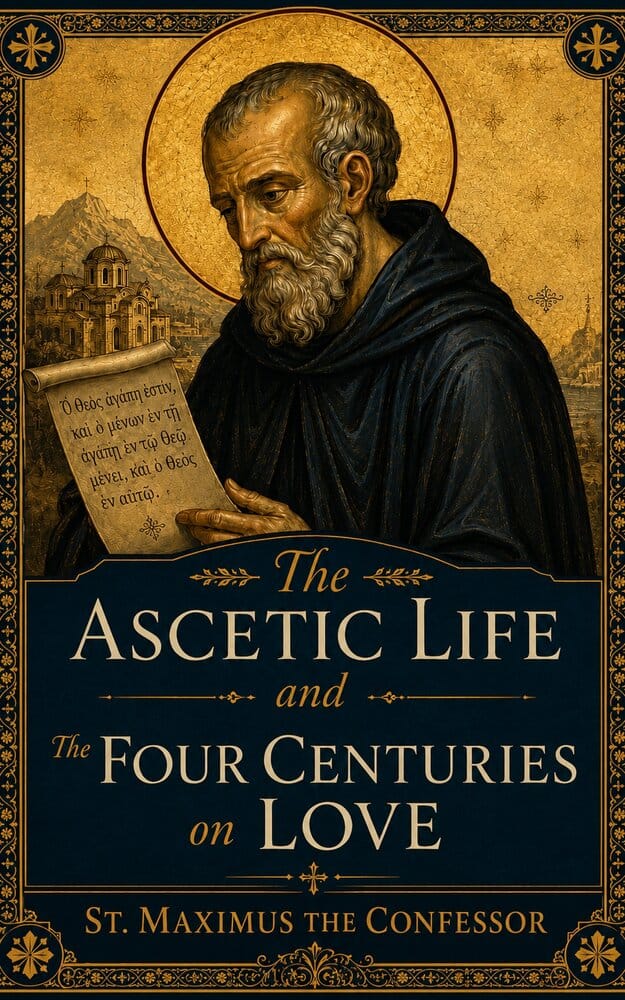
A new English translation of St. Maximus the Confessor's The Ascetic Life and The Four Centuries on Love — the great Byzantine master on the school of charity.
Companion study guide: The Ascetic Life — Study Guide →
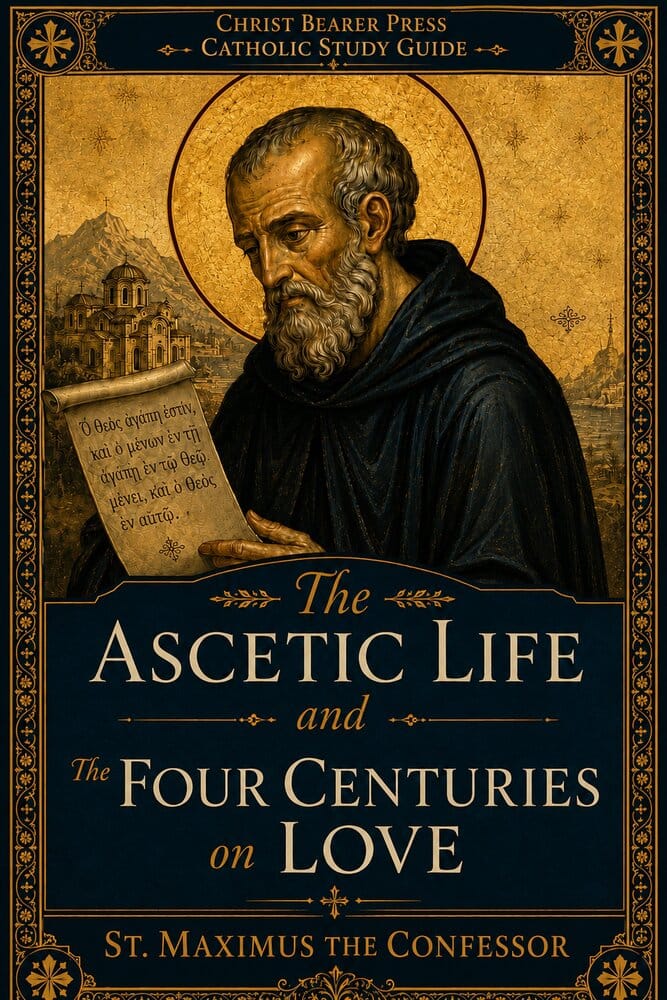
A companion study guide to The Ascetic Life — guided sessions on St. Maximus the Confessor, for parish, classroom, and personal prayer.
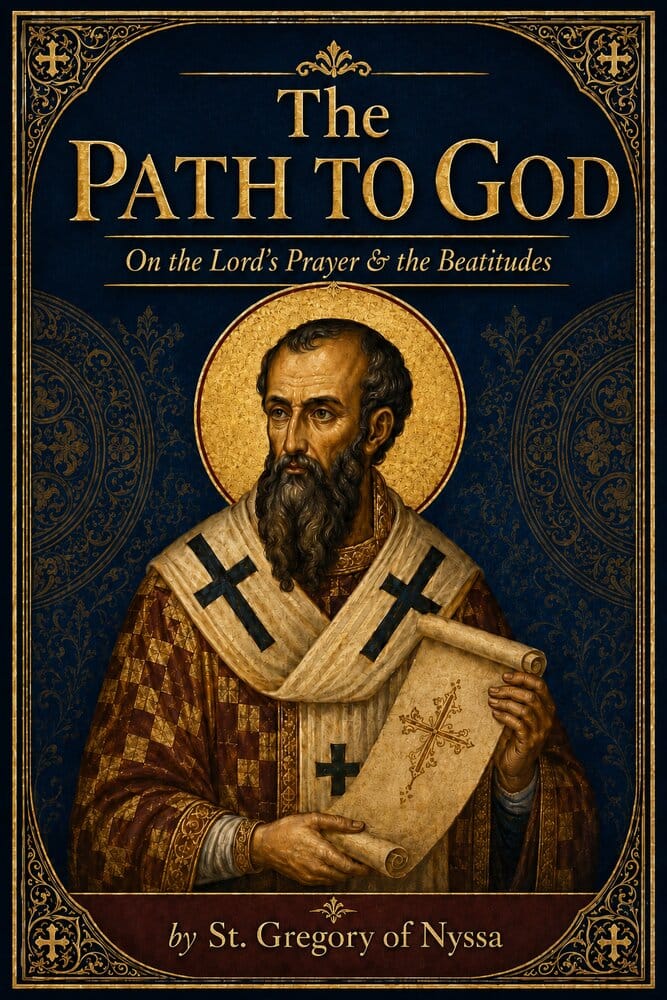
A new English translation of St. Gregory of Nyssa's homilies on the Lord's Prayer and the Beatitudes — with a companion study guide.
Companion study guide: The Path to God — Study Guide →
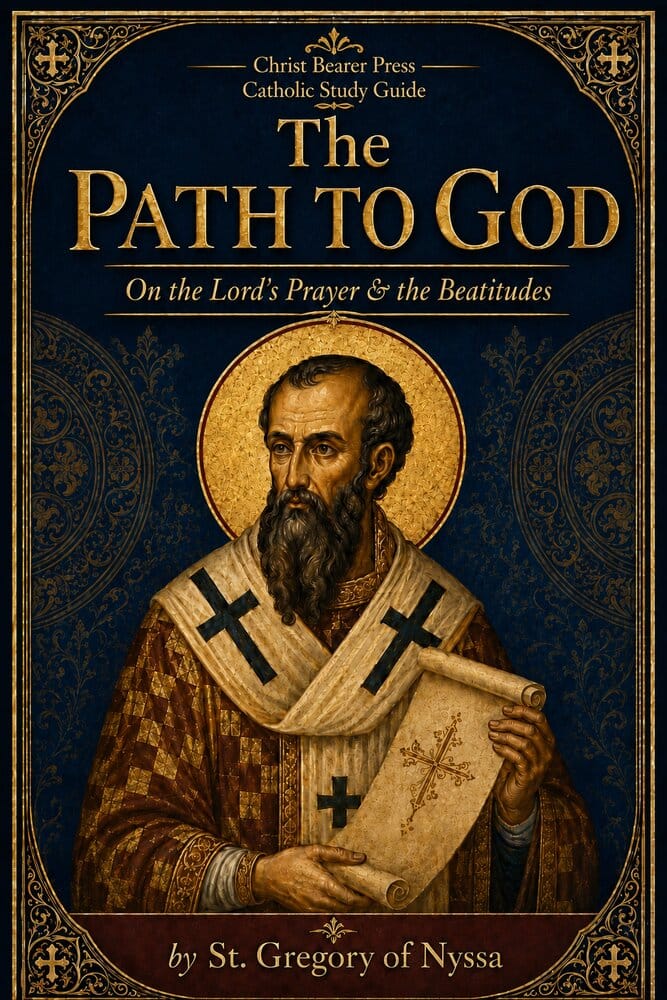
A companion study guide to The Path to God — thirteen guided sessions on St. Gregory of Nyssa's homilies, for parish, classroom, and personal prayer.

Dom Chautard's classic on the interior life, the book St. Pius X kept at his bedside — for everyone whose work for God has begun to outrun their prayer, and the way back to letting everything flow from union with Christ.

A monthly Catholic planner and journal for living the liturgical year. Every day of October laid out with the Church's calendar and daily Mass readings, feast days, a rule of life, and weekly examens — plus dated pages to plan your days and journal your prayer, all dedicated to the Most Holy Rosary.

A monthly Catholic planner and journal for living the liturgical year. Every day of September laid out with the Church's calendar and daily Mass readings, feast days, a rule of life, and weekly examens — plus dated pages to plan your days and journal your prayer, all dedicated to the Seven Sorrows of Mary.
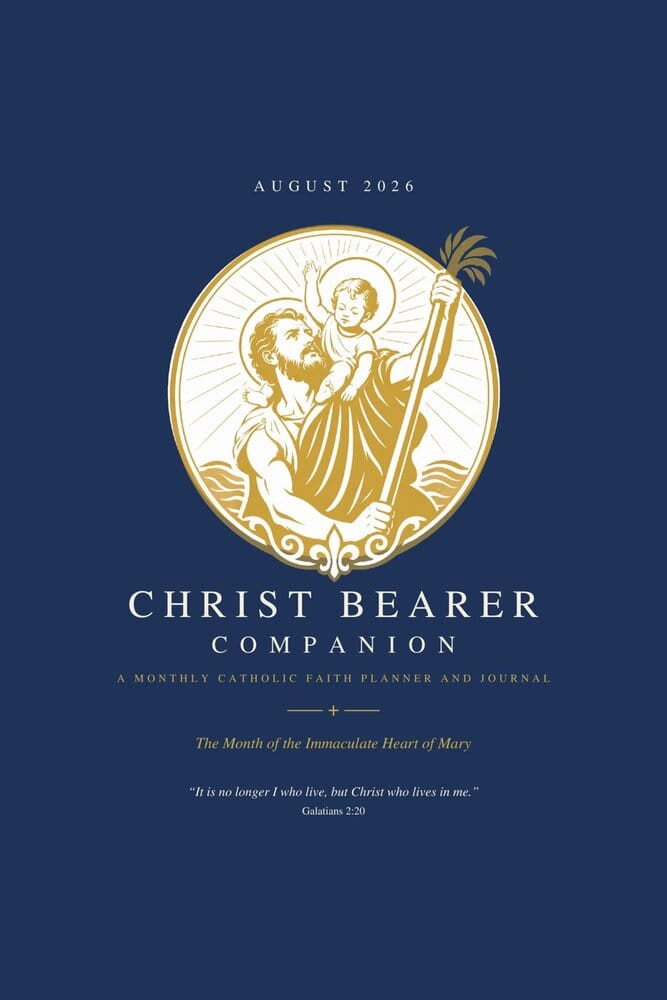
A monthly Catholic planner and journal for living the liturgical year. Every day of August laid out with the Church's calendar and daily Mass readings, feast days, a rule of life, and weekly examens — plus dated pages to plan your days and journal your prayer, all dedicated to the Immaculate Heart of Mary.
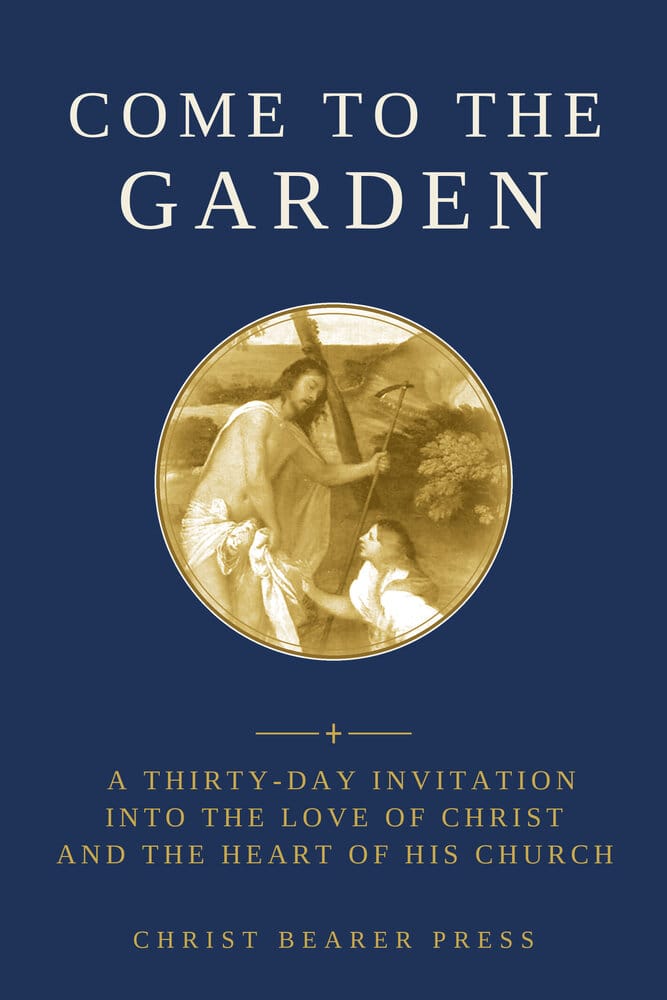
A thirty-day invitation into the love of Christ and the heart of His Church — written for anyone carrying questions of gender or sexuality who longs to know they belong. Scripture, the voices of the saints, gentle questions, and a prayer for every day.

St. John Bosco's thirty-one days of meditation according to the spirit of St. Vincent de Paul — a fresh English translation from the Italian first edition of 1848. One short chapter a day, each taking up a single virtue and closing with one concrete thing to do before the day is out.
Join our monthly newsletter and we'll send you a free 7-day starter devotional — a simple place to begin, in just five minutes a day.
One email a month of real spiritual value. Easy unsubscribe anytime. We never share or sell your email.